
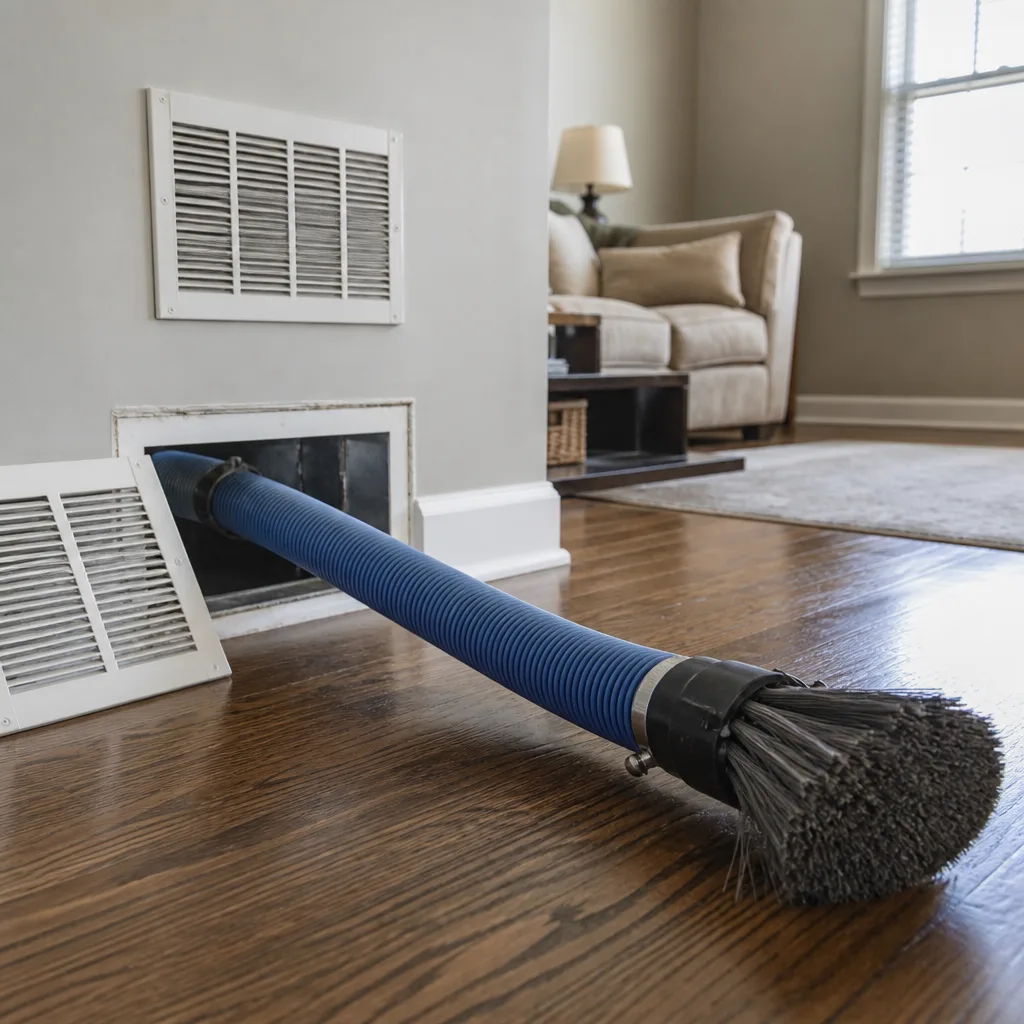
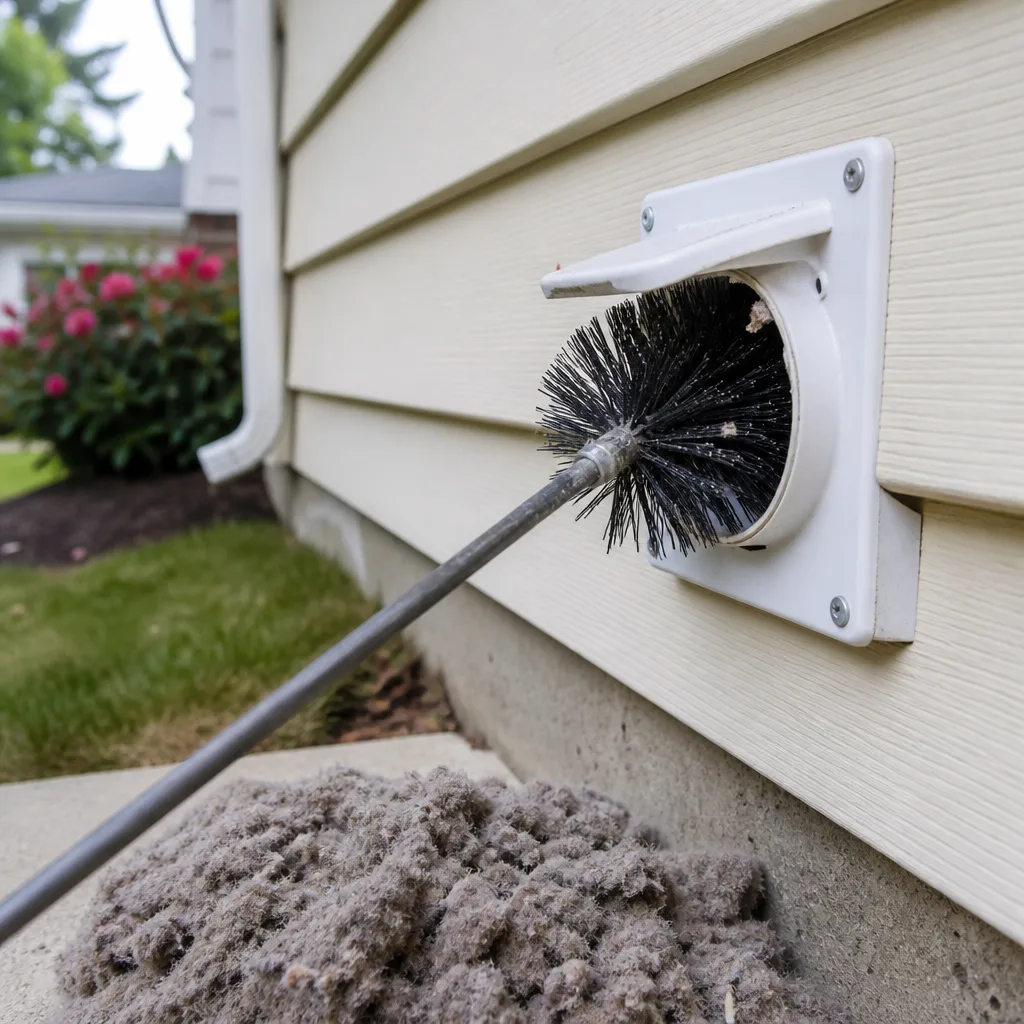
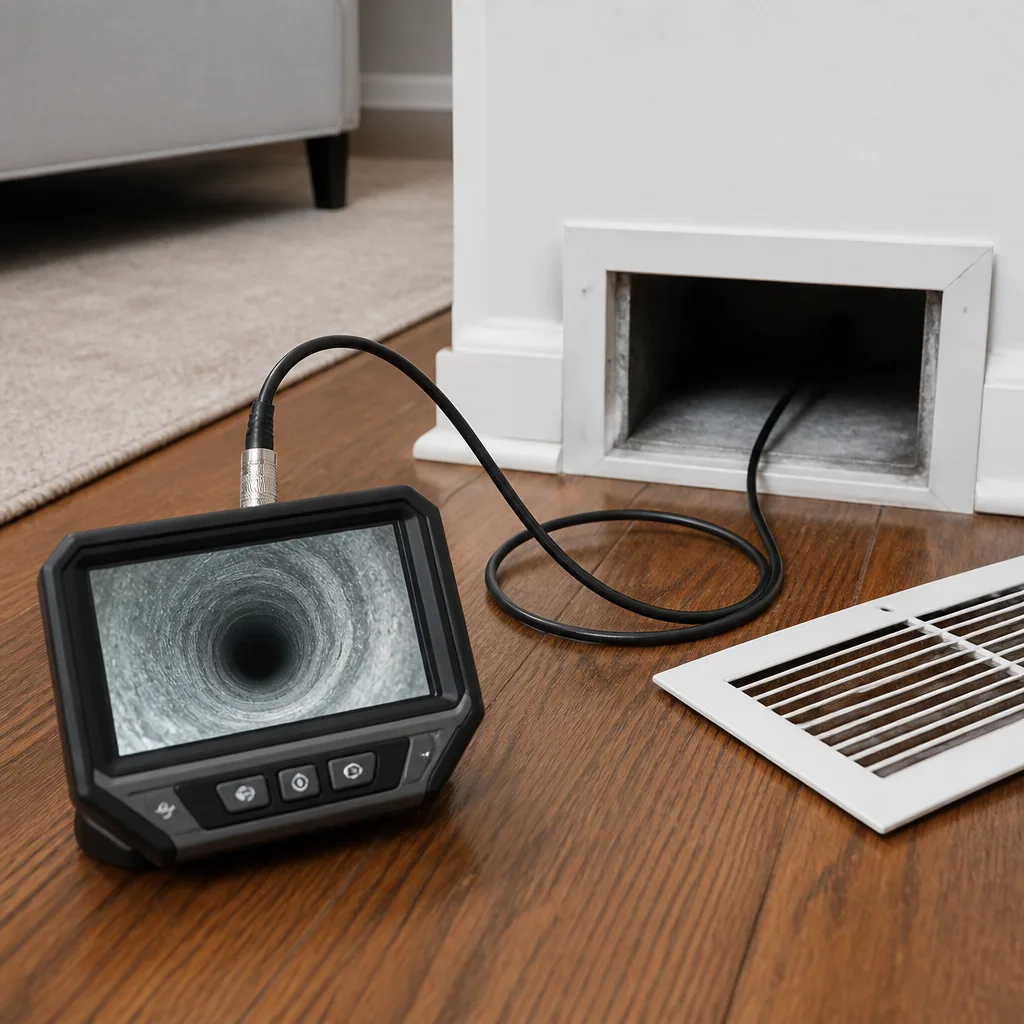
Whole-system duct and dryer vent check with before-and-after photos - you see exactly what came out of your vents
That "$99 whole-house special" is a bait ad - the real number appears once they are in your hallway, or the "clean" is a shop-vac at the register. We photograph the inside of your ducts before and after instead.
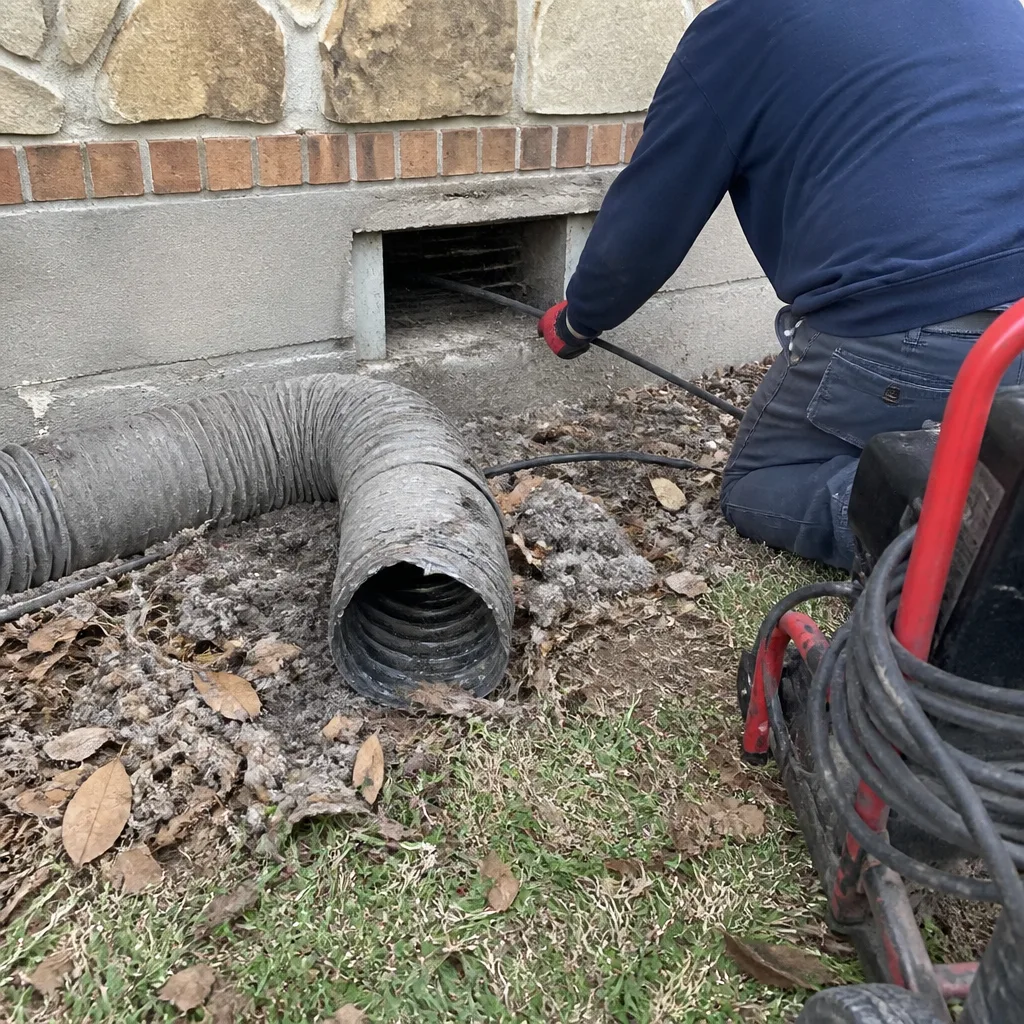 Before
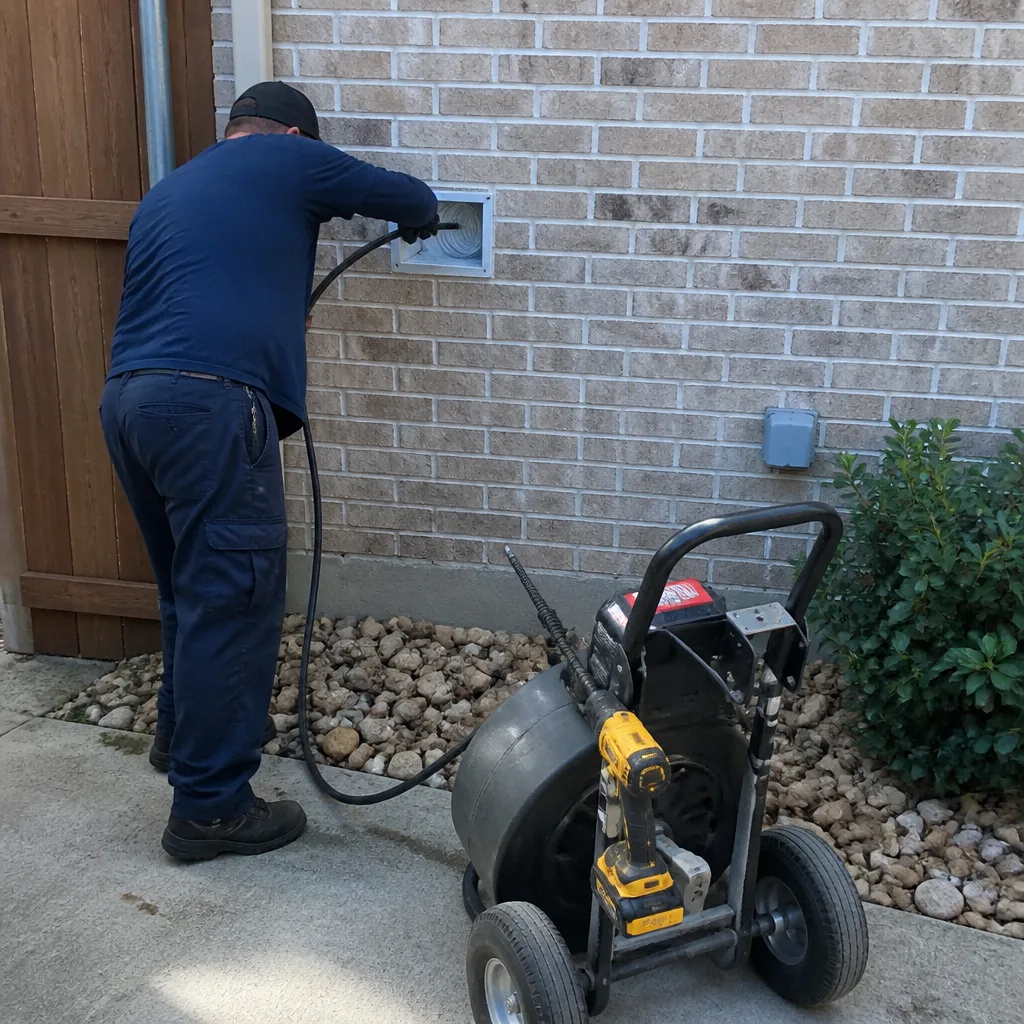 After
After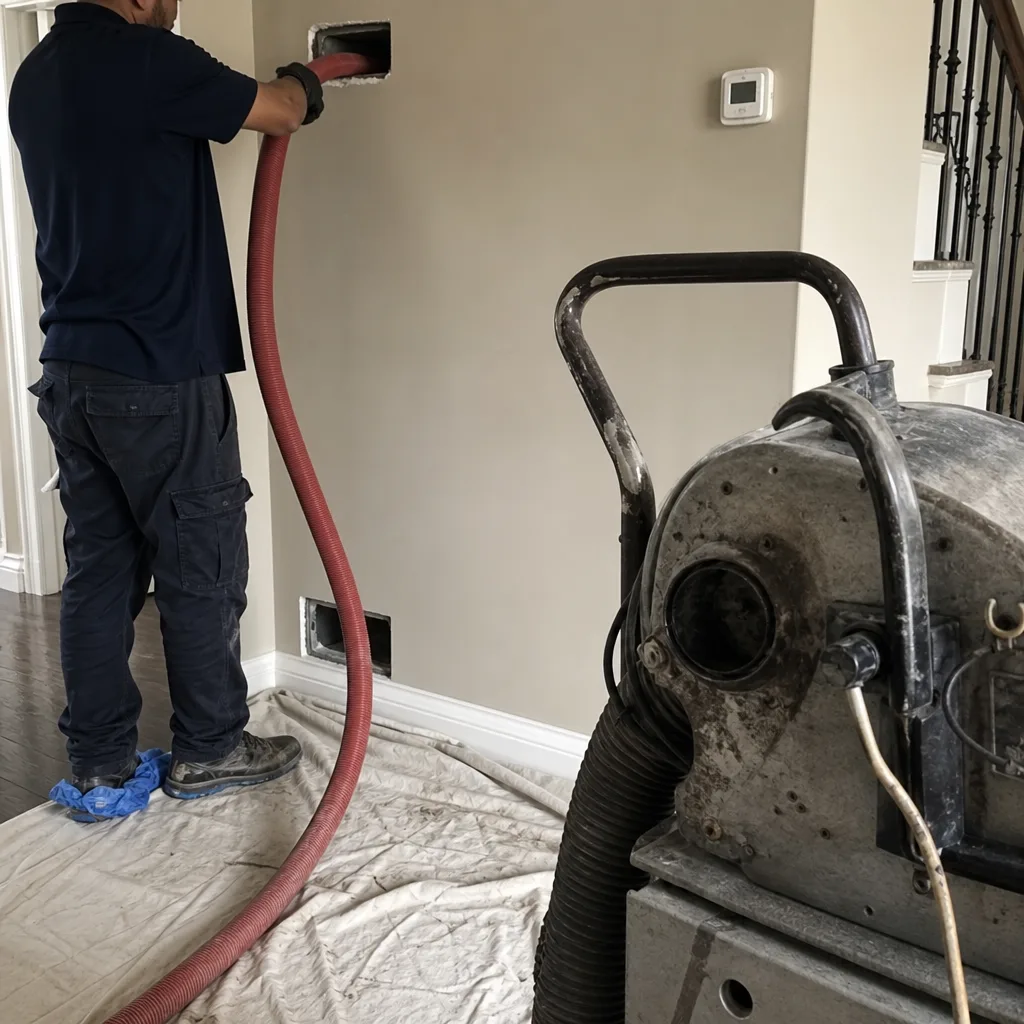 Before
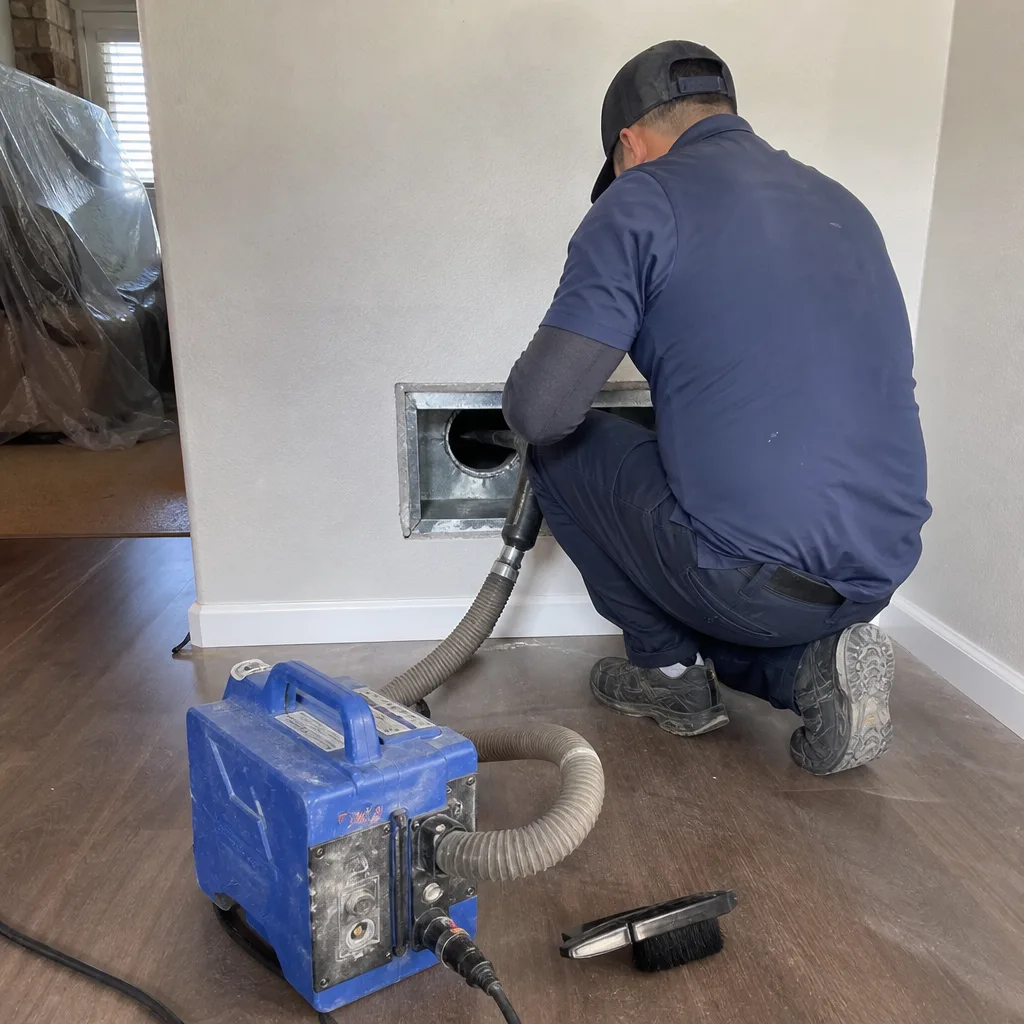 After
After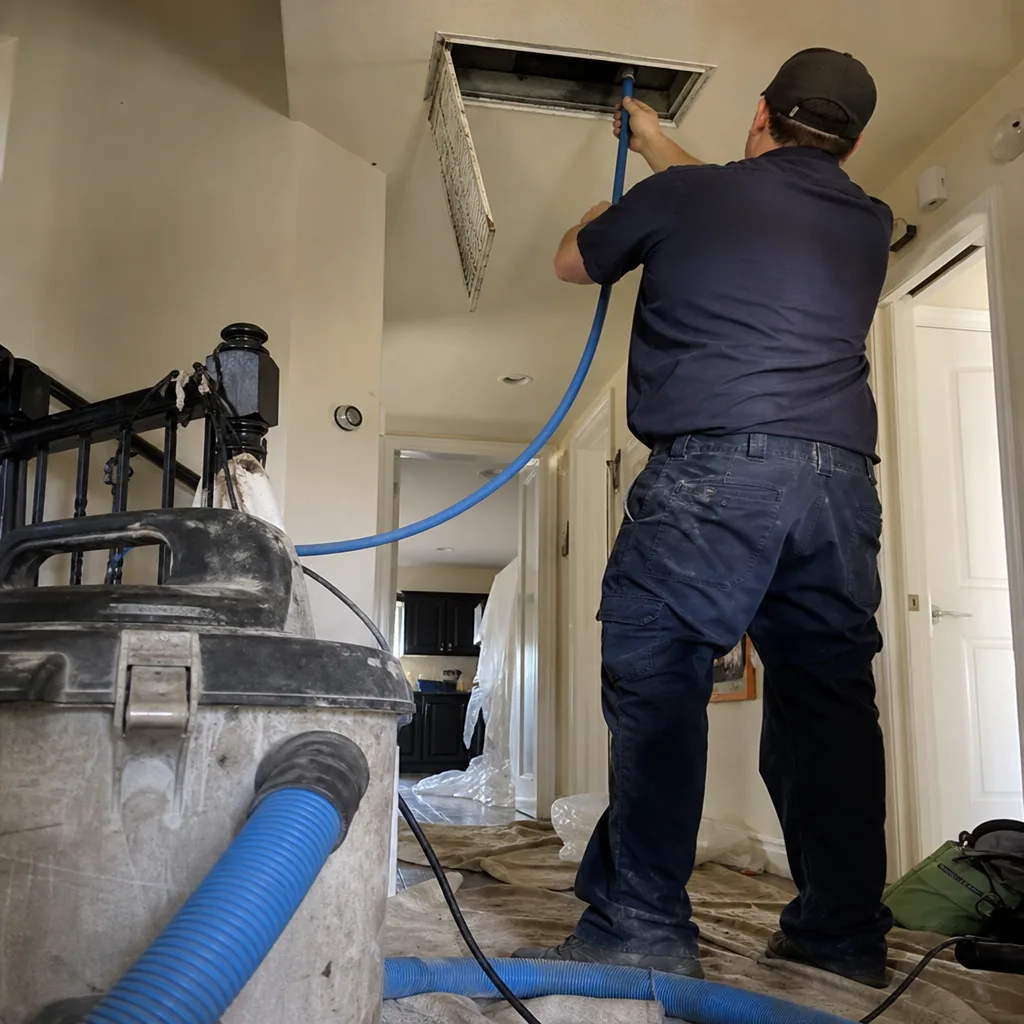 Before
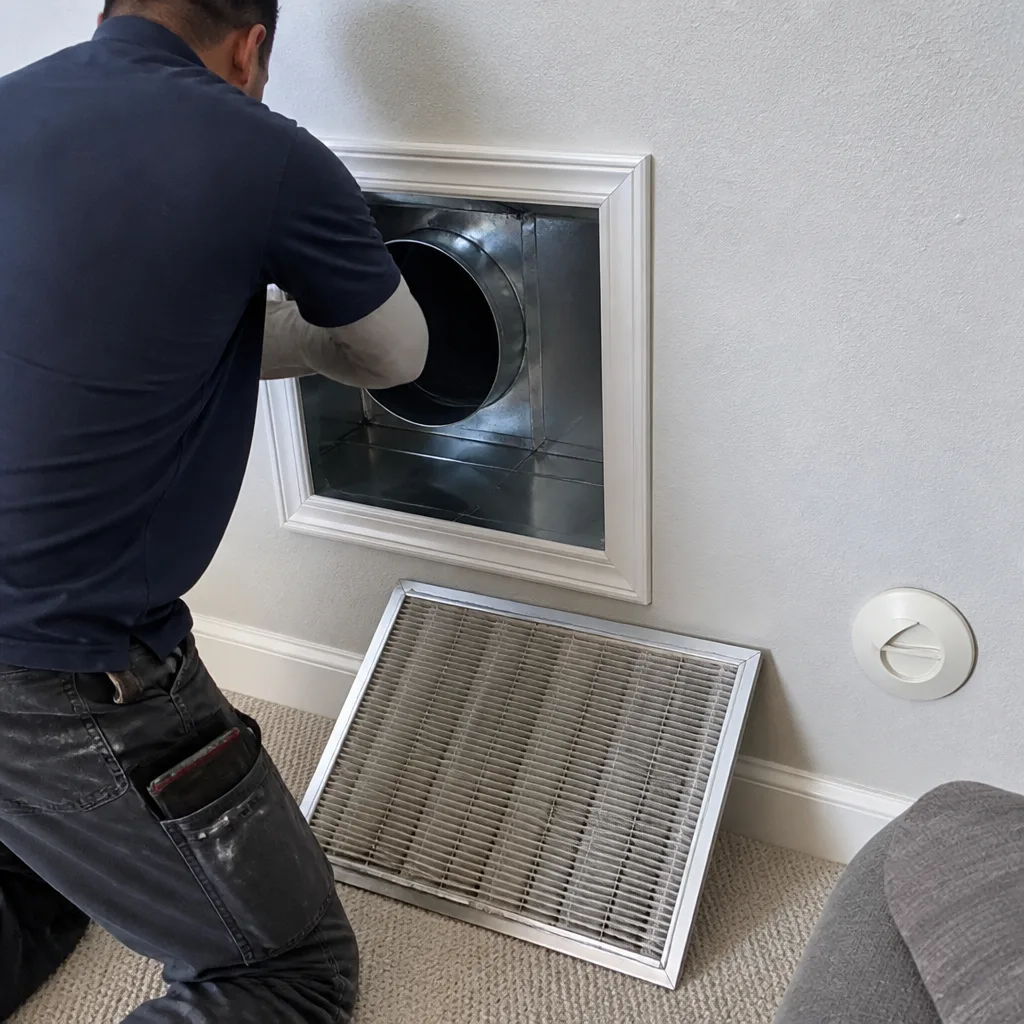 After
AfterAbatement Technologies Vent Sanitizing: The Frisco Owner’s Guide
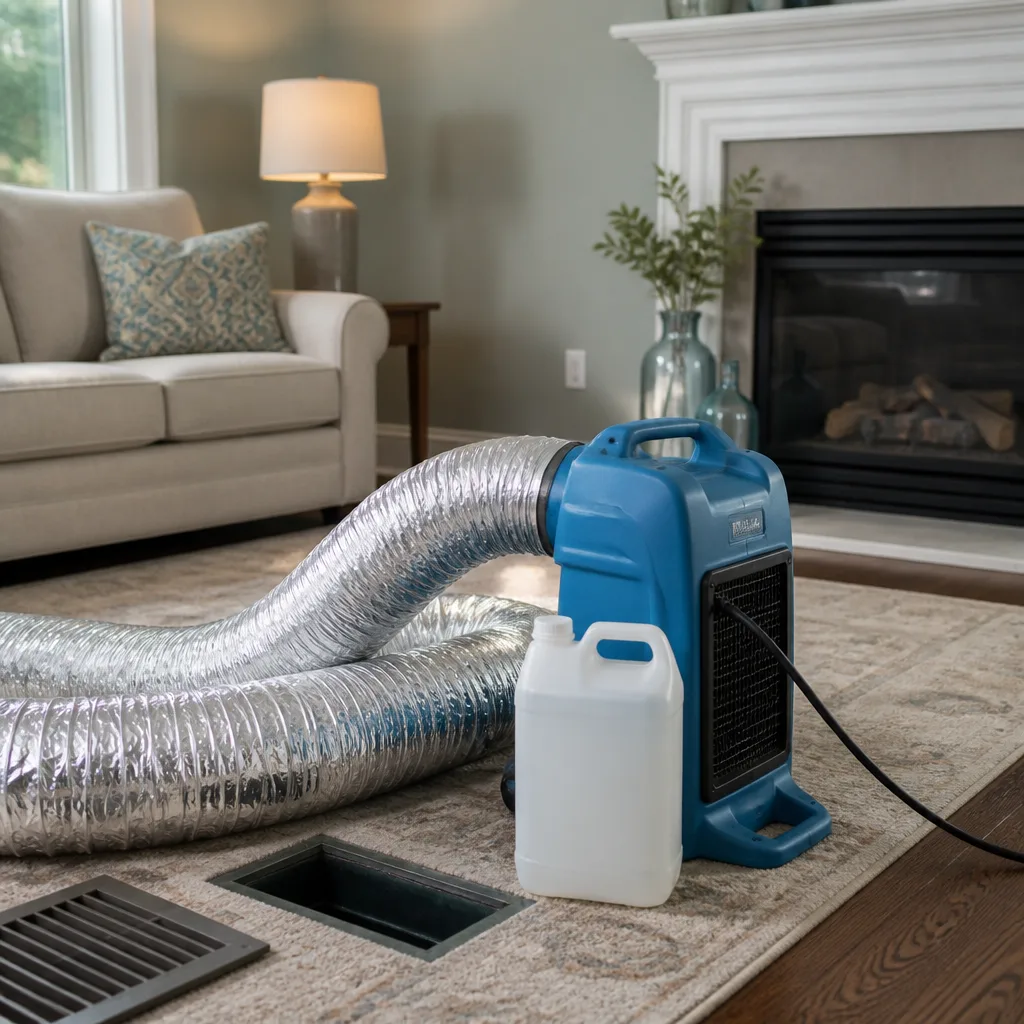
We stock and install Abatement Technologies-compatible vent sanitizing systems in Frisco, with most jobs running $340-$580 installed depending on duct run count and plenum access. Same-day scheduling is usually available because we keep Abatement Technologies-compatible UV-C and ozone-generating sanitizing modules on our trucks, along with the mounting hardware and wiring harnesses that tend to fail first in Texas heat. Most Frisco homeowners discover their vent sanitizing system has failed when they notice persistent musty odors returning within 48 hours of a standard duct cleaning, or when the UV bulb indicator on their Abatement Technologies cabinet stays dark despite the unit receiving power.
Which Abatement Technologies Models This Applies To
Abatement Technologies vent sanitizing equipment breaks into two main series: the CAP series (CAP600, CAP600-UV, CAP1200) designed for residential ductwork up to 5 tons, and the HEPA-Care series (HC500, HC800, HC1500) used in larger Frisco homes with multiple zones or integrated air-scrubbing. The critical compatibility gotcha is the lamp socket spacing: CAP-series UV-C modules use 2.375-inch center-to-center mounting, while HEPA-Care units use 3.125-inch spacing. We’ve seen homeowners order the wrong module online, discover the bracket holes don’t line up, and end up with a $180 part they can’t return because the box was opened.
To identify your unit, look for the silver data plate on the sanitizing cabinet, usually mounted on the supply plenum (the main duct box that distributes conditioned air to each room). The plate lists the model number, lamp wattage, and recommended replacement interval. For CAP-series units, we typically install OEM-spec Abatement Technologies UV-C lamps rated at 17,000 microwatt-seconds per square centimeter; for HEPA-Care systems, we match the manufacturer’s 36-watt or 55-watt specification depending on airflow CFM. Aftermarket equivalents exist from LSE Lighting and Pure UV, but we verify they carry the same UV-C output rating at 254 nanometers - the wavelength that actually neutralizes mold and bacterial DNA, not just a blue glow that looks impressive.
Signs Your Abatement Technologies Vent Sanitizing Is Failing
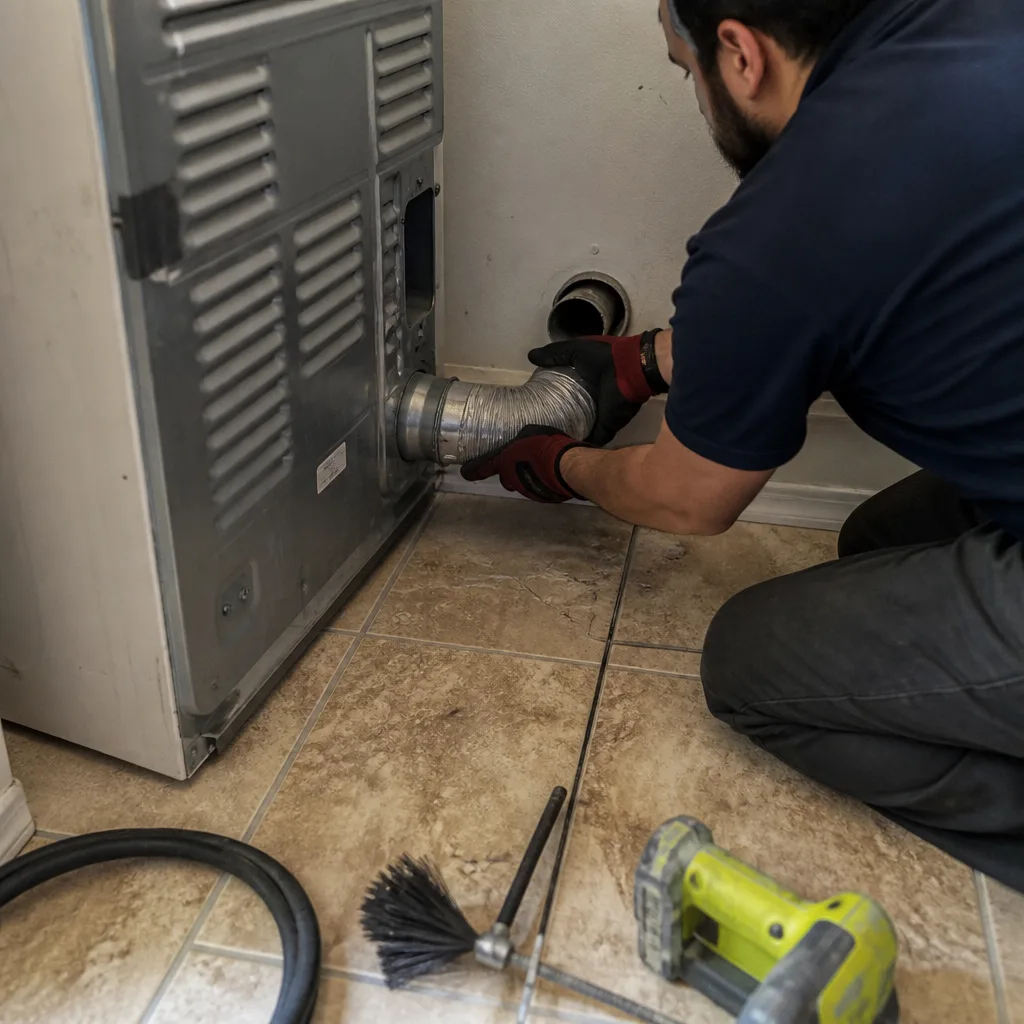
- UV indicator light is off or flickering. The ballast (the electrical component that steps up voltage to ignite the lamp) degrades with heat cycling. In Frisco’s attic temperatures, which routinely hit 140°F in July, ballast failure is more common than actual lamp burnout. The lamp may still glow faintly while producing insufficient UV output to sanitize anything.
- Musty smell returns within two days of duct cleaning. A functioning Abatement Technologies sanitizing system should suppress microbial growth at the evaporator coil and supply plenum. When the UV-C dosage drops below effective levels, mold colonies reestablish almost immediately in our humid Texas shoulder seasons.
- Visible corrosion on the lamp socket or wiring terminals. The ozone-generating variants (CAP600-OZ, HC800-OZ) produce corrosive byproducts that attack brass and copper connections over 3-5 years. We’ve opened cabinets in Starwood homes where the socket was green with oxidation and the lamp wobbled loose - a fire hazard, not just a performance issue.
- HVAC technician notes “biological growth” on the coil during maintenance. This is the tell that your sanitizing system has been down for months. The coil should stay clean if the UV-C lamp is positioned correctly and producing rated output. Growth means the lamp is dead, misaligned, or the wrong spectrum entirely.
- Unit hums but no ozone odor detectable at registers. On ozone models, the corona-discharge plates foul with dust and oil vapor. Cleaning helps temporarily, but plate degradation is irreversible. After about 4,000 run-hours in Frisco’s dusty conditions, replacement is the only fix that restores output to manufacturer spec.
BeforeAfterReplacement Cost & What’s Included
| Component | Typical Range (Frisco) |
|---|---|
| UV-C lamp module (CAP series) | $180 - $260 |
| UV-C lamp module (HEPA-Care series) | $240 - $340 |
| Ozone generator replacement (corona plates + power supply) | $280 - $420 |
| Ballast replacement only | $140 - $200 |
| Full sanitizing system (new cabinet, lamp, mounting) | $480 - $720 |
| Labor for swap or new install | $160 - $260 |
What drives the range: plenum access (some Frisco builders bury the unit behind drywall that needs cutting), whether the original wiring is still to code, and if we find degraded flex duct that needs addressing while we’re in the system. Every job gets a written price before work starts, under Haven Standard Clause 1. The lamp itself carries a 12-month manufacturer defect warranty; our installation workmanship is covered by the 365-Day Done Right Promise, documented in writing on every invoice.
DIY or Call Us?
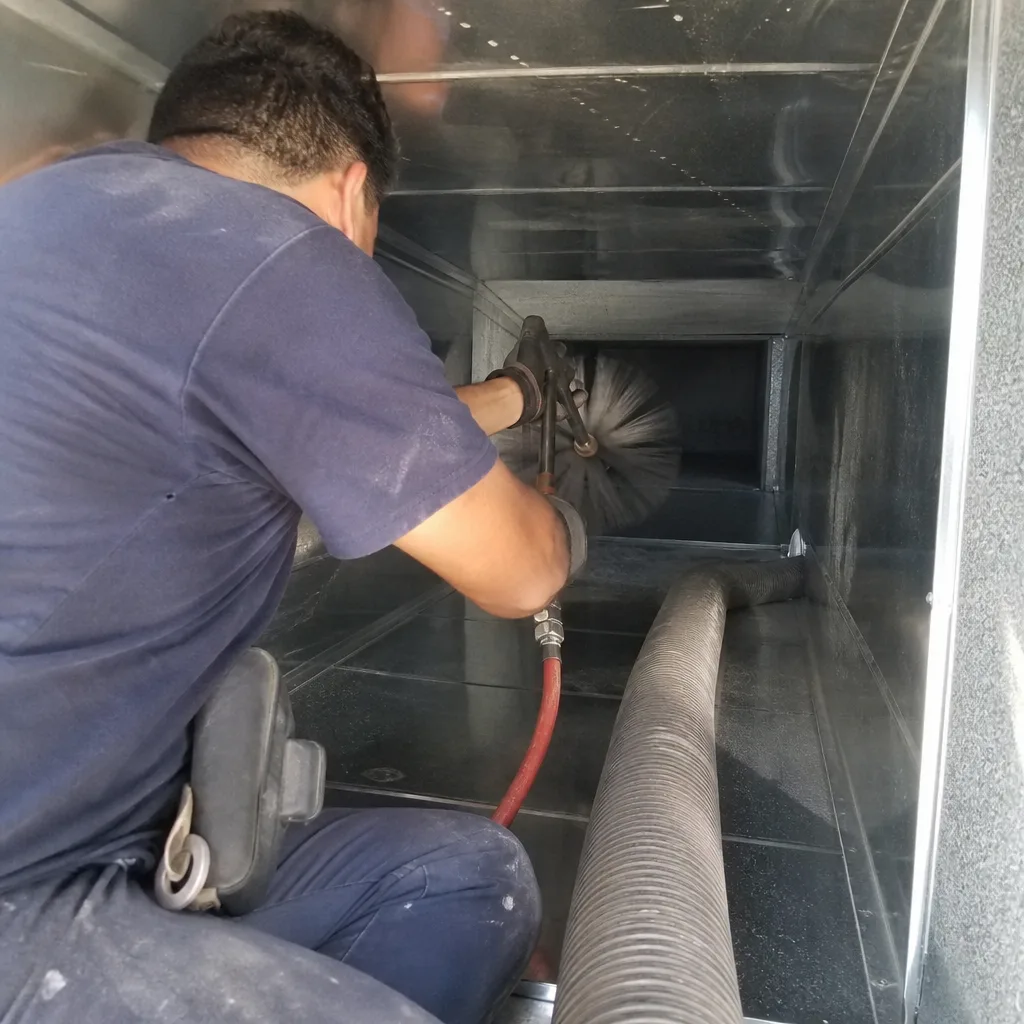
There’s a safe middle ground and a hard stop. Homeowners can verify power at the unit with a non-contact voltage tester, check that the lamp indicator responds to the door interlock switch, and photograph the data plate for us - all without touching anything that carries load. What we don’t recommend: removing a live UV-C lamp bare-handed (retinal damage from direct UV exposure is real and cumulative), attempting to bypass a failed ballast with hardware-store parts, or drilling new mounting holes in a plenum that may contain asbestos-containing duct liner (still present in some 1980s Frisco construction, particularly in older Preston Road corridor homes).
The wiring runs 120V through components that sit in 140°F attics for years. Insulation hardens. Grounds loosen. We’ve found units where the previous homeowner’s “simple” lamp swap left bare conductors touching the metal cabinet. If you’re not comfortable verifying continuity and proper grounding, call us. The photo is already on your phone before I say what it costs.
FAQs
UV-C output degrades to ineffective levels after roughly 9,000 hours of runtime, which translates to 12-14 months for systems that run continuously. We recommend annual replacement because Texas dust and high attic temperatures accelerate phosphor coating degradation. The lamp may still light after 18 months while producing a fraction of the germicidal dosage. Call (940) 290-8552 and we’ll check your run-hours against actual output - estimates are free.
Ballasts and sockets are replaceable as individual components, which we do when the cabinet and reflector are still sound. Corona-discharge ozone plates cannot be rebuilt economically; replacement plate kits cost nearly as much as a new generator module and carry shorter warranties. We photograph the cabinet interior and show you exactly what’s worth saving. Call (940) 290-8552 for a written assessment.
A straightforward lamp-and-ballast swap on an accessible CAP-series unit takes 45-60 minutes. HEPA-Care systems with integrated airflow sensors and interlock wiring run 90-120 minutes. New installations or relocations to improve lamp positioning relative to the coil add time for fabrication and sealing. We quote the full scope in writing before starting, including how long you’ll be without HVAC.
We carry CAP-series and HEPA-Care UV-C modules, ballasts, sockets, and ozone generator assemblies on every CleanRun truck serving Frisco. For discontinued models (early CAP400 series, pre-2015 HC units), we source compatible retrofits within 24 hours. We also stock Lennox, Trane, and Carrier sanitizing components for mixed-system homes. If we don’t have your exact part, we don’t charge a return trip - it’s covered under our standard dispatch.
CleanRun Duct Repair & Cleaning is independently owned and operated under the Haven Standard. We are not affiliated with Abatement Technologies; we service their equipment using manufacturer-specified or verified-equivalent parts.
Ready to get your Abatement Technologies vent sanitizing system checked? Call (940) 290-8552 for a free estimate. We’ll bring the written price, the camera, and the part.
Written by Tomas Reyes, Owner, CleanRun Air Duct Cleaning Frisco at CleanRun Air Duct Cleaning Frisco, serving Frisco and nearby areas.