
Last updated September 23, 2026
Whole-system duct and dryer vent check with before-and-after photos - you see exactly what came out of your vents
That "$99 whole-house special" is a bait ad - the real number appears once they are in your hallway, or the "clean" is a shop-vac at the register. We photograph the inside of your ducts before and after instead.
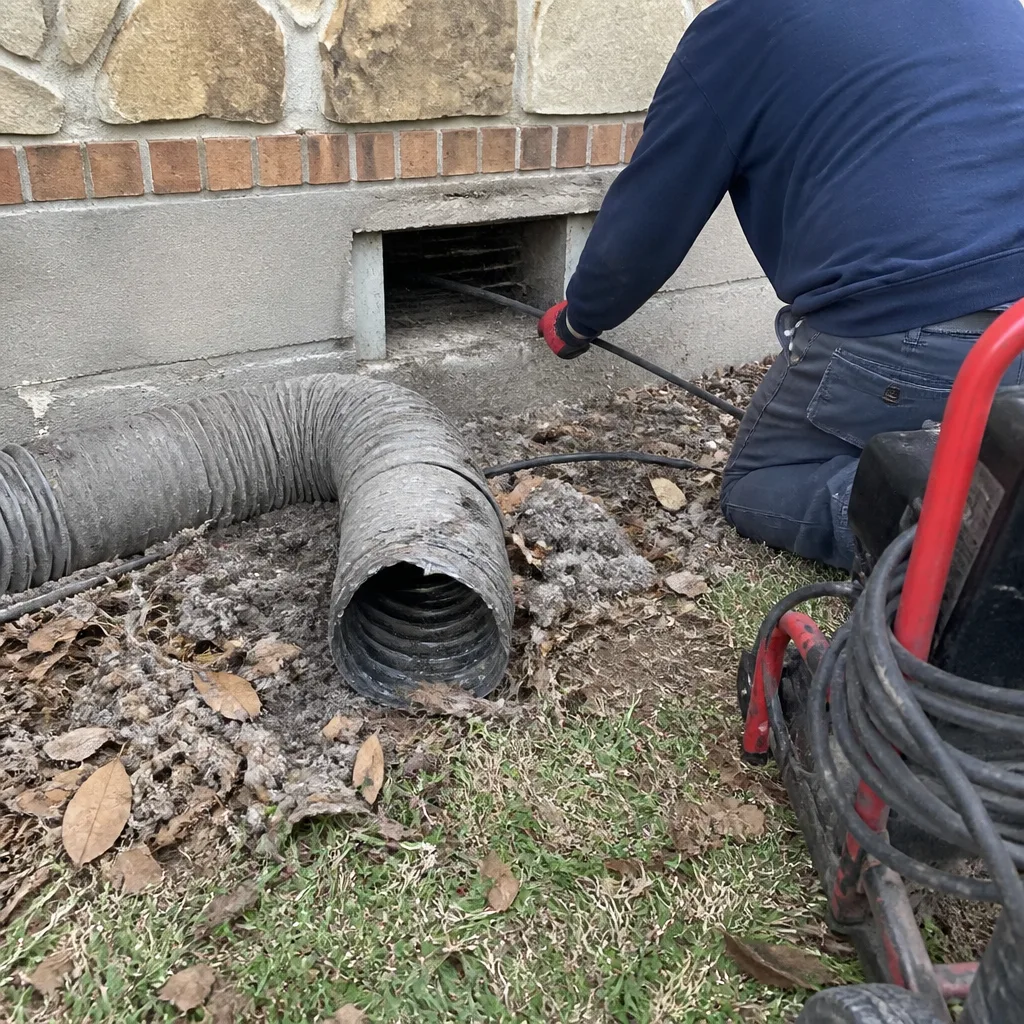 Before
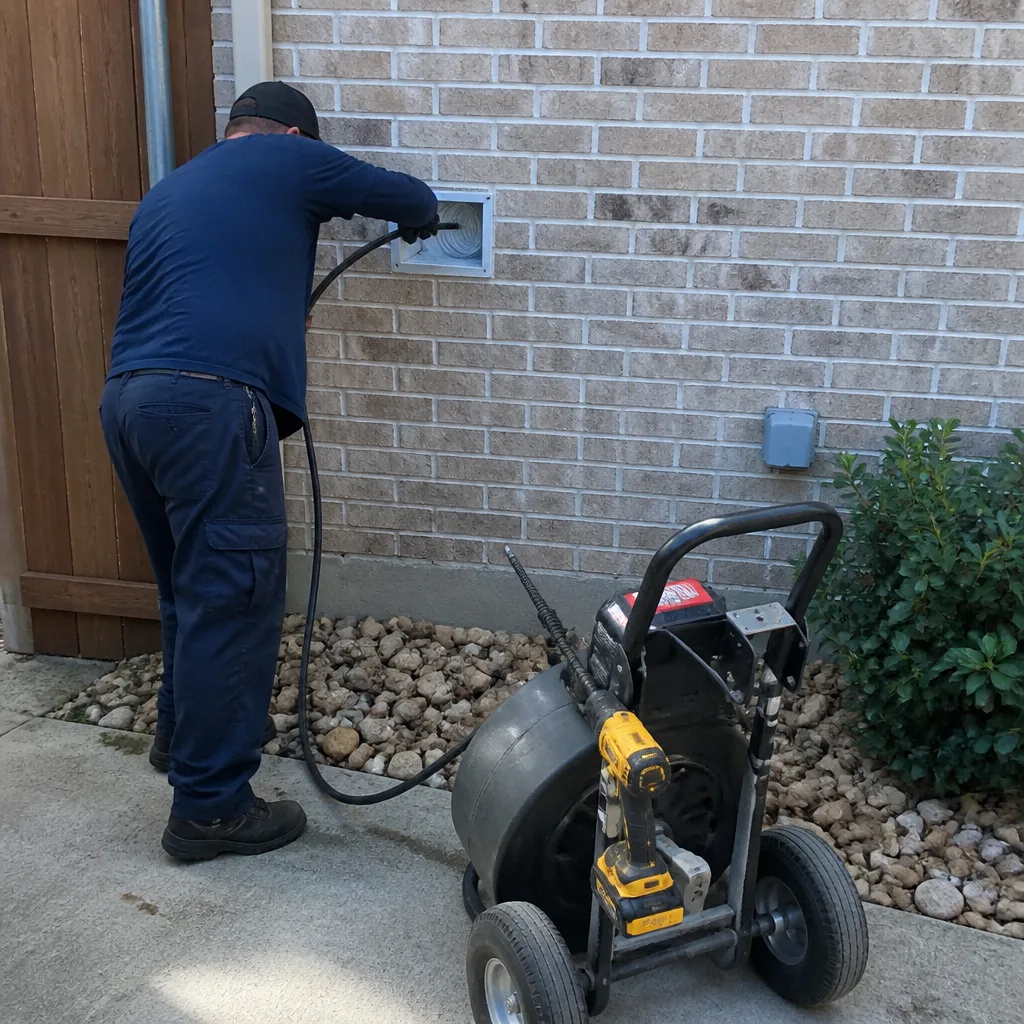 After
After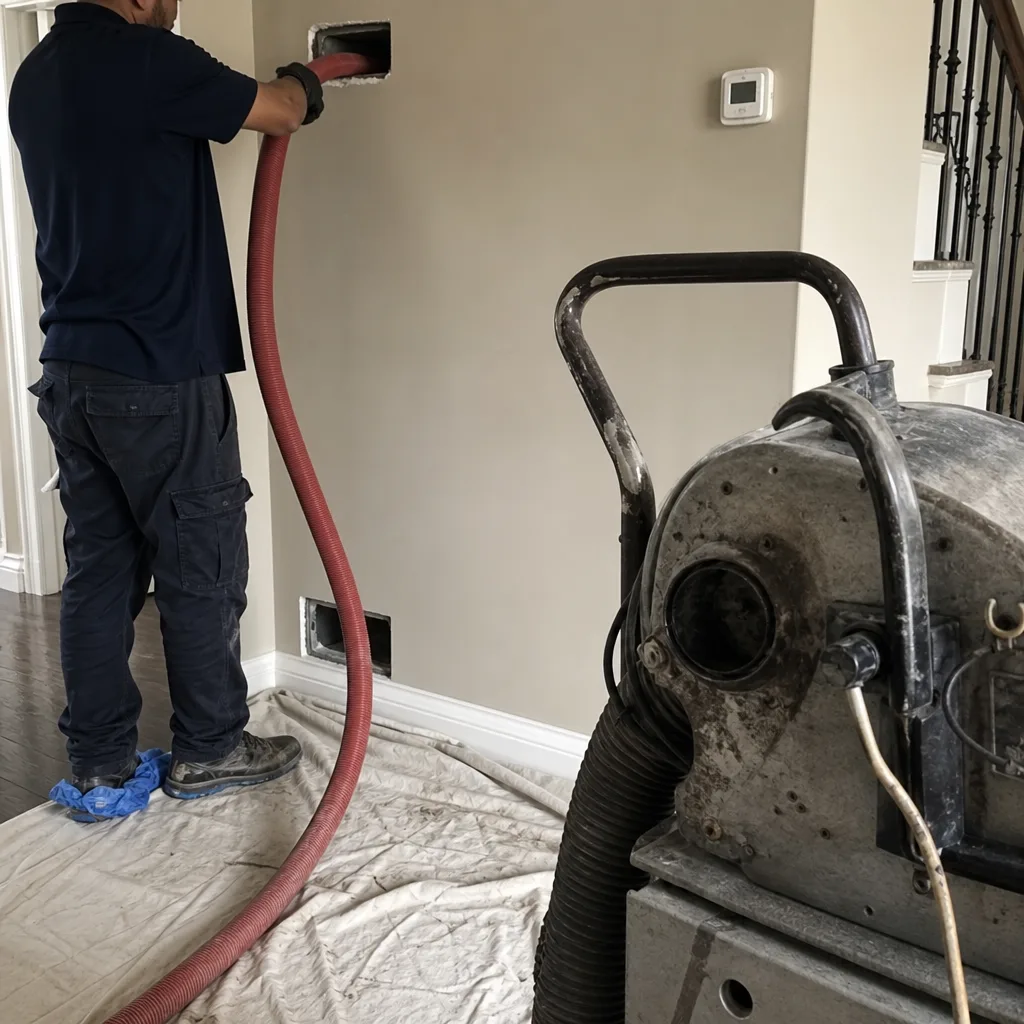 Before
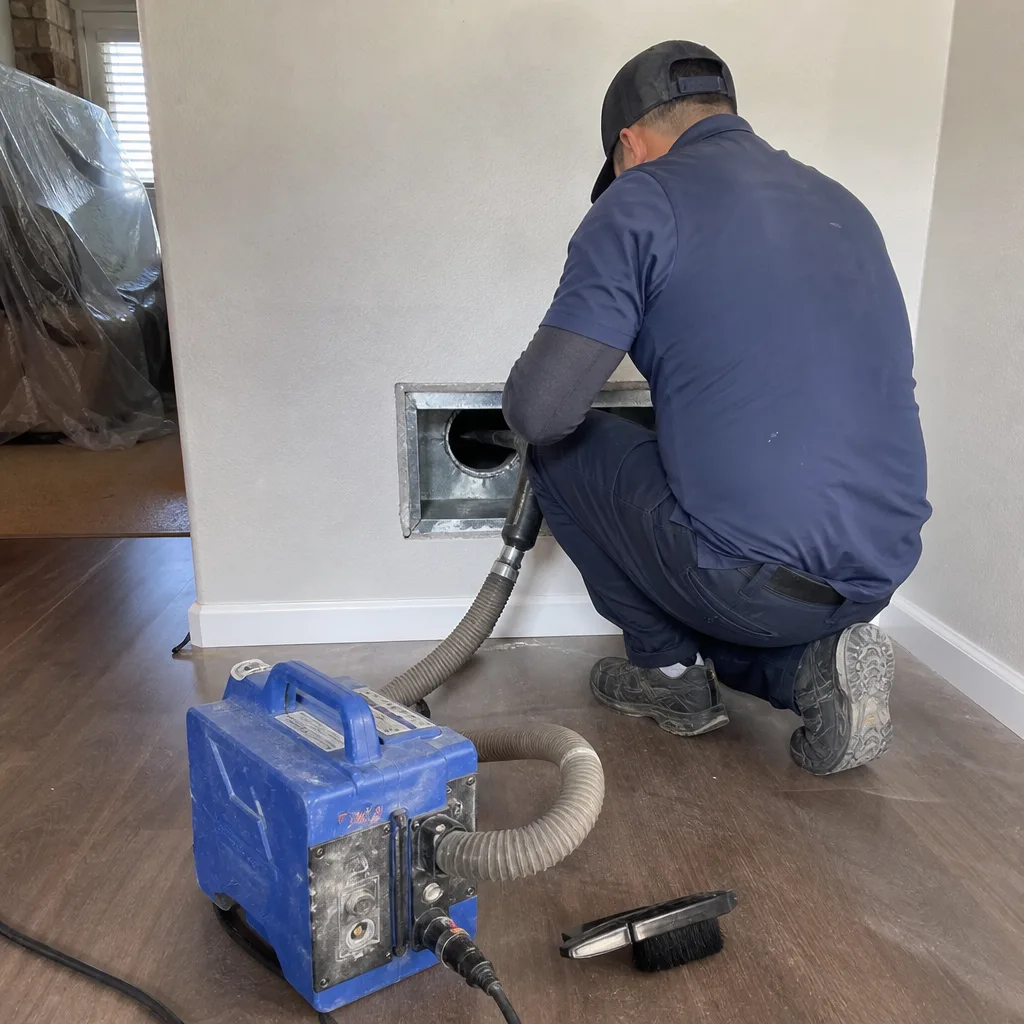 After
After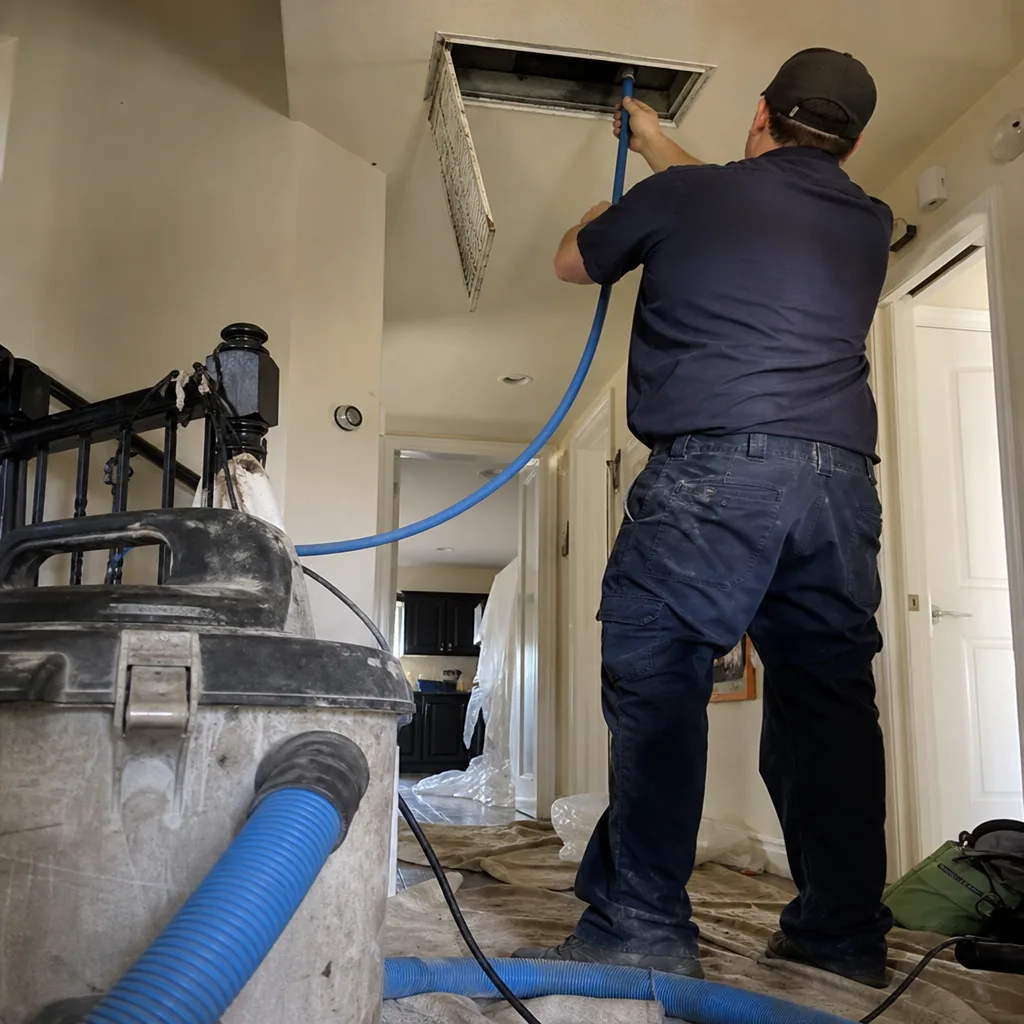 Before
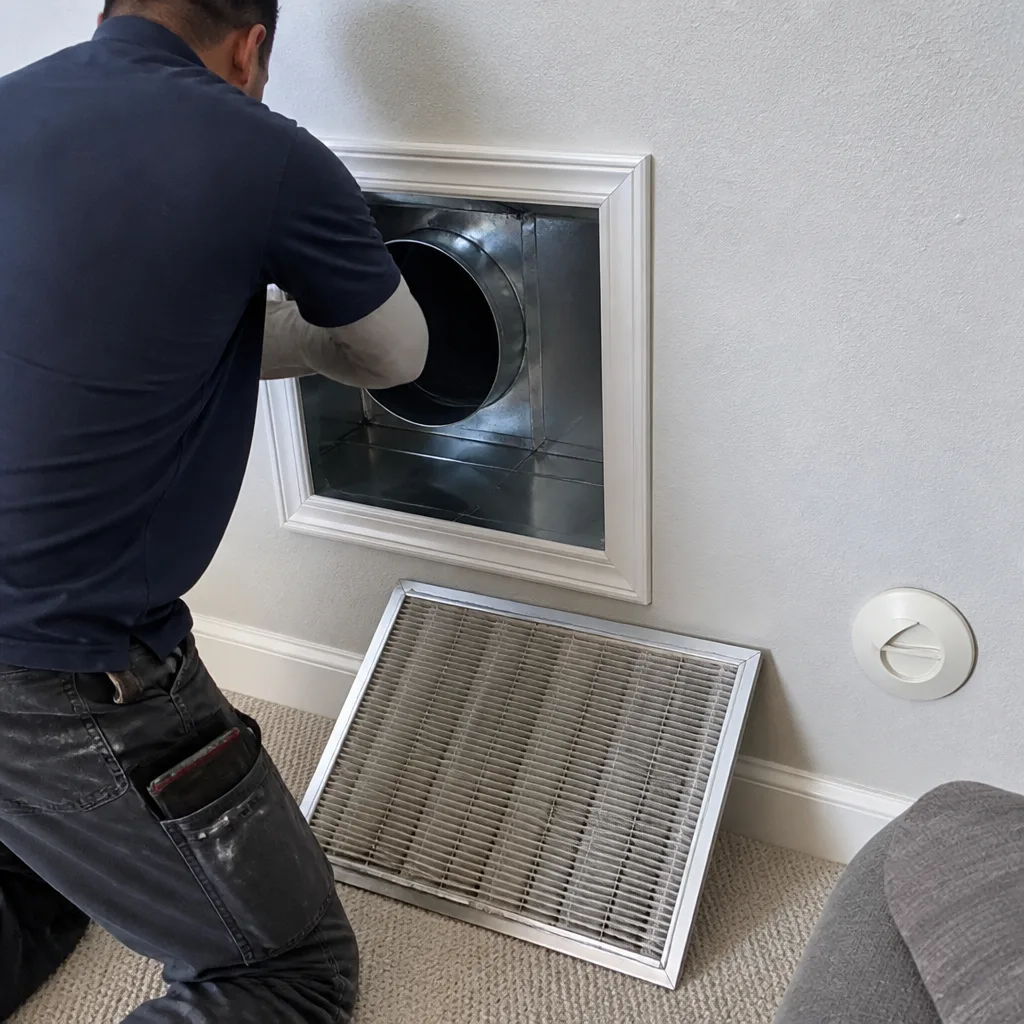 After
AfterDIY vs Professional Air Duct Cleaning: The Frisco Homeowner’s Decision Guide
A dryer vent brush, a shop vac, and a can of coil cleaner will address maybe 15% of the debris surface area in a typical Frisco duct system. That’s not nothing. But it’s also not duct cleaning, and treating it as equivalent is how debris gets redistributed rather than removed. In this guide, we’ll map exactly where the DIY boundary falls for Frisco homeowners, what equipment actually does the work, and what it costs to be wrong about the difference. For related reading, see our How to Hire a Air Duct Cleaning Contractor in Frisco: A Step-by-Step Guide.
Quick Answer
Homeowners can effectively maintain register surfaces and the first 12-18 inches of accessible ductwork, but the negative-pressure extraction step that captures dislodged debris from the full duct run requires professional-grade equipment not available for consumer purchase. In Frisco, professional whole-system cleaning runs $350-$750 for a typical single-family home, while DIY supplies cost $80-$150 for a fraction of the coverage. The risk of partial DIY cleaning is real: agitating debris without source capture redistributes it into living spaces rather than removing it.
Table of Contents
- What DIY Air Duct Cleaning Can Actually Accomplish
- Where DIY Stops: The Equipment Boundary
- The Risk of Partial Cleaning: Redistributed Debris
- Honest Cost Comparison: DIY vs. Professional in Frisco
- How Frisco’s Climate Affects Duct Contamination
- A Practical DIY Maintenance Protocol Between Professional Cleanings
- What Professional Cleaning Actually Delivers
- How to Choose a Professional Duct Cleaner in Frisco
BeforeAfterWhat DIY Air Duct Cleaning Can Actually Accomplish
Let’s start with what works. A motivated Frisco homeowner with basic tools can accomplish three things that meaningfully affect air quality and system efficiency.
Removing and Washing Registers
Floor and wall registers collect the most visible debris in any duct system: dust, pet hair, cooking grease particulate, and the fine pollen that blows through Frisco from March through May. Removing registers, soaking them in warm water with mild detergent, brushing the fins clean, and reinstalling them dry takes about 30 minutes for a typical 2,000-square-foot home. This is worth doing annually. The register is the terminal point where conditioned air enters your living space, and clean registers measurably reduce the particulate load that circulates at breathing height.
Vacuuming Accessible Duct Openings
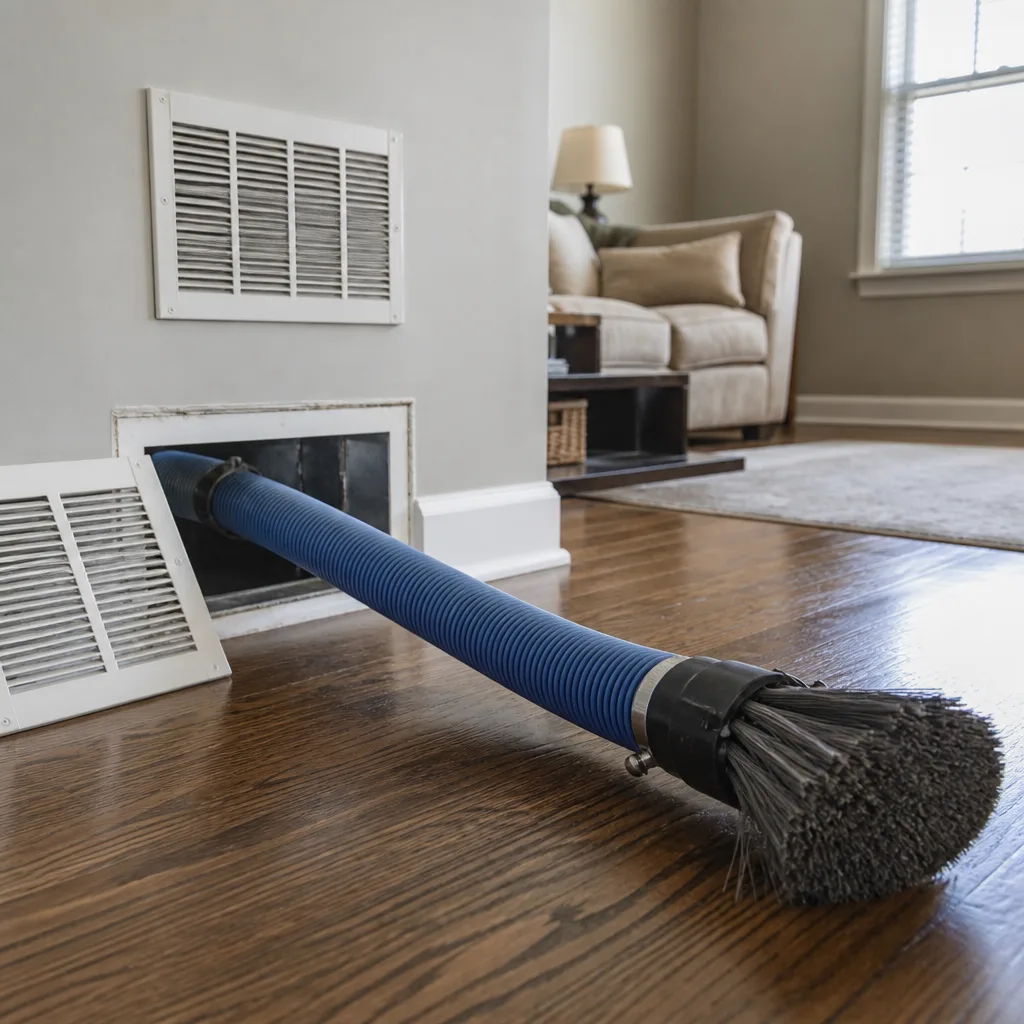
With the register removed, a standard household vacuum with a hose attachment can reach 12-18 inches into the supply duct run (the metal or flex duct that carries conditioned air from the plenum to the room). This removes loose debris at the duct opening: dust bunnies, construction residue in newer Frisco homes, and the granular debris that settles near register boots in high-traffic rooms. Use a flashlight. If you see a smooth metal surface beyond the debris layer, you’ve reached the practical limit of household equipment. If you see more debris receding into darkness, you’ve found the boundary.
Filter Replacement with Correct MERV Rating
This is the highest-impact DIY task. Frisco homeowners in neighborhoods like Phillips Creek Ranch and Newman Village often install filters with MERV ratings too high for their system’s fan capacity, restricting airflow and straining the blower motor. Check your HVAC manufacturer’s specification for maximum recommended MERV, typically printed on the air handler or in the original manual. For most residential systems in Frisco, MERV 8-11 balances filtration with airflow. Replace every 60-90 days during peak cooling season (May-September in North Texas), when systems run 12+ hours daily and filter loading accelerates.
These three tasks are genuine maintenance. They are not Air Duct Cleaning, but they are worth doing, and they extend the effective interval between professional cleanings by reducing the debris load that enters the deep ductwork.
Where DIY Stops: The Equipment Boundary
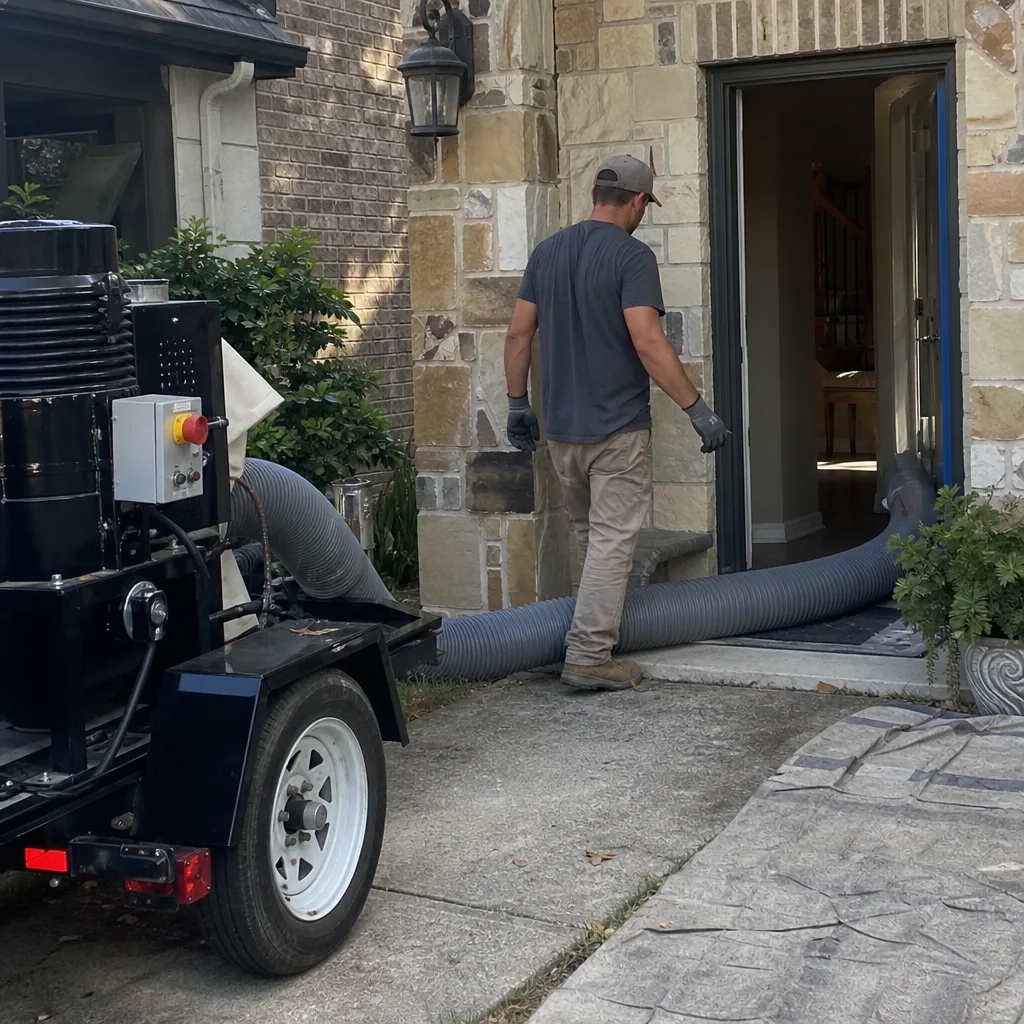
The professional duct cleaning process has three steps. Two of them are inaccessible to homeowner equipment by definition.
Step 1: Mechanical Agitation (Partially Accessible)
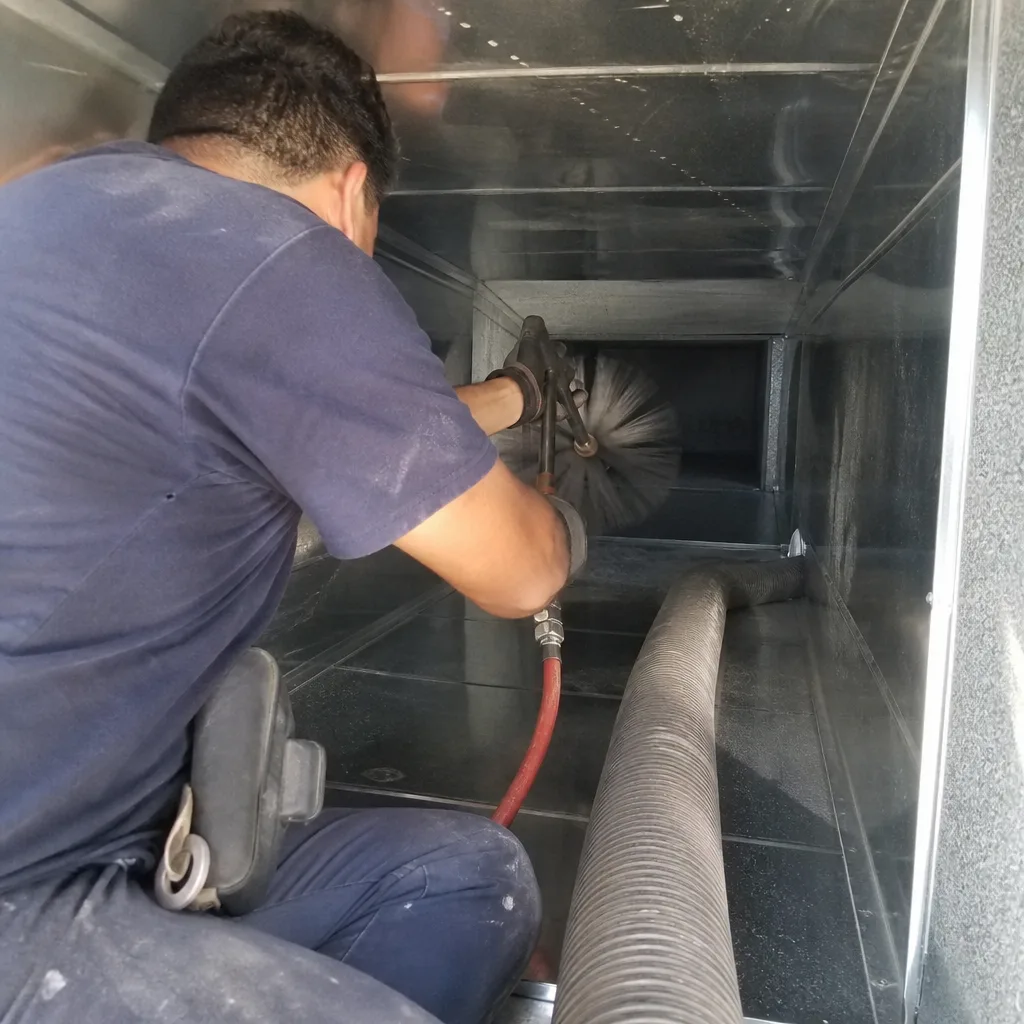
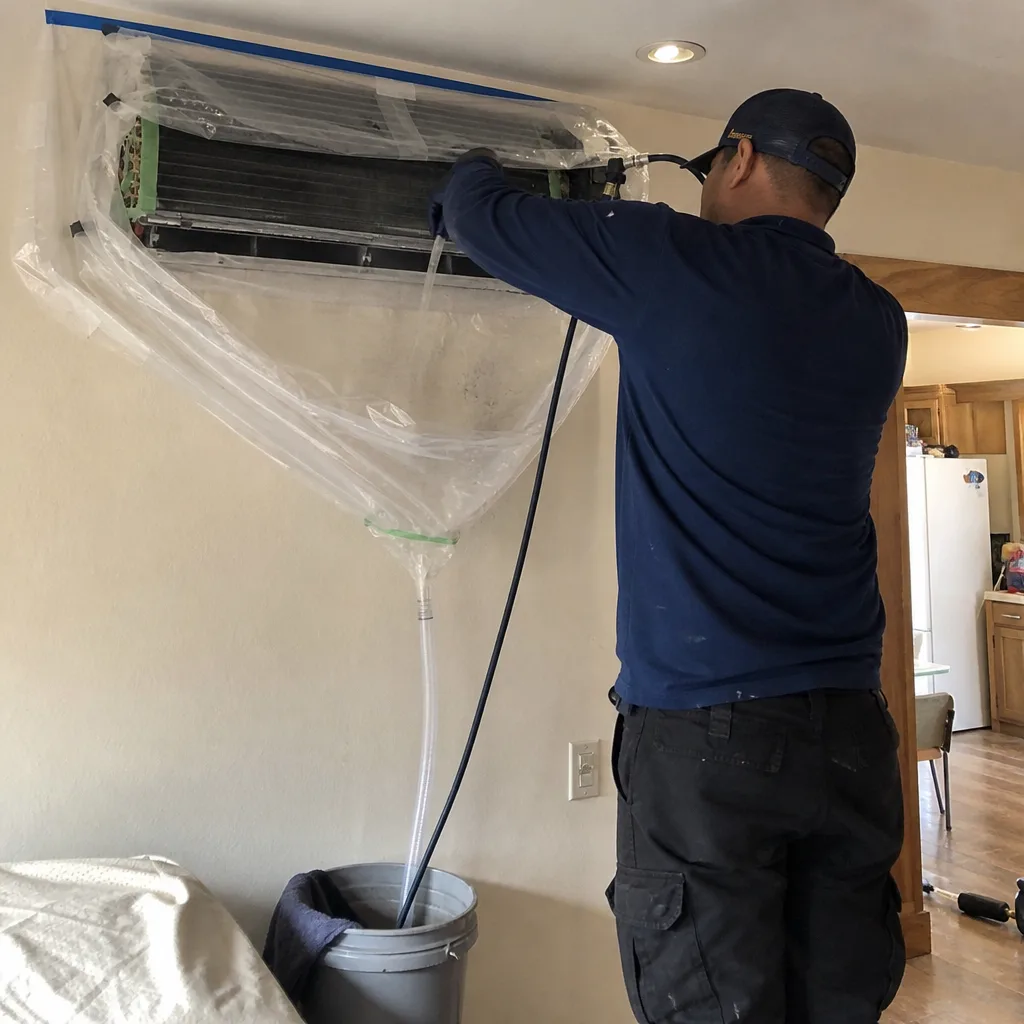
This is the brushing, whipping, or compressed-air disruption that loosens debris adhered to duct walls. Homeowner tools can agitate the first foot or two of duct. Professional equipment, such as Rotobrush systems with powered rotary brushes sized to duct diameter, agitate the full length of each duct run, including elbows and transitions that accumulate debris. The brush head is navigated on a flexible cable that extends 25+ feet, far beyond any household vacuum hose.
Step 2: Negative-Pressure Source Capture (Inaccessible)
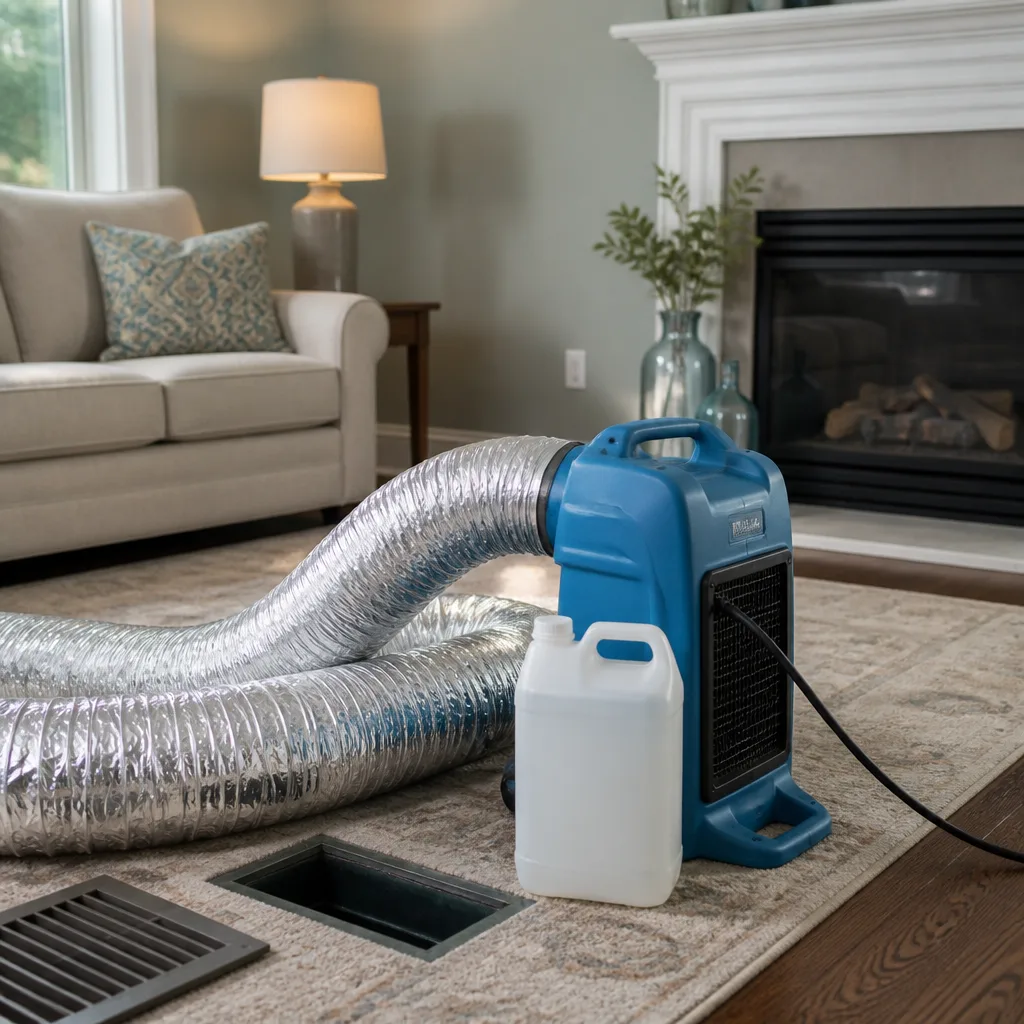
This is the step that defines professional work. A high-volume vacuum unit, typically mounted on a truck or portable Nikro HEPA system, creates negative pressure at the air handler or a sealed duct access point. This suction captures debris the moment it is dislodged, pulling it through the duct and into a containment vessel before it can enter living spaces. No household vacuum, even a “shop vac,” produces sufficient airflow (measured in cubic feet per minute, or CFM) or maintains the sealed duct environment required for source capture. A standard shop vac moves roughly 100-150 CFM. Professional negative-pressure systems operate at 4,000-15,000 CFM, depending on system design.
Without this step, agitated debris becomes airborne inside the duct system. The next HVAC cycle blows it into rooms. This is not theoretical. We’ve documented it.
Step 3: Component-Level Cleaning (Inaccessible)
The blower compartment, evaporator coil, and plenum (the central distribution box where supply ducts originate) collect the heaviest debris loads in any system. These components require panel removal, electrical lockout procedures, and specialized cleaning agents that do not damage coil fins or leave residue. In Frisco, where cooling systems run heavily from late April through October, evaporator coils in homes near the Preston Road corridor commonly show biofilm growth from condensation combined with fine dust infiltration. Coil cleaning without proper technique risks fin damage, refrigerant line stress, and voided manufacturer warranties.
The Risk of Partial Cleaning: Redistributed Debris
This is what the industry rarely explains, and it’s the core reason this guide exists.
When a homeowner brushes debris loose in a duct opening without source capture, the debris doesn’t simply fall back into place. It becomes airborne within the duct system. The next heating or cooling cycle distributes it through supply registers into living spaces. The result is not cleaner ducts. It’s temporarily dirtier air, with particles now respirable at room height rather than settled in ductwork.
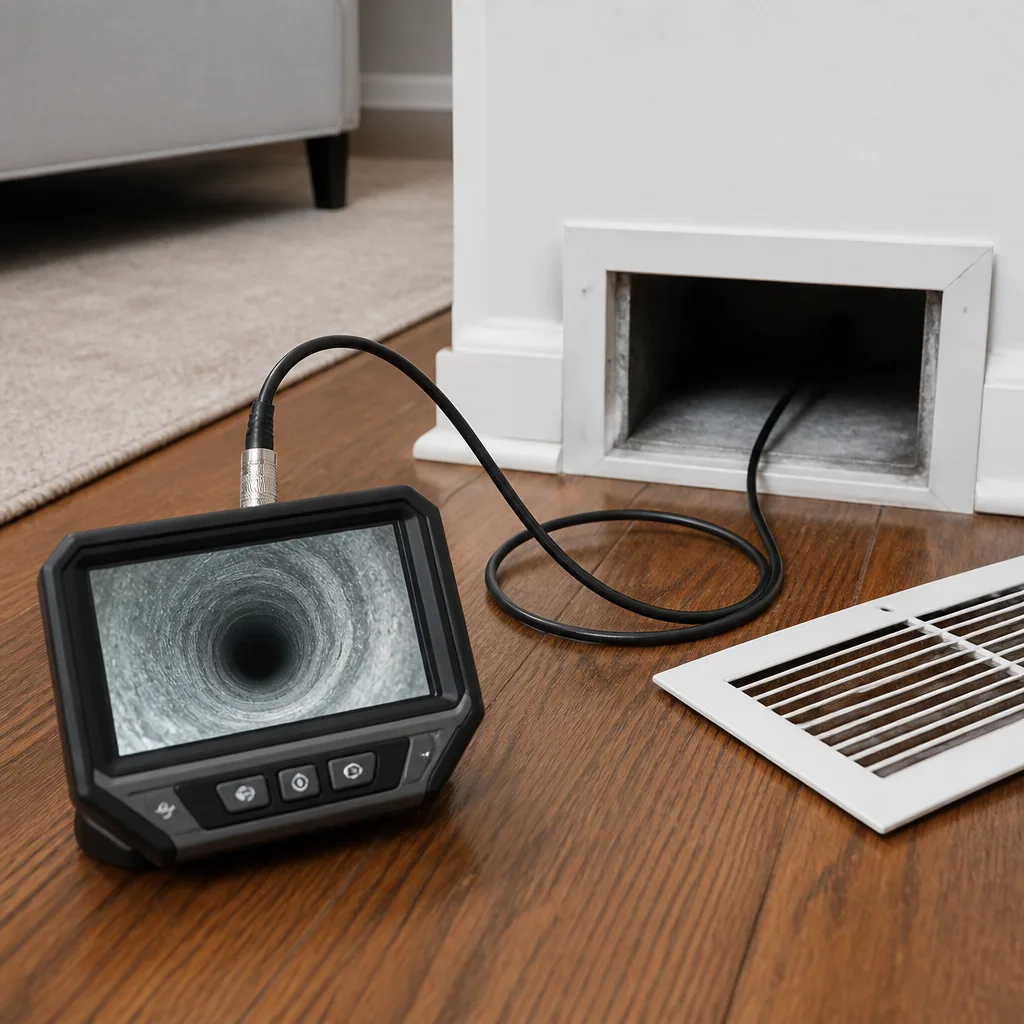
In our work across Frisco, we’ve documented this phenomenon photographically. A homeowner in The Trails at Lone Star Ranch had used a long-handled brush and shop vac on visible register openings two weeks before calling us. Our camera inspection showed agitated debris patterns: dust streaks on duct walls where brushing had occurred, with heavier accumulation 3-6 feet downstream where airborne particles had resettled. The supply registers in the master bedroom showed elevated particulate counts when we tested with a handheld particle counter. The homeowner’s DIY effort had moved debris, not removed it.
This isn’t a failure of effort or intelligence. It’s a failure of equipment capability. Negative-pressure source capture is not a refinement of vacuuming. It’s a different physical process that requires sealed duct access and industrial airflow volume.
The same principle applies to compressed-air “duct cleaning” services that skip proper vacuum attachment. We’ve found these in Frisco’s competitive market: technicians who blow compressed air through registers without source capture, creating the impression of cleaning while redistributing debris. The customer sees dust puff from registers, interprets this as “working,” and pays for a service that leaves the system dirtier than it started. Our Air Duct Cleaning in Frisco process documents every duct run photographically to verify debris removal, not redistribution.
Honest Cost Comparison: DIY vs. Professional in Frisco
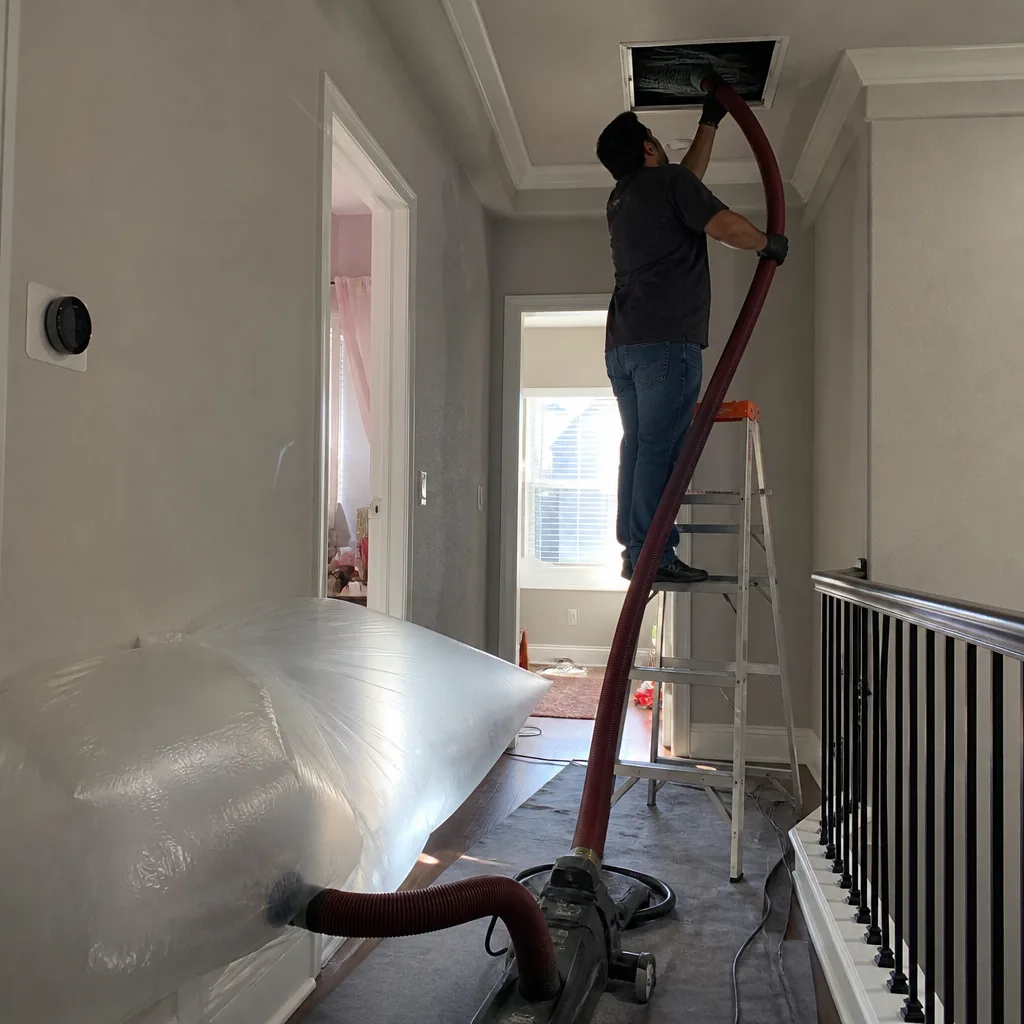
Cost comparisons fail when they compare unequal scopes. Here’s what each dollar amount actually covers.
DIY Supply Costs
| Item | Cost | What It Actually Cleans |
|---|---|---|
| Register brush set | $15-$25 | Register surfaces only |
| Extendable duct brush (6 ft) | $25-$40 | First 6 feet of accessible duct |
| Shop vacuum with HEPA filter | $80-$150 (or owned) | Loose debris at duct openings; no source capture |
| Coil cleaner (foaming) | $12-$18 | Evaporator coil surface (if accessible) |
| MERV-rated filters (4-pack) | $40-$80 | Return air filtration |
| Total realistic DIY investment | $80-$150 | Register surfaces, 12-18″ of duct, filter replacement |
Professional Service Costs in Frisco
| Scope | Price Range | What It Covers |
|---|---|---|
| Whole-system air duct cleaning | $350-$550 | All supply and return duct runs, register removal/cleaning, negative-pressure extraction, documented photo record |
| Whole-system + HVAC component cleaning | $500-$750 | Above plus blower compartment, evaporator coil, plenum cleaning |
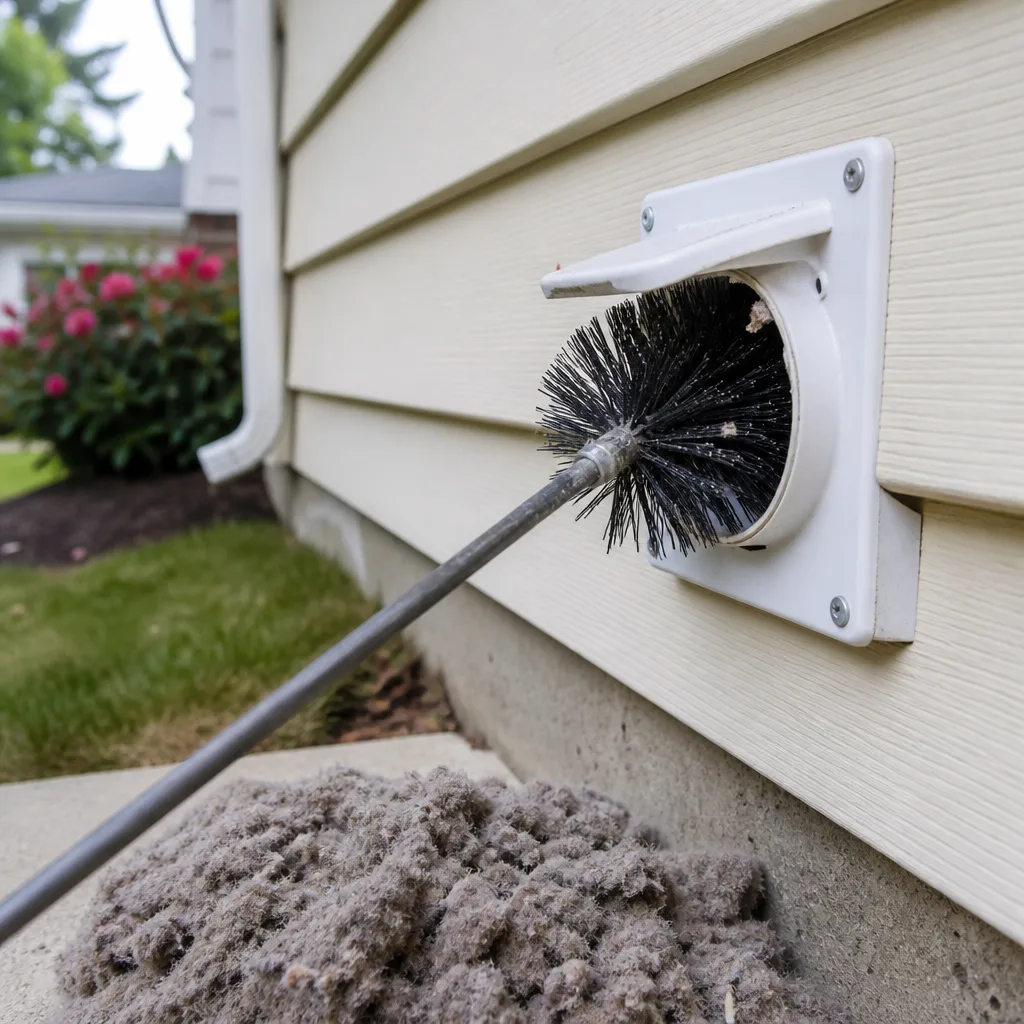
| Dryer vent cleaning (add-on or standalone) | $120-$200 | Full vent run from dryer to exterior termination, lint removal, airflow verification |
The meaningful comparison is not $150 vs. $500. It’s 15% of debris surface area addressed vs. 100%, with source capture vs. redistribution risk, with photographic documentation vs. no verification. For Frisco homeowners who purchased homes between 2015 and 2025, many of which were built during the area’s rapid construction boom, the debris load from construction residue and post-occupancy accumulation often justifies professional attention every 4-6 years.
CleanRun Air Duct Cleaning Frisco operates under Haven Standard Clause 1: written price delivered before any work starts, every time. Our CleanRun Air Duct Cleaning Frisco home page details the full scope included in every quote.
How Frisco’s Climate Affects Duct Contamination
Frisco’s specific climate patterns create duct contamination profiles that differ from national averages. Understanding these patterns helps homeowners decide when DIY maintenance suffices and when professional cleaning addresses accumulated climate-specific debris.
High Cooling Load and Biofilm Risk
North Texas cooling seasons run 180+ days annually in most years. Frisco’s July and August average highs exceed 95°F, with sustained humidity that keeps evaporator coils wet for months. This creates ideal conditions for biofilm, a microbial layer that adheres to coil surfaces and duct walls near the air handler. Biofilm is not dust. It does not vacuum away. It requires mechanical agitation combined with antimicrobial treatment, applied with equipment that protects coil integrity. We’ve found active biofilm in 40% of Frisco systems during initial inspections, particularly in homes with oversized AC units that short-cycle and fail to dehumidify adequately.
Wind-Borne Particulate from Development
Frisco’s continued growth means active construction in nearly every sector. Wind from the south and southwest carries fine particulate, drywall dust, and landscaping debris into outdoor HVAC intakes. Homes near active development in areas like The Grove at Frisco or PGA Frisco show elevated coarse particulate in return ductwork. This debris is heavier than household dust and settles in low-velocity sections of duct runs, beyond the reach of DIY tools.
Pollen Peaks and Filter Loading
Frisco’s tree pollen season, dominated by oak and cedar, peaks in March and April. Grass pollen extends through May. During these weeks, standard filters load rapidly, and bypassed pollen enters ductwork when filters are overloaded or improperly seated. Annual filter changes before pollen season, combined with professional duct cleaning every 4-6 years, manage this load effectively. See our Seasonal Air Duct Cleaning Care for Frisco: Year-Round Homeowner’s Guide for timing recommendations.
Hard Water Scale and Coil Efficiency
Frisco’s municipal water supply, sourced from North Texas reservoirs, carries moderate hardness. Evaporator condensate with dissolved minerals leaves scale residue on coil fins over time, reducing heat transfer efficiency. This scale is not addressed by duct brushing. It requires professional coil cleaning with appropriate chemistry, documented in our HVAC Cleaning in Frisco service scope.
A Practical DIY Maintenance Protocol Between Professional Cleanings
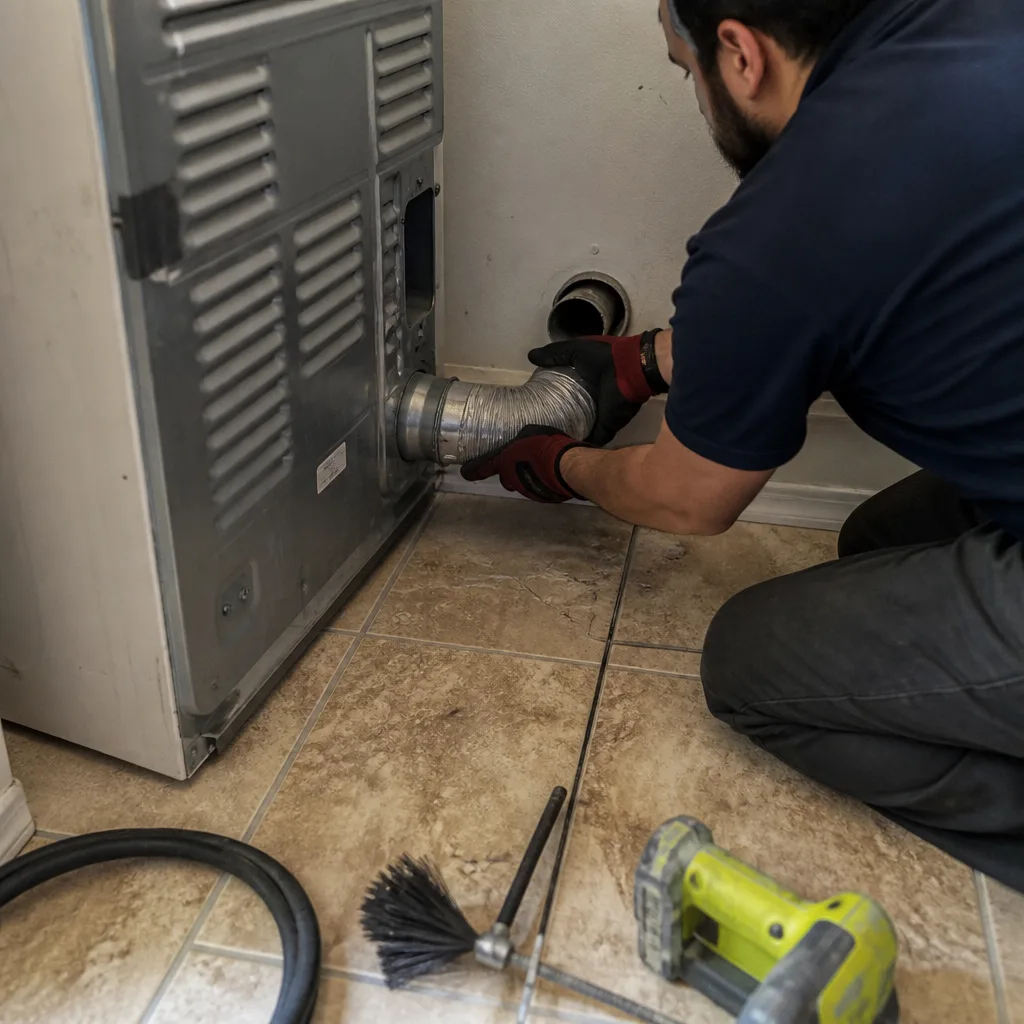
Homeowner maintenance has value when it’s scoped realistically. Here’s a protocol that extends professional cleaning intervals without overstating what it accomplishes.
- Quarterly: Register inspection and cleaning. Remove all floor and wall registers. Wash in warm water with mild detergent. Dry completely before reinstalling. Inspect duct openings with flashlight; vacuum visible debris with hose attachment. Note any musty odors, visible mold, or insect activity, these require professional assessment.
- Monthly: Filter inspection and replacement as needed. Hold filter to light. If you cannot see light through it, replace it. In Frisco’s peak cooling months (June-September), check every 30 days. Write the installation date on the filter frame. Verify correct MERV rating for your system, never exceed manufacturer specification.
- Annually: Return grille and blower compartment visual check. With system powered off, remove the return air grille. Vacuum the return duct opening. If your air handler is in an accessible attic or closet, visually inspect the blower compartment through the access panel (do not remove sealed panels). Note dust accumulation on the blower wheel. Heavy buildup indicates the system is moving debris rather than air, schedule professional service.
- Biennially: Exterior inspection of ductwork and vents. Check outdoor condenser unit for debris clearance (2 feet minimum). Verify exhaust vents (dryer, bathroom fans) terminate properly and damper flaps operate. In Frisco, lint accumulation at dryer vent terminations is common due to wind patterns that drive debris against north-facing walls.
- Every 4-6 years: Professional whole-system cleaning. Schedule before visible degradation, heavy accumulation is harder to remove and increases risk of component damage. Homes with pets, recent renovation, or respiratory-sensitive occupants may need 3-4 year intervals.
This protocol acknowledges what homeowner tools can do (surface maintenance, filter management, early problem identification) and what they cannot (deep duct extraction, component cleaning, source capture of dislodged debris).
What Professional Cleaning Actually Delivers
Professional duct cleaning varies enormously in quality. Understanding what genuine professional service includes helps Frisco homeowners evaluate quotes and avoid the $79 coupon trap.
The Documented Photo Record
This is non-negotiable. Every duct run must be photographed before and after. Not a representative photo. Every run. The photo record is the only verification that work occurred throughout the system, not just at accessible registers. At CleanRun, this has been standard practice since our first job in 2013. Customers receive the photo record as a deliverable, not a sales tool shown on a tablet and then deleted.
We’ve responded to “cleaned” systems in Frisco where competitors showed a single dramatic before/after from one register, while 80% of duct runs remained untouched. The photo record prevents this. Haven Standard Clause 2, Documented Verification, requires it.
Written Scope and Price Before Work Starts
There is no legitimate reason for a duct cleaner to begin work without a written scope and fixed price. The “we’ll see what we find” approach enables the bait-and-switch that defines this industry’s reputation. CleanRun’s written price, delivered under Haven Standard Clause 1, specifies: number of supply and return runs to be cleaned, components included (blower, coil, plenum), treatments applied, and total price. No per-vent add-ons. No “surprise” discoveries that inflate the invoice.
Equipment Verification
Professional-grade equipment matters because it determines what can be physically accomplished. Rotobrush systems with powered rotary brushes navigate flex duct and rigid metal. Nikro and Abatement Technologies HEPA vacuums maintain negative pressure sufficient for source capture. Honeywell and Aprilaire media filters installed during service meet documented efficiency standards. Technicians should identify their equipment by manufacturer and model on request. If a technician cannot or will not name their equipment, they are likely using consumer-grade tools in a professional context.
The 365-Day Done Right Promise
Accountability after service completion separates genuine professionals from itinerant operators. Our written guarantee, included with every job record, states: if the work is not right, we make it right. This is not subject to manager discretion. It is a contractual obligation, backed by a business that has served 52,000+ homes since 2013 and maintains permanent operations in the Frisco market.
How to Choose a Professional Duct Cleaner in Frisco
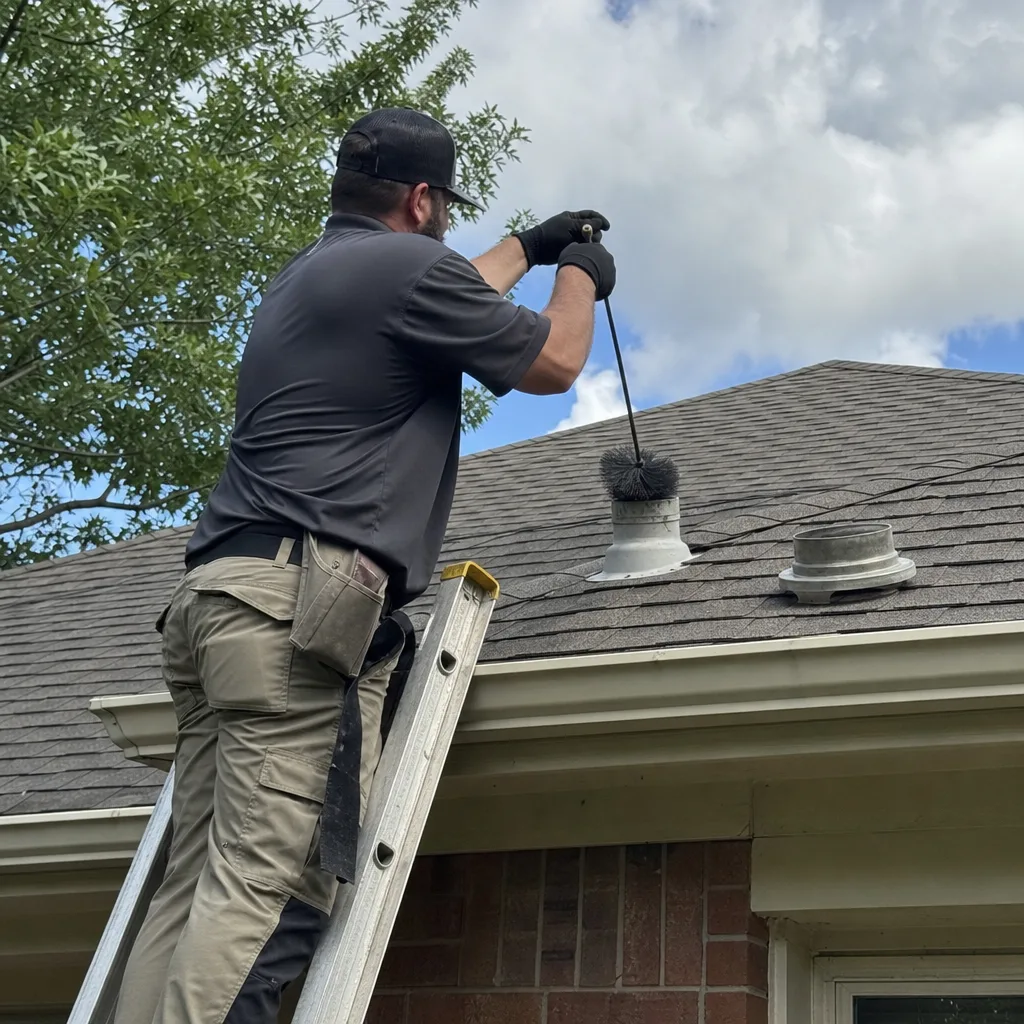
The Frisco market includes legitimate operators, coupon-driven bait-and-switch services, and compressed-air-only outfits that redistribute debris. Here’s how to distinguish them.
- Verify licensing and insurance. Texas requires HVAC contractors to hold a TDLR license for work that involves system components. Ask for license number and verify through TDLR’s online lookup. CleanRun publishes its license number on every page, not buried in a footer.
- Demand written price before work starts. Any hesitation here is a red flag. “We need to see it first” is acceptable for diagnostic work, not for a standard cleaning scope. The number of ducts, registers, and components is knowable before arrival.
- Request equipment specifics. “Professional equipment” is meaningless. Ask for manufacturer names: Rotobrush, Nikro, Abatement Technologies. Search them independently. Verify the equipment exists and is appropriate for residential duct cleaning.
- Ask about the photo record. Will you receive photos of every duct run, before and after, as a permanent record? Or just a sales presentation on a tablet? The answer reveals whether verification is a deliverable or a performance.
- Check for permanent local presence. Frisco’s growth has attracted operators with no fixed address, using disposable phone numbers and rented equipment. A business with established local operations, background-checked uniformed technicians (Haven Standard Clause 3: Verified Crews), and identifiable ownership can be held accountable. CleanRun is independently owned and operated under the Haven Standard, with Tomas Reyes as owner.
- Understand what the quote excludes. Some low quotes cover only supply ducts, excluding returns, blower, and coil. Others charge per vent, turning a $199 quote into $600+ at invoicing. A legitimate quote is comprehensive or explicitly itemized, not deliberately incomplete.
For dryer vent specifically, which involves different equipment and fire-safety considerations, see our Dryer Vent Cleaning in Frisco page.
Common Mistakes to Avoid
- Using a shop vac without source capture. This agitates debris into the airstream without sufficient suction to remove it. The next HVAC cycle distributes particles into living spaces. We’ve documented this pattern in Frisco homes where homeowners reported increased dustiness after “cleaning.”
- Installing MERV 13+ filters on standard residential systems. The higher filtration seems logical but restricts airflow, strains blower motors, and can cause evaporator coil freezing in Frisco’s high-humidity summers. Check manufacturer specifications before upgrading.
- Ignoring flex duct damage during DIY attempts. Flex duct, common in Frisco homes built 2015-2020, has a mylar outer layer and fiberglass inner liner. Aggressive brushing or vacuum attachment can tear the inner liner, creating leaks that reduce system efficiency and pull attic air into supply ducts.
- Treating register cleaning as duct cleaning. Clean registers improve appearance and reduce immediate particulate at room level. They do not address the duct runs where debris accumulates, nor the components that move air.
- Accepting “blow-and-go” services. Compressed air through registers without negative-pressure vacuum attachment is not duct cleaning. It’s debris redistribution, often sold at low prices to homeowners who cannot verify what occurred inside the ductwork.
- Neglecting dryer vents while focusing on HVAC ducts. Dryer vent blockage is a leading cause of residential fires. In Frisco’s windy conditions, exterior lint accumulation accelerates. HVAC duct cleaning does not address dryer vents; they require separate service with specialized equipment.
- Waiting for visible dust or odors before acting. By the time debris is visible at registers or mustiness is detectable, accumulation is substantial. Proactive maintenance, including scheduled professional cleaning, prevents the conditions that lead to visible problems.
When to Call a Professional
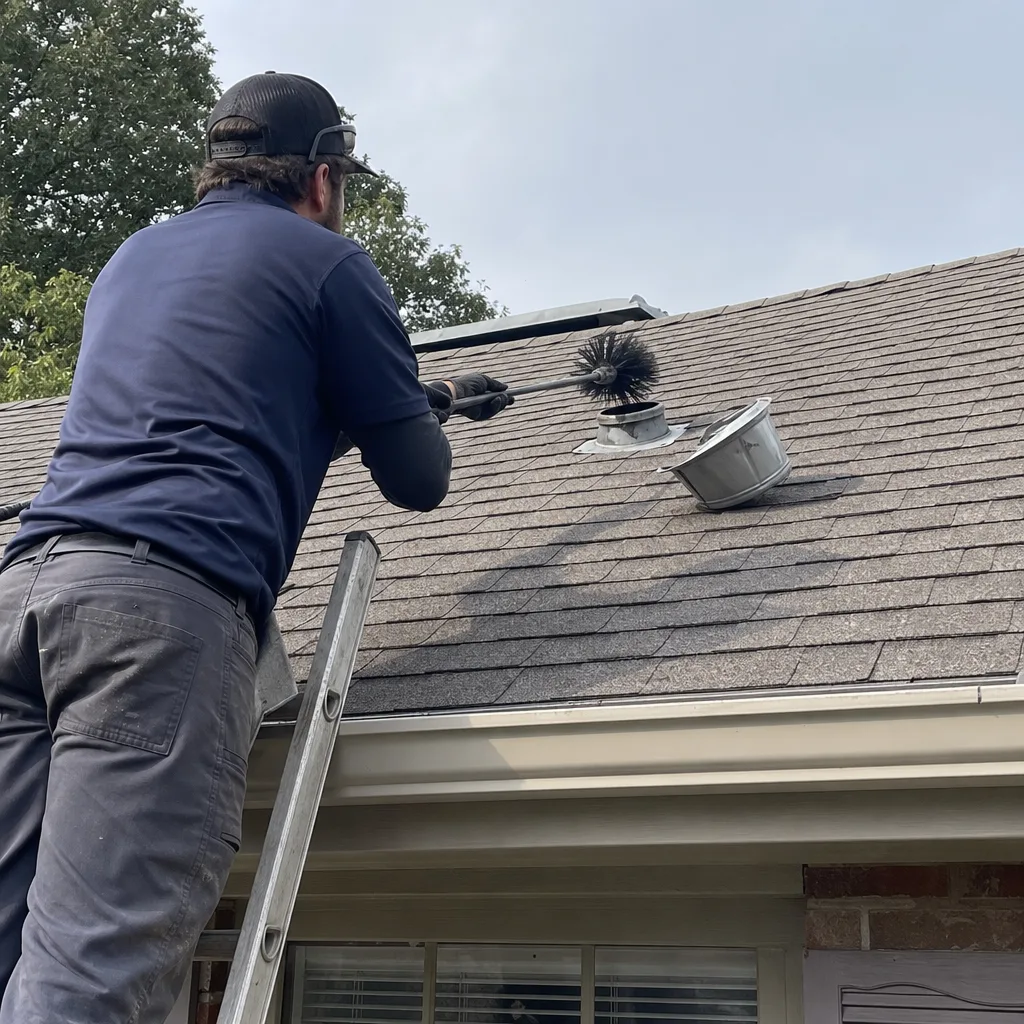
Call a professional when: you cannot see light through the duct beyond the first bend; you smell mustiness or detect mold when the system runs; you’ve recently completed renovation work (drywall dust is particularly damaging to components); your home was built during Frisco’s 2015-2022 construction surge and has never had professional duct cleaning; your energy bills have risen without usage changes, indicating restricted airflow; or you’ve attempted DIY maintenance and want verification of deep-duct condition.
CleanRun Air Duct Cleaning Frisco offers free estimates in Frisco. Every estimate includes a written scope and fixed price before any work begins, under Haven Standard Clause 1. Call (940) 290-8552 to schedule.
Frequently Asked Questions
Whole-system cleaning for a typical Frisco single-family home runs $350-$550, with HVAC component cleaning (blower, coil, plenum) adding $150-$200. The price depends on system size, accessibility, and contamination level. CleanRun delivers a written price before work starts, with no per-vent add-ons. Call (940) 290-8552 for an exact quote, estimates are free.
Low quotes typically exclude scope: returns only, no component cleaning, or per-vent pricing that multiplies at invoicing. Some operators use compressed air without vacuum capture, which is faster but redistributes debris rather than removing it. A legitimate quote specifies every duct run, every component, and the total price before work begins. The $79 coupon model survives by converting low initial quotes to inflated invoices through “discovered” problems.
Require a documented photo record of every duct run, before and after, delivered as a permanent job record. Not a tablet presentation. Not a representative sample. Every run. This is the only verification that debris was removed from the full system, not just visible register areas. CleanRun has included this on every job since 2013.
For typical Frisco homes, every 4-6 years with normal occupancy and standard filter maintenance. Homes with pets, recent construction, respiratory-sensitive occupants, or locations near active development may need 3-4 year intervals. Frisco’s extended cooling season and wind-borne construction particulate create higher debris loads than national averages suggest.
You can clean register surfaces and the first 12-18 inches of accessible ductwork effectively. Beyond that, household equipment lacks the airflow volume and sealed access required for source capture. Attempting deep cleaning without negative-pressure extraction risks redistributing debris into living spaces. Use DIY tools for maintenance between professional cleanings, not as a replacement.
Duct cleaning addresses the distribution network: supply and return duct runs, registers, and grilles. HVAC cleaning includes the air handler components: blower compartment, evaporator coil, and plenum. These components collect the heaviest debris and have the greatest impact on system efficiency and air quality. CleanRun offers both, scoped separately or combined, with written pricing for each. See our HVAC Cleaning in Frisco page for component-specific details.
The Bottom Line
DIY air duct maintenance has a defined, useful scope: register cleaning, accessible duct vacuuming, and diligent filter management. These tasks meaningfully reduce particulate load and extend professional cleaning intervals. But the negative-pressure extraction that removes debris from the full duct system, and the component cleaning that maintains HVAC efficiency, require equipment and training beyond household tools. The risk of partial DIY cleaning, redistribution rather than removal, is real and documented. For Frisco homeowners, the honest calculation is not $150 vs. $500, but 15% of debris surface area addressed with redistribution risk vs. 100% with source capture, photographic verification, and written accountability. Professional service is not always necessary on a fixed schedule, but when it is, the quality gap between genuine and nominal service is the difference between clean ducts and redistributed debris. Explore more guides & resources on our blog.ner air and a lighter wallet with nothing changed inside the ducts.
Written by Tomas Reyes, Owner at CleanRun Air Duct Cleaning Frisco, serving Frisco since 2013.