
Last updated September 23, 2026
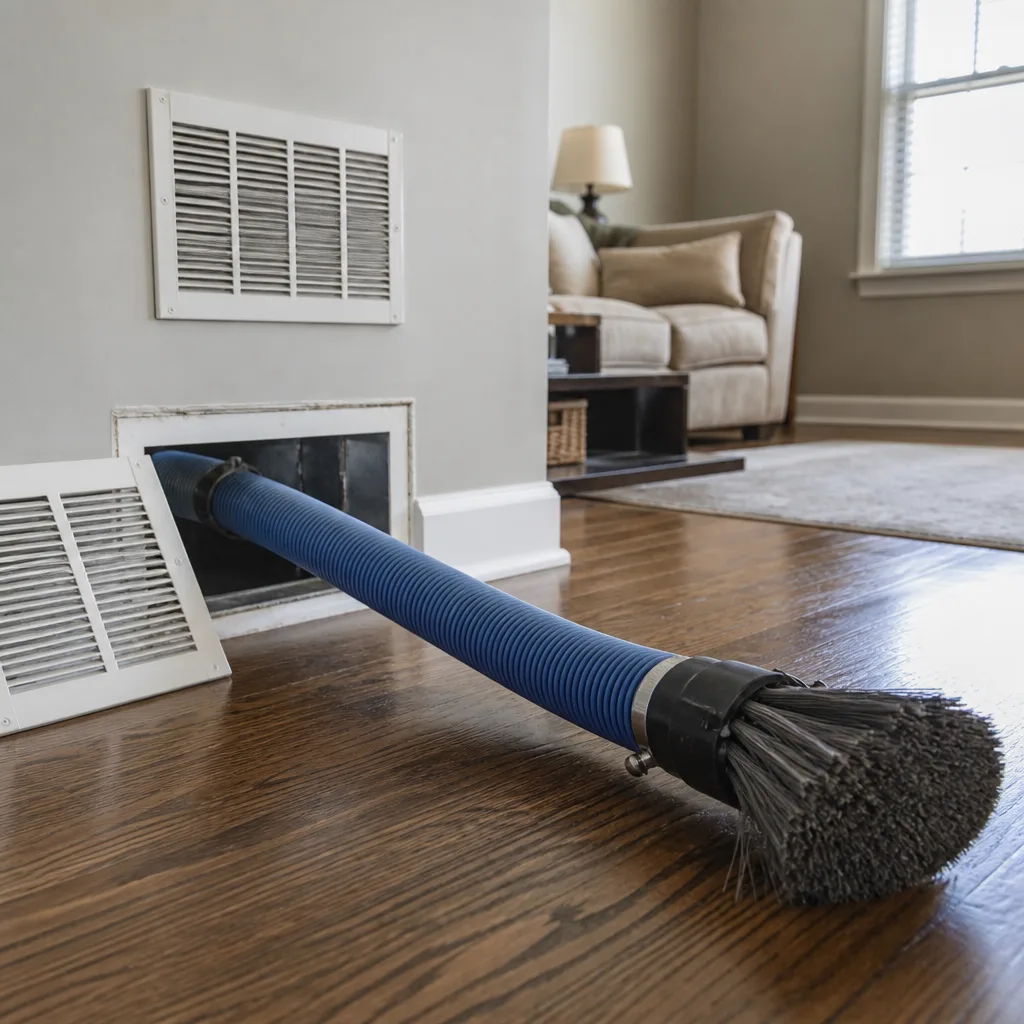
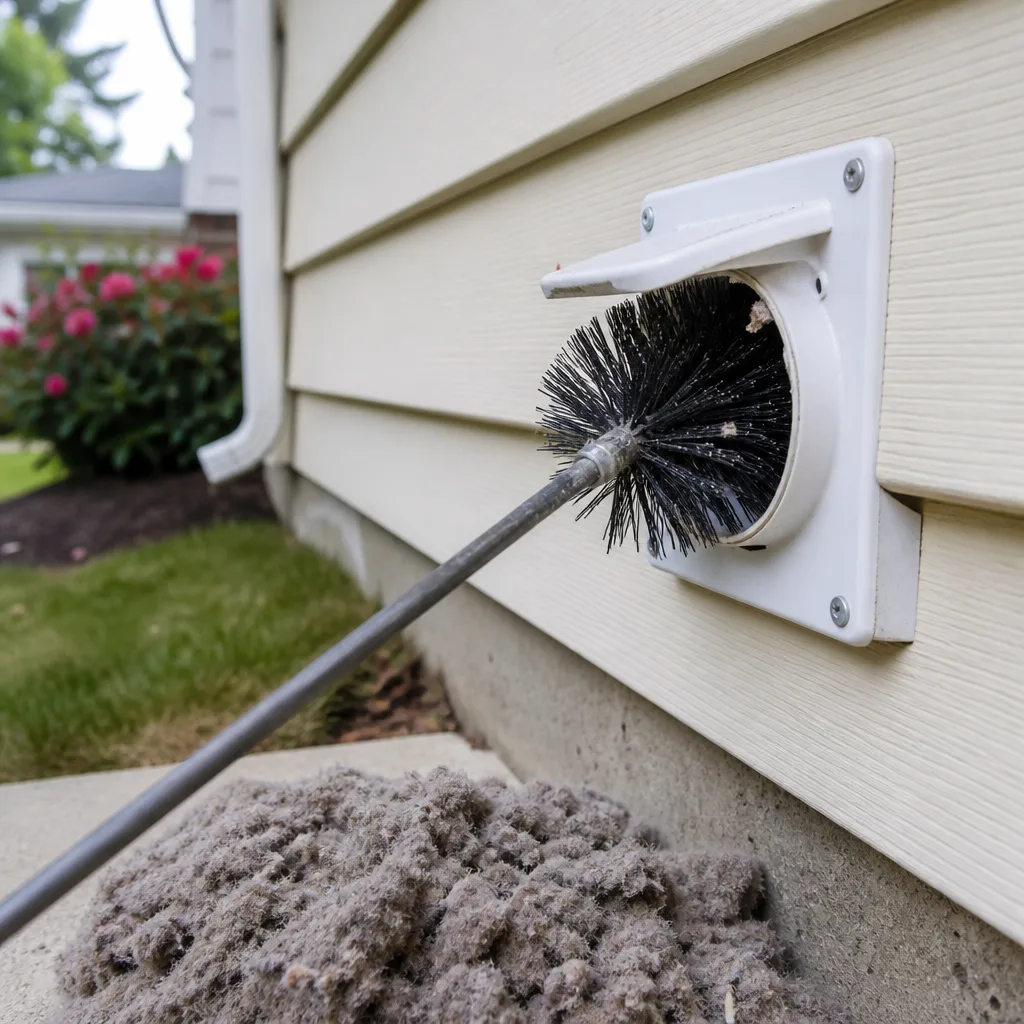
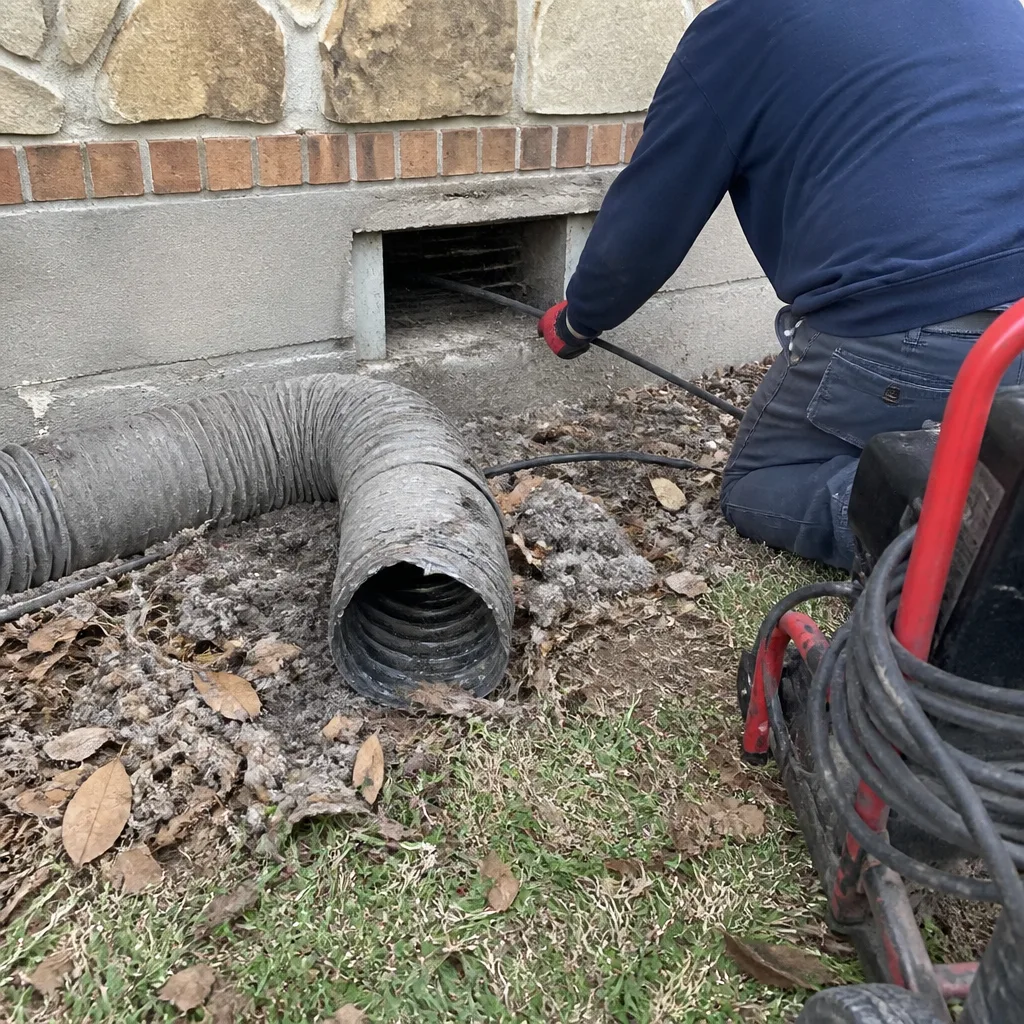
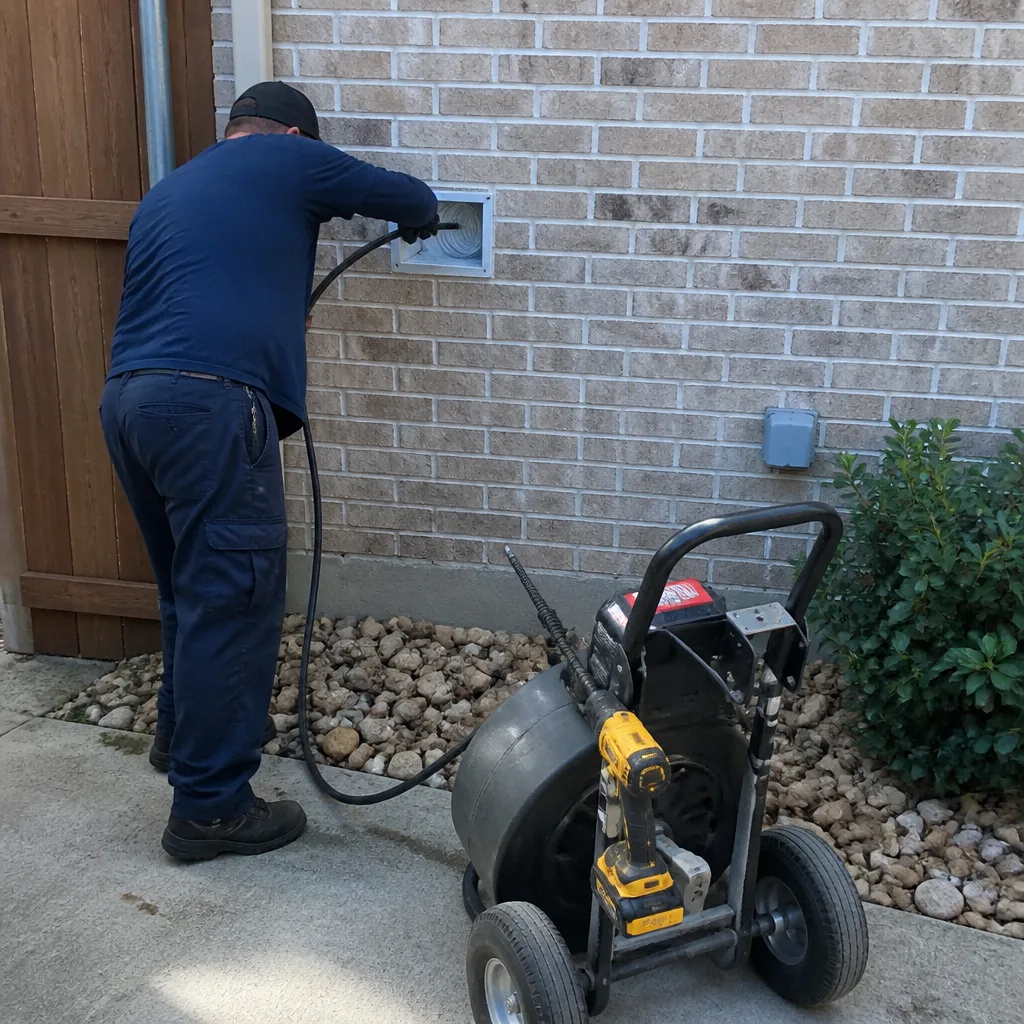
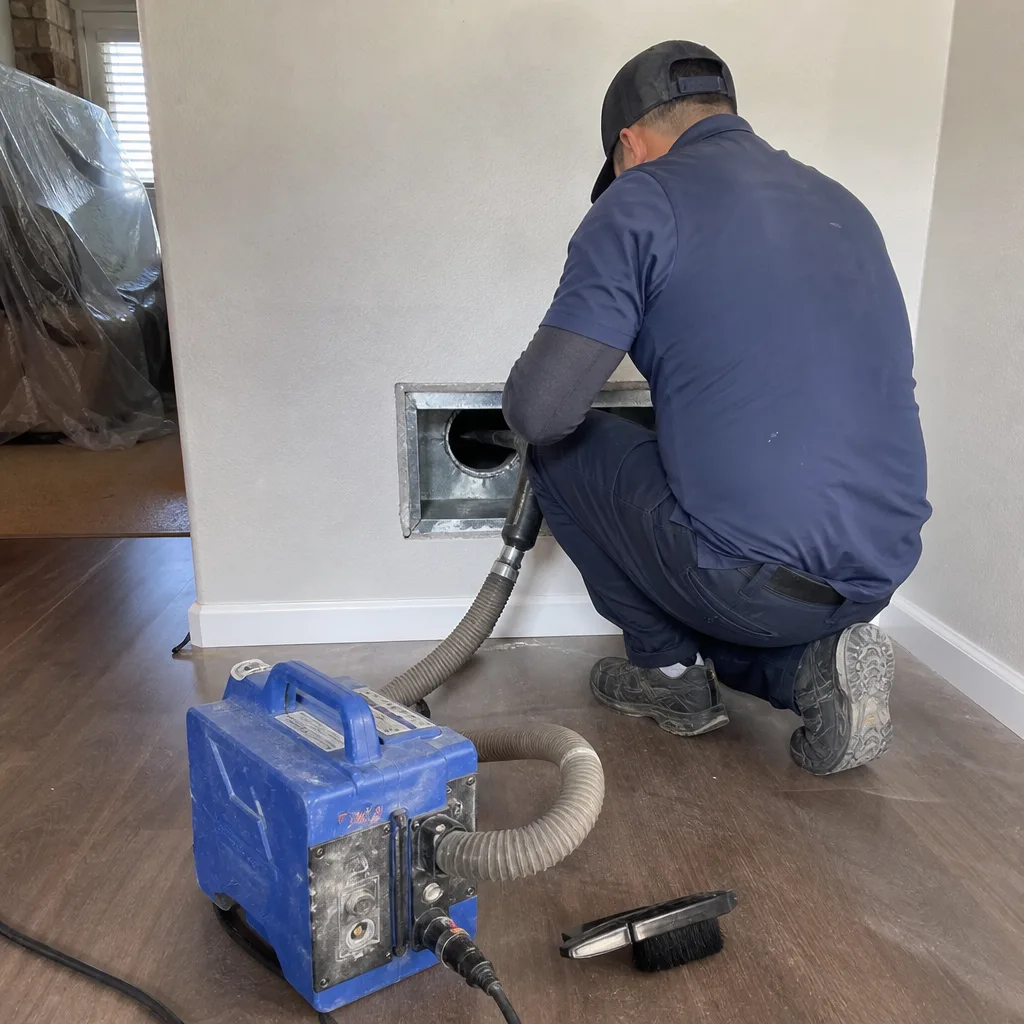
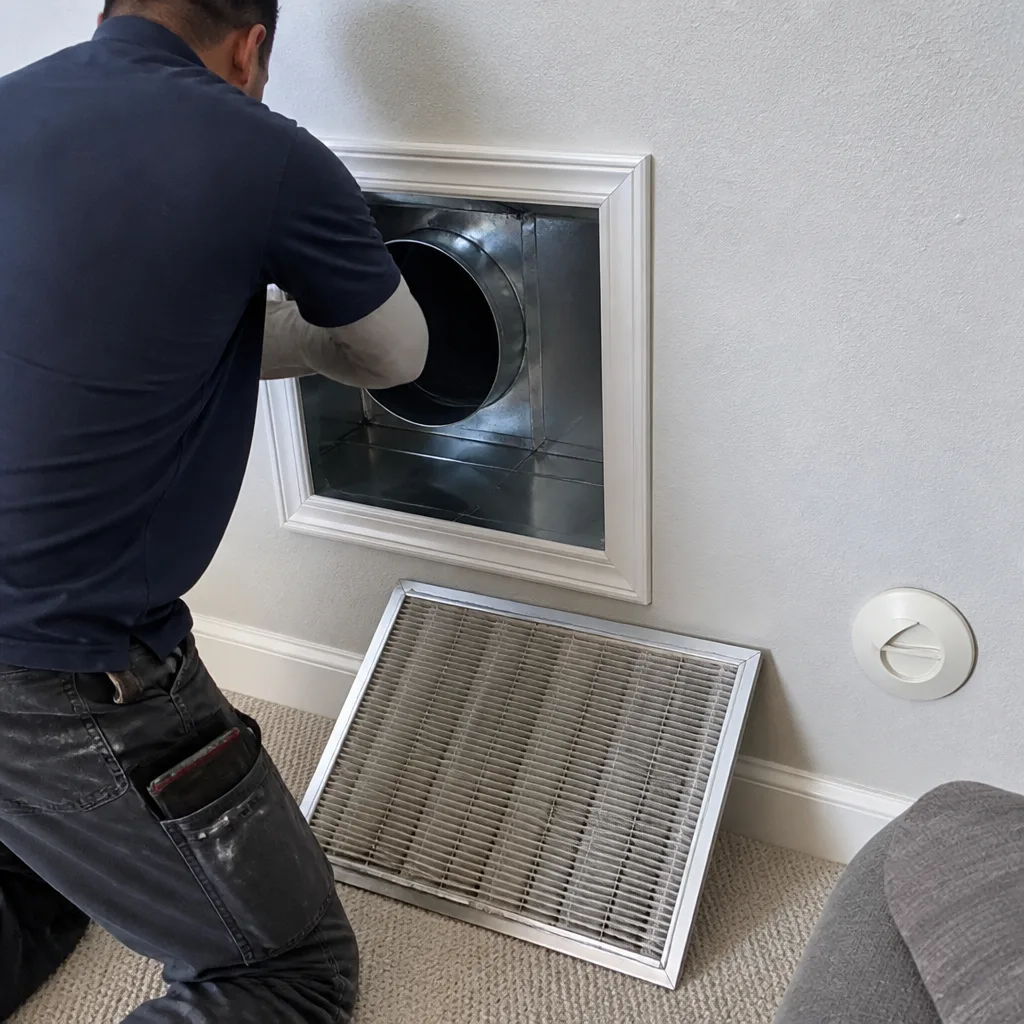
Whole-system duct and dryer vent check with before-and-after photos - you see exactly what came out of your vents
That "$99 whole-house special" is a bait ad - the real number appears once they are in your hallway, or the "clean" is a shop-vac at the register. We photograph the inside of your ducts before and after instead.

 Before
 After
After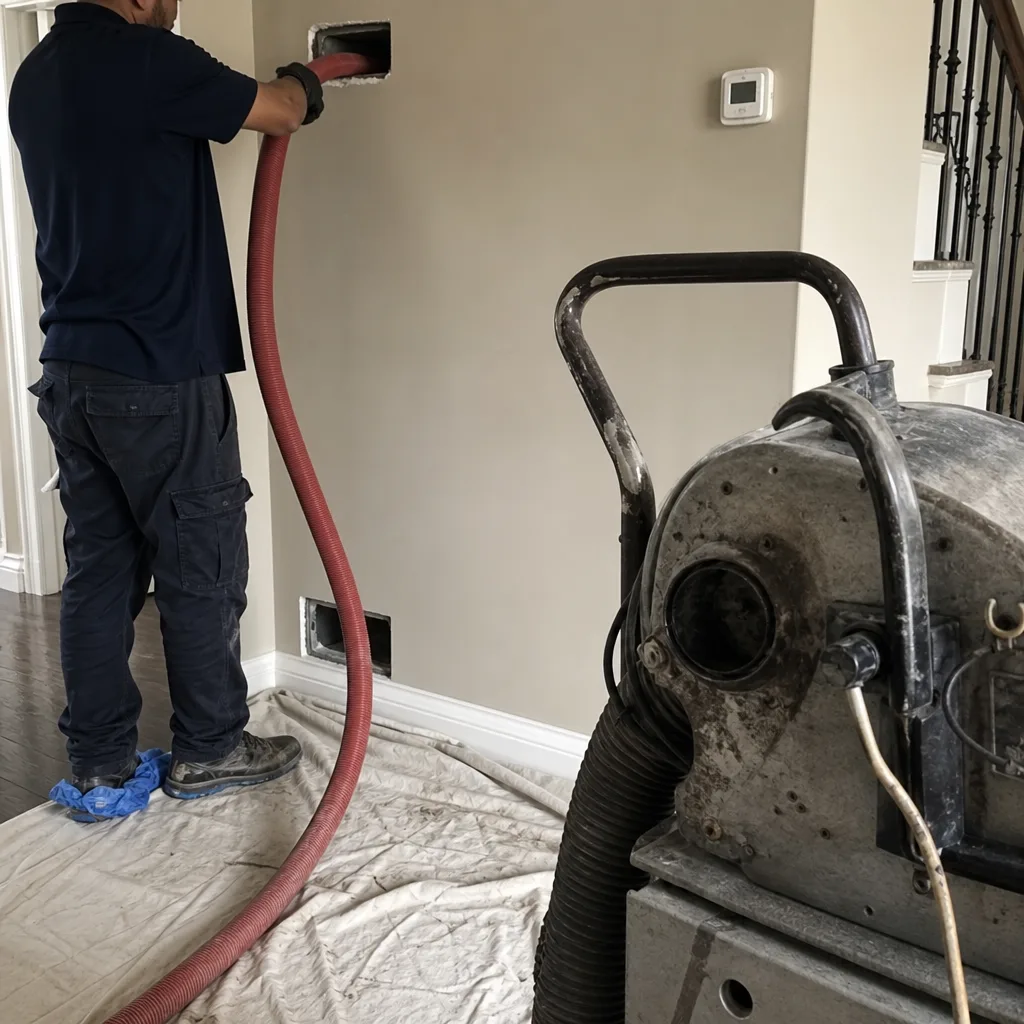 Before
 After
After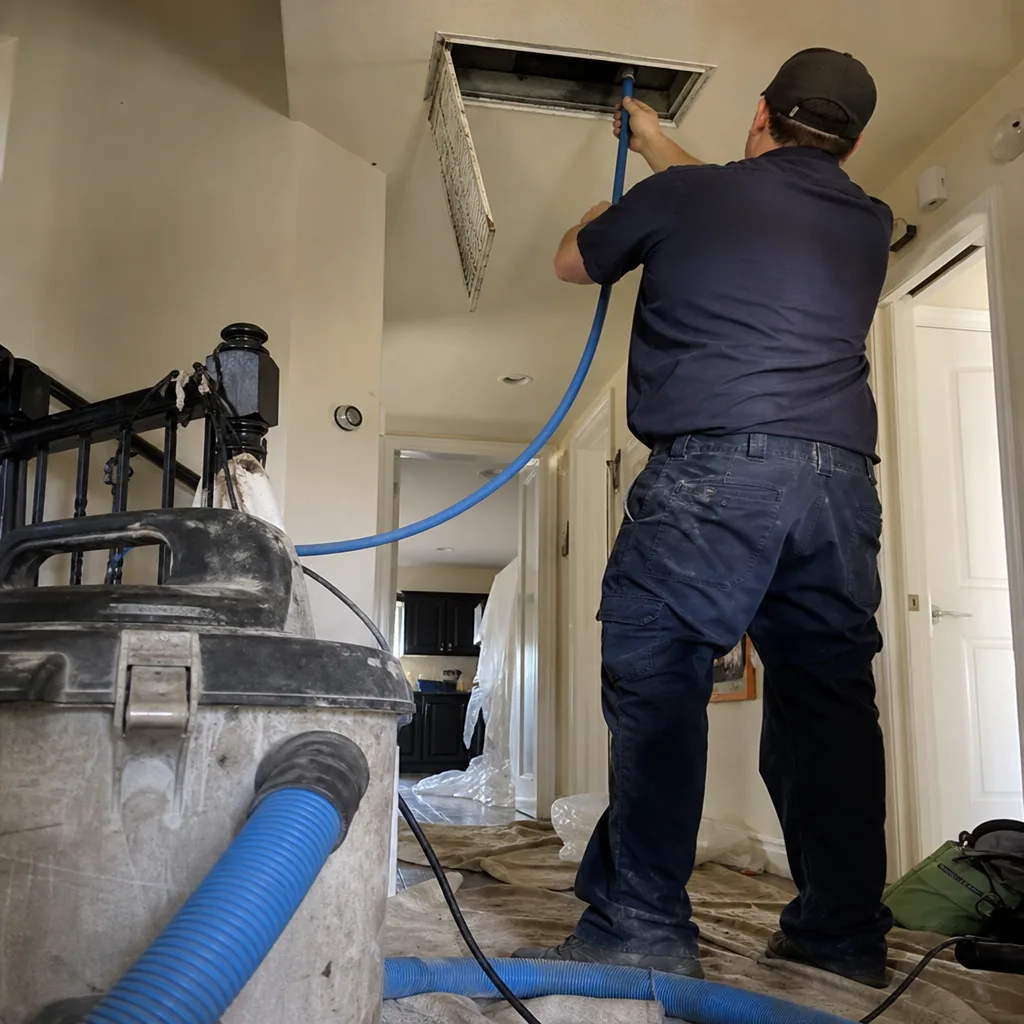 Before
 After
AfterAir Duct Cleaning Warning Signs: A Frisco Homeowner’s Reference Guide
Increased dust on your furniture is the most cited warning sign for duct cleaning. It’s also a symptom of four other problems that duct cleaning won’t fix: a failing filter, a disconnected duct run, negative air pressure from an oversized system, or a return leak pulling attic air. In Frisco, where summer attic temperatures exceed 140°F and new construction in neighborhoods like Phillips Creek Ranch and Newman Village has compressed installation schedules, we’ve found that roughly half the homes calling for “duct cleaning” actually need filter upgrades, duct sealing, or pressure balancing first. This guide shows you what to look for, what it means, and which contractor to call based on what you find. For a deeper dive, see The Complete Guide to Air Duct Cleaning in Frisco.
Quick Answer
The warning signs that actually indicate duct cleaning is needed include visible debris buildup inside supply registers, reduced airflow at specific vents compared to others, and a documented photo record showing accumulation in the duct runs themselves. Most other symptoms - musty smells, allergy flare-ups, or general dustiness - require diagnostic work to separate duct debris from filter failure, duct leakage, or pressure imbalance before spending money on the wrong fix.
Table of Contents
- What You Can See in 10 Minutes: A Room-by-Room Register Inspection
- Dust on Surfaces vs. Debris in Ducts: Telling Them Apart
- Visible Mold at the Register: Surface Problem or Systemic Issue?
- Airflow Imbalance: When Uneven Heating or Cooling Points to Blocked Ducts
- Physical Duct Damage: Signs You Need Repair, Not Just Cleaning
- Warning Signs That Route to a Different Contractor Entirely
- How Frisco’s Climate and Construction Patterns Affect Duct Condition
- What Documentation Should a Duct Cleaning Include?
BeforeAfterWhat You Can See in 10 Minutes: A Room-by-Room Register Inspection
You don’t need tools to start. Remove the floor or ceiling register covers in three rooms: one near the thermostat, one at the far end of the house, and one in a room that feels stuffy. Look inside with a flashlight. What you’re hunting for is debris that has traveled past the register and adhered to the duct walls, not just loose dust that settled after the last filter change.
Here’s what to document:
- Color and texture at the register throat. Gray, fibrous matting usually indicates deteriorating duct liner or degraded filter media. Dark, greasy buildup suggests kitchen aerosols or pet dander that has condensed on duct walls. In Frisco’s hard-water zones, including much of the land east of Preston Road, we’ve also seen white mineral deposits where humidifier overuse has left scale inside metal ductwork.
- Depth of visible debris. If you can see accumulation more than six inches past the register boot, that’s a meaningful signal. Surface dust at the lip is normal; a debris shelf extending into the duct run suggests the system has been operating without adequate filtration for an extended period.
- Return grille condition. The large grille where air enters the system should show uniform color. If the lower third is dark gray and the upper two-thirds are clean, your filter has been bypassing air around its frame, or the filter slot is the wrong size. This is a filter problem, not a duct cleaning need.
- Register-to-register comparison. In a properly balanced system, supply registers should show similar debris patterns. One register with heavy buildup and a clean neighbor ten feet away suggests a disconnected or collapsed duct run serving that room, not a system-wide cleaning need.
Photograph what you find. Date-stamped photos are the only way to compare conditions over time, and they’re the first thing we ask for when a Frisco homeowner calls us for a second opinion on another company’s recommendation.
We’ve been documenting register conditions since 2013, and the pattern is consistent: homes with 1-inch pleated filters changed on schedule show minimal throat buildup even after five years. Homes with washable electrostatic filters or “lifetime” media typically show significant accumulation at the 18-month mark, especially in Frisco’s pollen-heavy spring seasons when cottonwood and oak load the outdoor air.
Dust on Surfaces vs. Debris in Ducts: Telling Them Apart
Surface dust is the most misdiagnosed symptom in residential HVAC. Here’s how to separate the causes before you spend money on the wrong solution.
| What You’re Seeing | Most Likely Cause | What Fixes It |
|---|---|---|
| Uniform dust layer on furniture within 48 hours of cleaning | Filter failure or bypass (wrong size, gaps around frame, or MERV too low for system) | Correct filter specification and installation; verify static pressure |
| Dust concentrated near return grille, minimal elsewhere | Return duct leakage pulling attic or crawlspace air | Duct sealing, not cleaning; negative-pressure test recommended |
| Dust with visible fibers or insulation particles | Deteriorating flex duct liner or duct board erosion | Duct repair or replacement; cleaning will release more particles |
| Dust only when system runs, with visible debris at register throat | Actual duct accumulation being mobilized by airflow | Professional duct cleaning with negative-pressure extraction |
| Dust in new construction or post-renovation home | Construction debris in duct runs from incomplete protection during build | Full system cleaning; verify no drywall screws or large debris remain |
The test we recommend: wipe a surface clean, note the time, and check it after the system has completed three full heating or cooling cycles. If dust appears only after the blower runs, the source is downstream of the filter. If dust accumulates steadily regardless of system operation, the source is ambient infiltration or filter bypass.
In Frisco’s newer neighborhoods, particularly the 2018-2023 builds in Hollyhock and Lawler Park, we’ve documented a specific pattern: builders often install 1-inch filter racks with 16x25x1 slots on 4-ton systems that require 2-inch or 5-inch media for proper surface area. The filter loads in six weeks, bypass begins, and homeowners see dust six months after move-in. Cleaning the ducts in this scenario wastes money; the filter specification is the problem.
Our crews carry a manometer on every truck. If we suspect filter bypass during a duct cleaning evaluation in Frisco, we measure static pressure across the filter and the evaporator coil. Numbers don’t require interpretation. Haven Standard Clause 1 requires a written price before work starts, and we won’t write a scope for duct cleaning if the data points to a filter or pressure problem instead.
Visible Mold at the Register: Surface Problem or Systemic Issue?
Finding mold-colored staining at a supply register triggers immediate anxiety. Most homeowners assume it means the entire duct system is contaminated. Usually, it doesn’t.
Surface mold at the register is typically localized to the register boot, the drywall or ceiling material surrounding it, or the first six inches of visible duct. The cause is almost always a temperature differential: cold supply air meeting warm, humid room air at a metal surface that drops below the dew point. In Frisco, this happens most often in bathrooms, laundry rooms, and rooms with north-facing exterior walls where the duct boot is poorly insulated from the attic.
Systemic mold growth inside duct runs requires three conditions simultaneously: organic food source (dust debris), sustained moisture (usually from a humidifier malfunction, condensate leak, or duct leakage into a moist crawlspace), and stagnant airflow. Remove any one condition and growth stops. This is why simply cleaning visible mold at a register without addressing the moisture source guarantees recurrence.
Here’s the decision tree we use:
- Staining limited to register face and visible boot: Clean with EPA-registered antimicrobial, improve boot insulation, verify room humidity stays below 55%. No duct cleaning required.
- Visible growth extending past first elbow, or musty odor when system runs: Inspection camera required. If growth is confirmed in the duct run, cleaning with antimicrobial application is appropriate. We use Abatement Technologies HEPA-contained equipment for this work, with photo documentation before and after each run.
- Musty odor but no visible growth, odor persists after filter change: Likely evaporator coil or condensate pan issue. Routes to HVAC service, not duct cleaning. The coil is downstream of the filter and can harbor microbial growth that distributes through the entire system.
- Multiple registers showing similar staining patterns: Suggests system-wide humidity control failure or duct leakage in a moist environment. Requires full diagnostic before any cleaning scope is written.
We’ve responded to “mold in ducts” calls in Frisco’s older Stonebriar and Legacy areas where the actual problem was a condensate drain line backing up into the plenum every cooling season. Cleaning the ducts without fixing the drain would have been a $400 annual recurrence. Our written scope under Haven Standard Clause 1 separated the drainage repair from the cleaning, with line-item pricing for each.
One more point: if anyone in your household has immune compromise, don’t self-diagnose. Hire an industrial hygienist for air and surface sampling. CleanRun will perform cleaning only after receiving a written protocol from a qualified third party. This isn’t upselling caution; it’s recognizing that “mold” covers thousands of species with vastly different health implications, and liability for getting it wrong falls on the contractor who acted without data.
Airflow Imbalance: When Uneven Heating or Cooling Points to Blocked Ducts
A room that won’t hold temperature is not automatically a duct cleaning issue. The diagnostic sequence matters.
Start with the simple checks. Is the register open? Is furniture blocking it? Is the duct run damper closed (many Frisco builders install manual dampers at the plenum that gradually shift closed from vibration)? These three causes account for roughly 30% of the “no airflow” calls we field.
Next, compare supply airflow room-to-room. Hold a tissue against the register grille. In a balanced system, the tissue should pull flat with similar force at every supply. If one register barely deflects the tissue while another pulls it hard against the grille, you have a restriction or a leak in that duct run.
Restrictions that cleaning can fix:
- Debris accumulation at a sharp elbow or transition, common in flex duct installations where the installer created a pinch point
- Construction debris (drywall mud, wood scraps, insulation chunks) left in the duct during build
- Filter fragments that detached and lodged downstream of the filter rack
Restrictions that cleaning cannot fix:
- Collapsed flex duct, usually from attic traffic or improper support spacing
- Disconnected duct at a collar or takeoff, dumping conditioned air into the attic
- Kinked flex duct from tight bending radius during installation
- Oversized duct run with velocity too low to deliver air effectively
In Frisco’s summer conditions, a disconnected duct run in a 145°F attic is dumping your cooled air into a space that doesn’t need it, while the connected room swelters. The energy waste is substantial, but the fix is mechanical reconnection and sealing, not cleaning. We’ve found disconnected 6-inch flex runs in attics over homes in The Trails and Panther Creek that had been dumping air for years. The homeowners assumed air duct cleaning would fix the hot room. What fixed it was a $180 reconnection and mastic seal, documented with before-and-after airflow measurements.
Our crews use a digital anemometer to measure face velocity at every register before any cleaning begins. If we find a 40% or greater imbalance between rooms, we stop the evaluation and inspect the attic or crawlspace. Haven Standard Clause 2 requires that we report conditions we observe that affect system performance, even if they’re outside the scope we were called to quote. We don’t clean around a disconnected duct and hope you don’t notice.
Physical Duct Damage: Signs You Need Repair, Not Just Cleaning
Some conditions make duct cleaning actively harmful. Cleaning a damaged duct system with negative-pressure equipment can pull liner fragments, insulation, or disconnected sections into the airflow path, contaminating what was previously clean.
Here’s what to look for if you have attic or crawlspace access:
- Collapsed flex duct. Flex duct should maintain a round or oval cross-section. If you see flat sections, sharp bends, or duct resting directly on ceiling joists without support, the inner liner may be torn. Negative-pressure cleaning will pull fiberglass and vapor barrier material into the airstream. The fix is replacement, not cleaning.
- Disconnected trunk lines. Metal trunk ducts in Frisco attics often connect to flex takeoffs with draw bands. If the draw band has slipped or the flex has pulled off, you’ll see a metal collar with no duct attached, or flex dangling loose. This is a conditioned-air leak, not a debris problem. Sealing and reconnection is required before any cleaning scope makes sense.
- Missing duct board sections. Duct board (fibrous rigid board with foil facing) was common in Frisco construction through the early 2000s. If the foil facing is torn or sections are missing, the fiberglass core is exposed to airflow. Cleaning will erode more material. Replacement with metal or lined metal duct is the correct scope.
- Water staining or rust on metal duct. Indicates past or ongoing condensate leakage, usually from a nearby coil or humidifier. Cleaning won’t fix the moisture source, and wet debris is harder to extract effectively. Fix the leak first, evaluate whether cleaning is still needed after the duct dries.
- Animal entry. Frisco’s expanding development has pushed raccoons, squirrels, and roof rats into residential attics. Chewed flex duct, nesting material at registers, or droppings in the duct run require pest remediation before any HVAC work. We won’t clean a duct with active animal presence; it’s ineffective and creates liability for disturbing contaminated material without proper containment.
Our documented photo record includes attic and crawlspace conditions when we find damage. The customer receives these photos as part of the standard job record, with written scope options for repair, replacement, or cleaning once the damage is addressed. Since 2013, we’ve delivered this documentation on every job, including the 52,000+ homes in our service history.
If you’re unsure what you’re seeing, our CleanRun Air Duct Cleaning Frisco home page includes a photo gallery of common duct conditions we encounter in Collin County homes, with descriptions of what each condition requires.
Warning Signs That Route to a Different Contractor Entirely
Spending money on duct cleaning when the problem is elsewhere is frustrating. Here are the symptoms that should send you to a different specialist first.
| Symptom | What It Actually Indicates | Who to Call |
|---|---|---|
| Musty odor, visible mold on walls or ceiling, no register staining | Building envelope moisture intrusion, roof leak, or plumbing leak | Water damage restoration or general contractor; industrial hygienist if mold is extensive |
| Electrical burning smell when heat runs | Failing heat strip, loose connection, or motor overheating | HVAC service technician; potential fire hazard, do not operate system |
| Gas odor when furnace operates | Combustion leak or gas line issue | Gas utility emergency line or licensed plumber; evacuate if odor is strong |
| Carbon monoxide detector alarms | Combustion appliance failure or backdrafting | Fire department for immediate safety; HVAC contractor for combustion analysis after clearance |
| Visible insects or rodent droppings at multiple registers | Active pest infestation in ductwork or building | Licensed pest control; duct cleaning after remediation is complete and verified |
| System runs constantly, poor cooling, ice on refrigerant lines | Refrigerant leak, dirty coil, or airflow restriction at equipment | HVAC service; duct cleaning will not restore capacity |
| Loud whistling or roaring from registers | Oversized equipment or undersized ductwork creating excessive velocity | HVAC contractor for Manual D duct design review; cleaning irrelevant to noise |
We carry combustion analyzers and refrigerant gauges on our trucks, but we use them only to confirm that duct cleaning is appropriate, not to perform HVAC repairs. If your furnace heat exchanger is cracked, we stop work and recommend a licensed HVAC contractor. Haven Standard Clause 4 requires that we document and report safety hazards we observe, even when it means losing the job. We’ve done this since our first year in Frisco, and we’ll keep doing it.
How Frisco’s Climate and Construction Patterns Affect Duct Condition
Frisco’s specific conditions create duct problems that don’t apply uniformly across Texas. Understanding them helps you interpret what you’re seeing.
High summer attic temperatures. From June through September, Frisco attics routinely reach 140-150°F. Flex duct in unconditioned attics degrades faster here than in cooler climates. The inner liner becomes brittle; the insulation compresses; draw bands loosen from thermal cycling. A flex duct run that would last 20 years in Minnesota may need replacement at 12 years in Collin County. We’ve documented this pattern specifically in Frisco’s 2005-2012 builds, where original flex duct is now reaching this failure window.
Caliche soil and foundation movement. Frisco’s expansive clay soils create slab movement that stresses duct runs embedded in or beneath the slab. In older neighborhoods like Frisco Square and the original downtown area, we’ve found cracked slab ducts that pull soil gas and moisture into the system. This isn’t a cleaning issue; it’s a structural repair requiring duct abandonment and rerouting through the attic.
Rapid construction pace. Frisco’s 2015-2023 building boom compressed installation timelines. We’ve photographed construction debris in duct runs of homes less than two years old, particularly in master-planned communities where multiple trades were working simultaneously. Drywall mud, insulation fragments, and even fast-food wrappers have shown up in our pre-cleaning inspections. New construction duct cleaning is a legitimate need here, but it requires different equipment and technique than maintenance cleaning of a 10-year system.
Pollen loading. Frisco’s location on the Blackland Prairie puts it in the path of heavy oak, cottonwood, and ragweed pollen seasons. Homes with outdoor air intakes or economizer cycles load filters faster, and underspecified filters allow pollen to reach the duct runs. We see this most often in homes with media air cleaners that were never maintained; the bypass air carries pollen straight to the duct walls.
Hard water and humidifier scale. Frisco’s municipal water supply ranges from moderately hard to very hard depending on the well blend in a given month. Whole-home humidifiers with evaporative pads scale rapidly if not maintained, and the scale can flake into the duct system. We’ve extracted significant mineral debris from ducts in homes with bypass humidifiers that hadn’t had pad changes in multiple seasons. The cleaning is effective, but the humidifier maintenance schedule is the root cause.
What Documentation Should a Duct Cleaning Include?

If you do need duct cleaning, the deliverables separate professional work from vacuum noise. Here’s what to demand.
Written scope and price before work starts. Not an estimate range. A fixed price for a defined scope: number of supply runs, number of return runs, equipment to be cleaned (blower, coil, plenum), and any repair items identified during inspection. Haven Standard Clause 1 requires this on every CleanRun job. We don’t have “call for a quote” in our vocabulary; the price is written, itemized, and signed before a panel comes off.
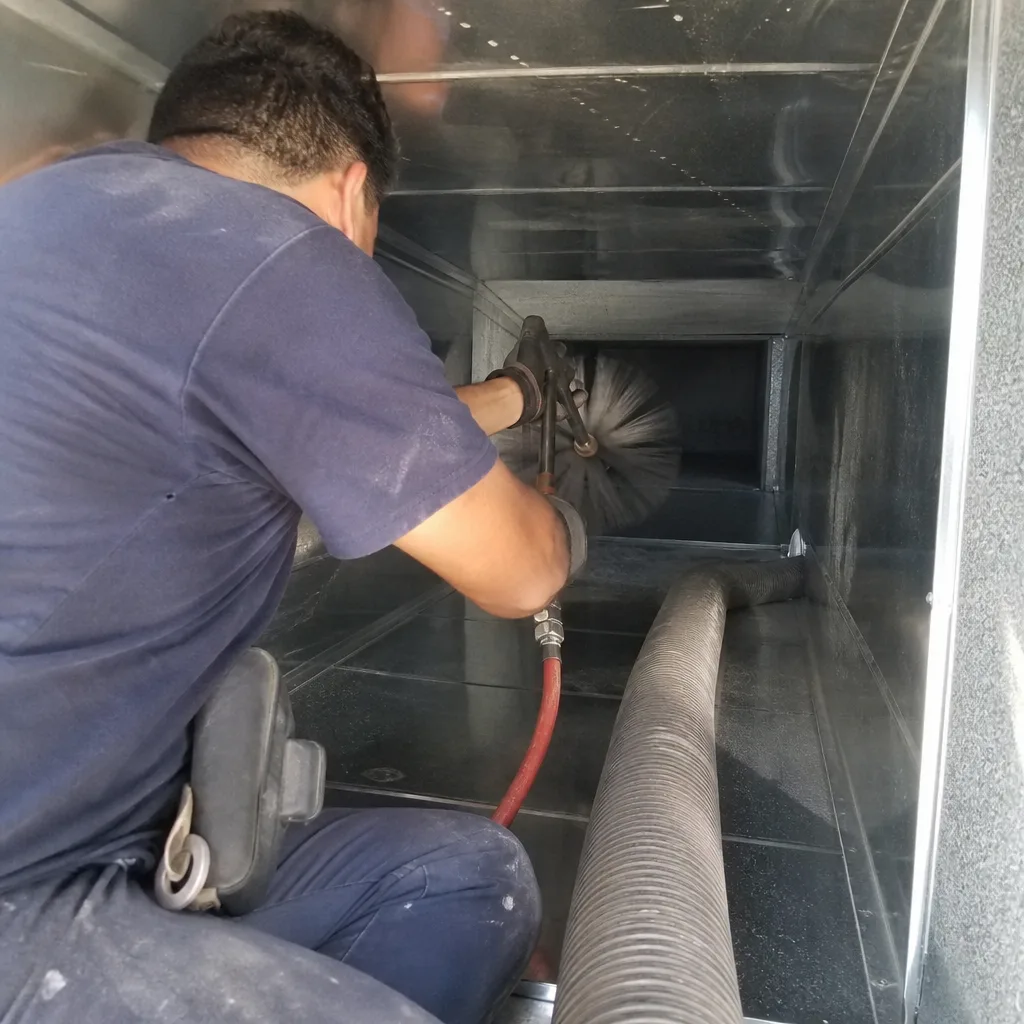
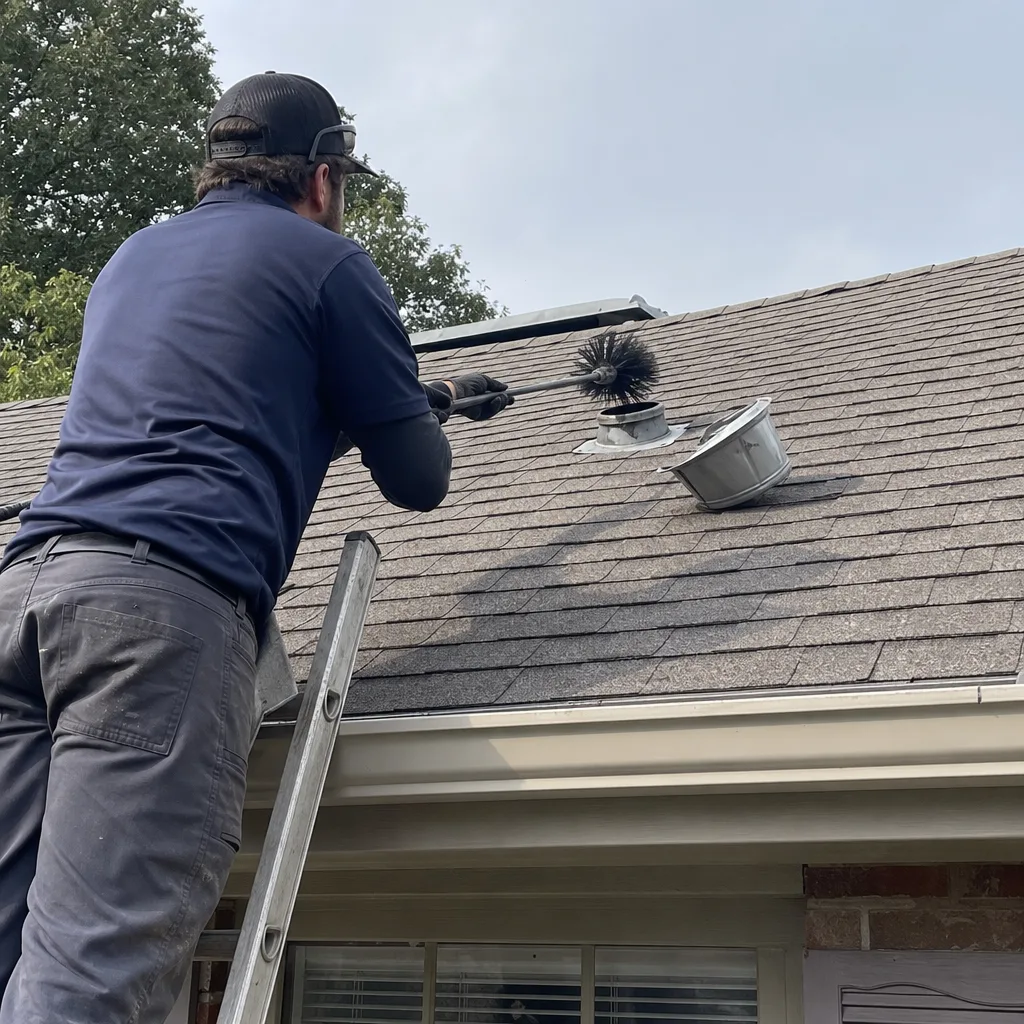
Photo record of every duct run. Before and after images from a borescope or inspection camera, showing the interior of each supply and return run. Not a single representative photo. Every run. Our crews use Rotobrush equipment with integrated camera systems, and the photo set is delivered to the customer as a standard job record. Since 2013, we’ve photographed the interior of every duct run on every job. If a company can’t show you what your ducts looked like before and after, you have no evidence the work was performed.
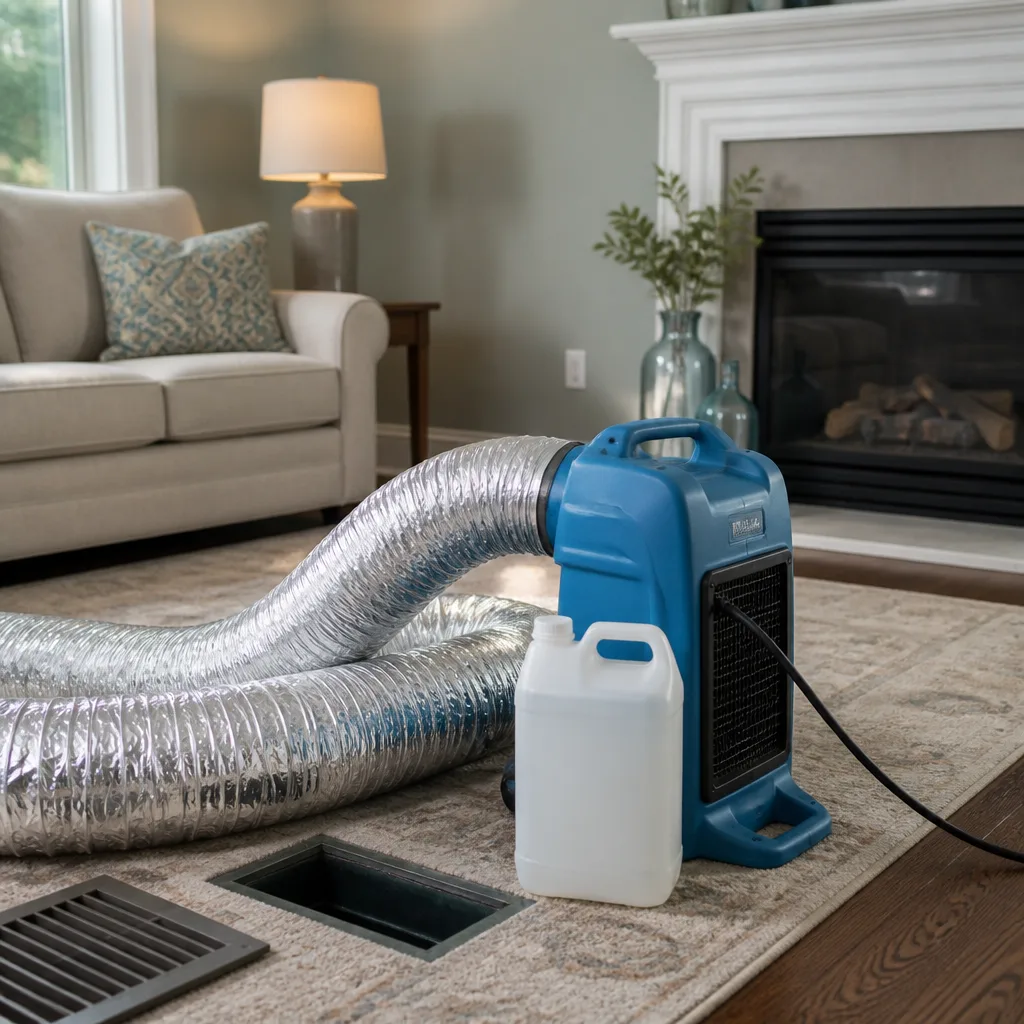
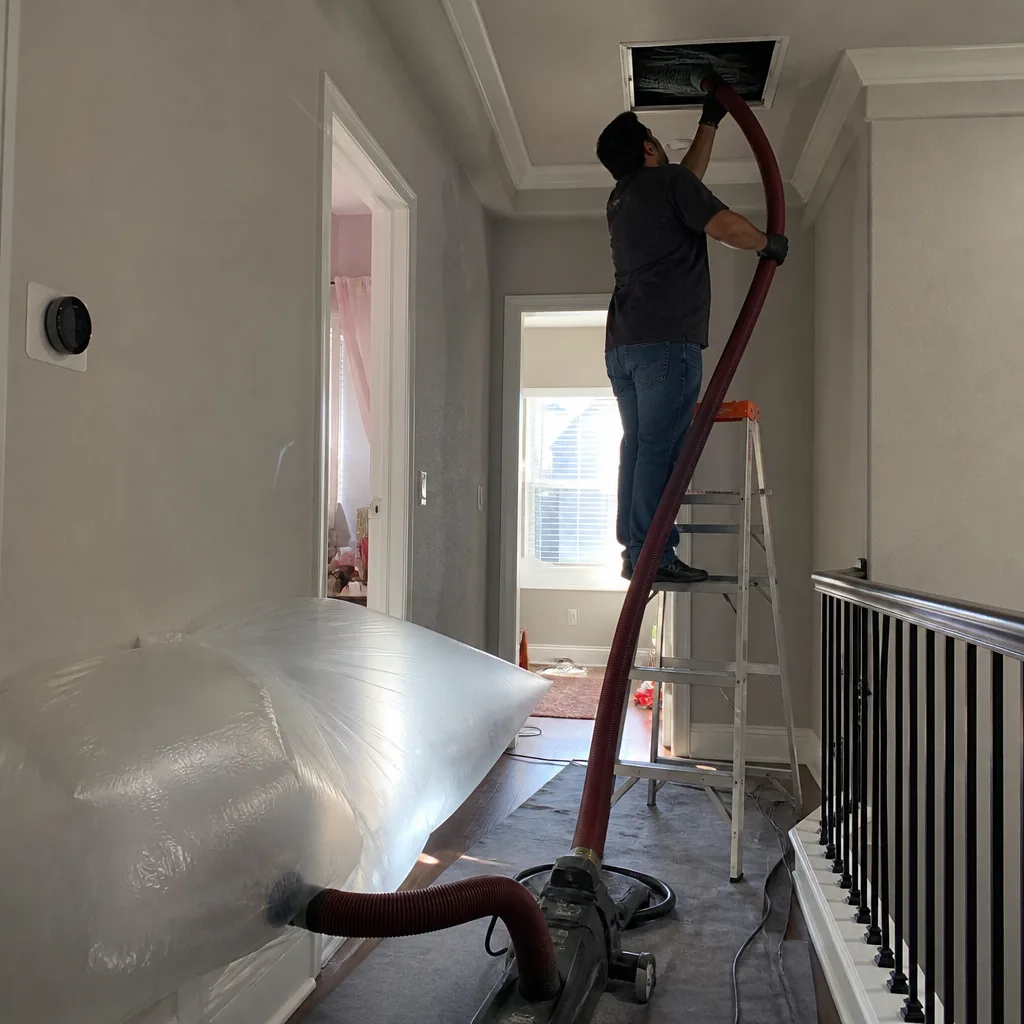
Equipment specification. The brands and models used should be named. Our standard equipment includes Rotobrush brush-and-vac systems, Nikro HEPA vacuums, and Abatement Technologies negative-air machines. Customers can look up these brands independently and verify they’re trade-recognized, not shop-vac equivalents. We also use Guardsman antimicrobial products where microbial treatment is specified.
Airflow measurement. Face velocity at each register, measured with a calibrated anemometer, before and after cleaning. This documents that the work improved performance, not just appearance.
Written warranty. Our 365-Day Done Right Promise is backed in writing on every job. If debris returns or airflow problems persist within a year, we return to diagnose and correct at no charge. This is a written guarantee, not a policy subject to manager discretion.
We also offer a Free Second Opinion on any written estimate from another contractor. Bring us their scope and price; we’ll put our own number next to it, with line-item detail, at no cost. We’ve done this for hundreds of Frisco homeowners since 2013, and we publish our license number openly because verifiable credentials matter more than claimed credentials.
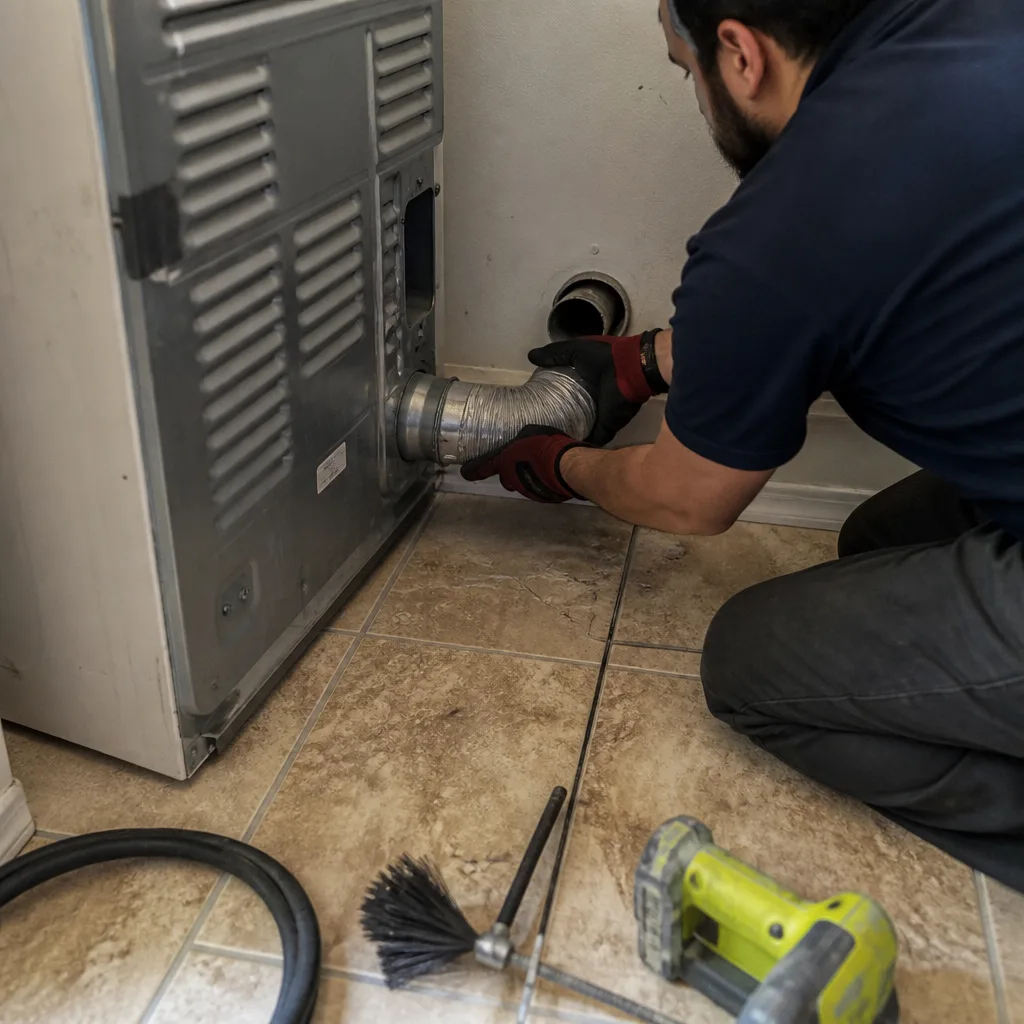
For dryer vent concerns specifically, our Dryer Vent Cleaning in Frisco page details the documentation standards for that separate service, including airflow measurement at the exterior termination.
Common Mistakes to Avoid
- Booking cleaning based on a $79 coupon without a scope inspection. In Frisco, we’ve found that coupon-priced cleanings typically cover three supply runs and exclude returns, blower, and coil. The upsell begins after arrival. A written scope prevents this.
- Assuming new construction means clean ducts. Frisco’s compressed build schedules leave construction debris in duct runs. We’ve cleaned homes under two years old with significant drywall mud and fastener accumulation. Age doesn’t equal cleanliness.
- Treating all registers as equal. Kitchen and bathroom registers accumulate different debris than bedroom registers. A scope that doesn’t differentiate by room type is guessing at the work required.
- Ignoring the return side. The return duct pulls air from your home back to the system. It’s often dirtier than supplies because it has no filter protection upstream of the grille. A “supply-only” cleaning misses half the system.
- Accepting fogging or spray treatments without debris removal. Chemical application on top of accumulated debris creates a coated, potentially more adhesive layer. Effective cleaning removes debris first; treatments apply to clean surfaces only if specified and justified.
- Not verifying insurance and licensing. Texas requires no specific duct cleaning license, but reputable contractors carry general liability and workers’ compensation. Ask for certificate of insurance; verify it’s current. CleanRun publishes our license number and carries coverage that protects your property and our crew.
- Cleaning without addressing the cause. If your filter is wrong, your duct is leaking, or your humidifier is scaling, cleaning is a temporary reset. The debris returns because the condition that created it persists. Our evaluations include cause identification; we won’t clean a system we know will recontaminate in six months.
When to Call a Professional
Call when you’ve completed the 10-minute register inspection and found visible debris past the register throat, when room-to-room airflow differs by more than 30%, or when you smell musty odor specifically when the system runs and can confirm it’s not coming from the coil or condensate pan. Call when you have a written estimate from another contractor and want a line-item second opinion at no charge. Call when you need documentation that the work was actually performed, not just promised.
CleanRun Air Duct Cleaning Frisco offers free estimates in Frisco. Every evaluation includes register inspection, airflow measurement, and attic or crawlspace inspection if indicated. The price we write is the price you pay. Call (940) 290-8552 to schedule. For whole-system evaluations including HVAC Cleaning in Frisco, we coordinate blower and coil access with the duct scope.
Frequently Asked Questions
Whole-system duct cleaning for a typical 2,000-2,500 square foot Frisco home ranges from $450 to $850, depending on the number of duct runs, accessibility, and whether the blower, coil, and plenum are included. Per-vent pricing is a red flag; it incentivizes the contractor to find more vents, not to clean the system comprehensively. CleanRun quotes one flat price per system, agreed in writing before work starts. Call (940) 290-8552 for an exact quote on your home - estimates are free.
Low quotes typically exclude the return duct system, the blower compartment, and the evaporator coil, or they limit the number of supply runs covered. The $79-$149 range in Frisco market advertising usually covers three to five supply registers only, with upselling required to complete a functional cleaning. A complete scope for a whole system, with photo documentation and airflow verification, requires more time and equipment. Ask for line-item detail and compare scopes, not just bottom-line numbers.
Demand a photo record from inside every duct run, before and after, with timestamps. Demand airflow measurements at each register. A contractor who performed the work can produce both; a contractor who ran a vacuum near the registers cannot. CleanRun has delivered documented photo records on every job since 2013 as a standard deliverable, not an upgrade.
For most Frisco homes with properly specified filters changed on schedule, every five to seven years is reasonable. Homes with pets, recent construction, or occupants with respiratory sensitivity may need more frequent service. Homes with washable filters, bypassing filters, or humidifier scale issues may need cleaning sooner due to accelerated accumulation. The correct interval is determined by inspection, not calendar.
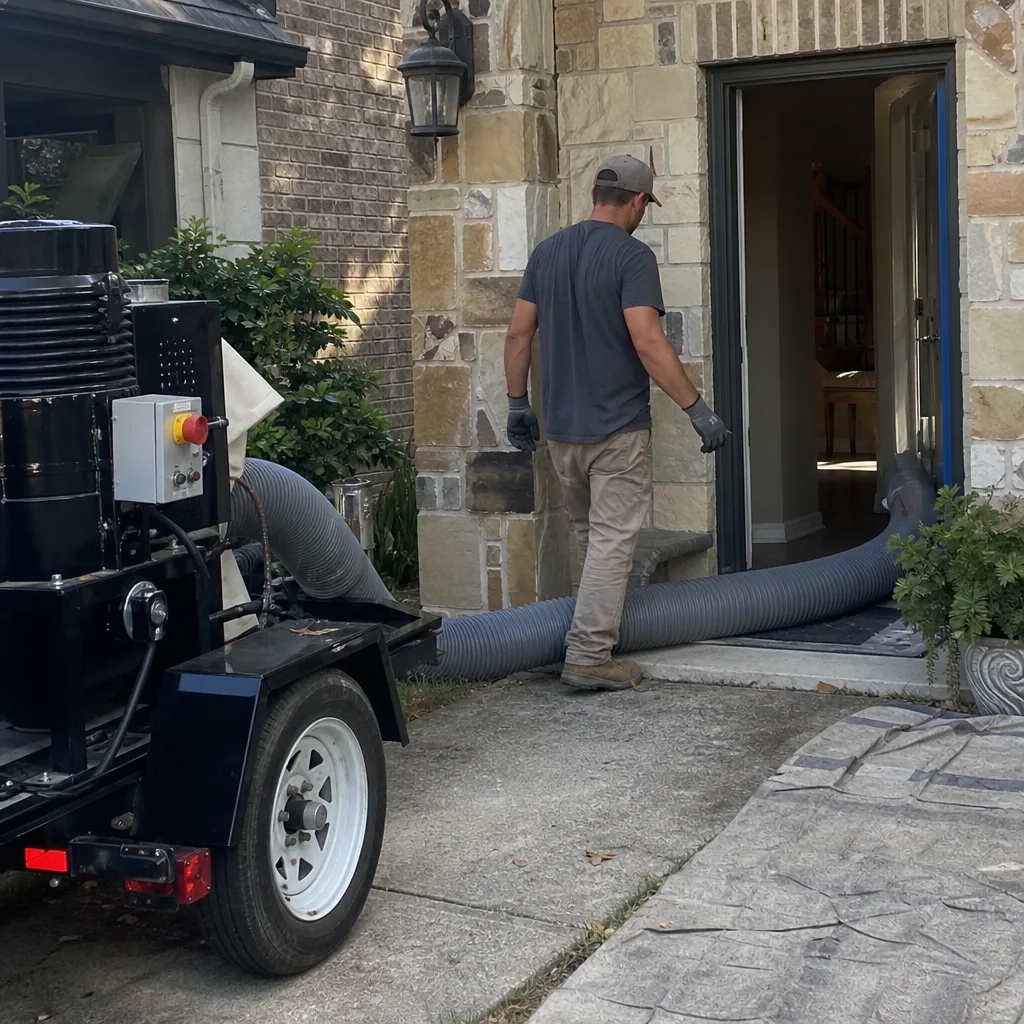
No. Residential duct systems require negative-pressure containment equipment to prevent debris migration during cleaning. A shop vacuum or brush kit without containment will release captured debris into your living space and potentially damage flex duct liner. Additionally, Frisco attics present heat and fall hazards that make DIY duct access dangerous. This is professional work with professional equipment.
It can, if the allergen source is accumulated debris in the duct runs. It will not help if the source is ambient pollen infiltration, pet dander on surfaces, or mold in the building envelope. We evaluate homes with allergy concerns by identifying the specific allergen and its location before recommending cleaning. In some Frisco homes, the better investment is improved filtration or duct sealing against attic infiltration.
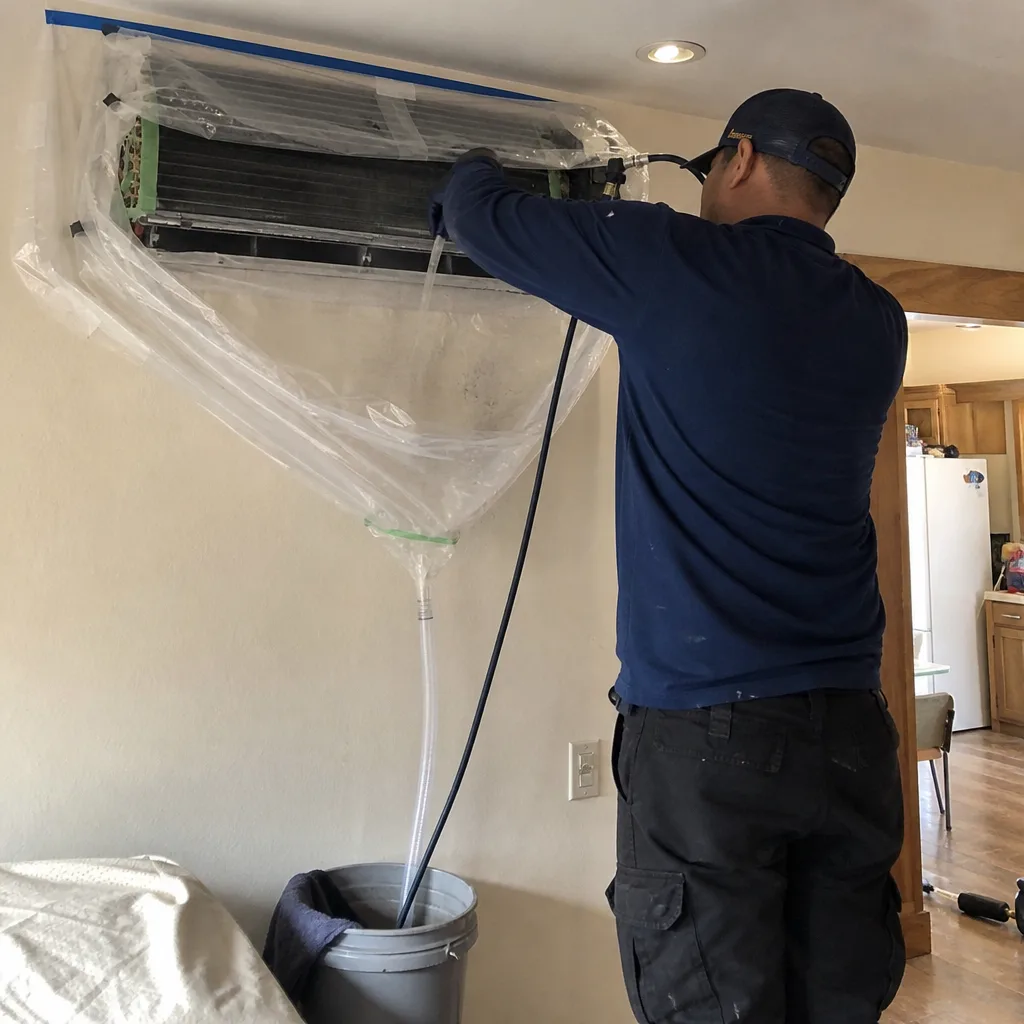
Duct cleaning addresses the distribution network: supply and return duct runs, registers, and grilles. HVAC cleaning includes the air handler components: blower assembly, evaporator coil, condensate pan, and heat exchanger. A complete system service addresses both. Our HVAC Cleaning in Frisco page details the equipment and documentation standards for the mechanical side.
The Bottom Line
Most warning signs attributed to dirty ducts have other causes. The homeowner who inspects registers, compares room airflow, and distinguishes surface dust from duct debris avoids paying for the wrong service. When duct cleaning is genuinely needed, it should be scoped in writing, performed with documented photo evidence, and backed by a written guarantee. In Frisco’s climate and construction environment, the specific conditions matter: attic heat degrades flex duct, rapid builds leave construction debris, and hard water creates scale that mimics organic debris. Observable evidence, not symptom lists, should drive your decision.
Written by Tomas Reyes, Owner at CleanRun Air Duct Cleaning Frisco, serving Frisco since 2013.