
Last updated September 23, 2026
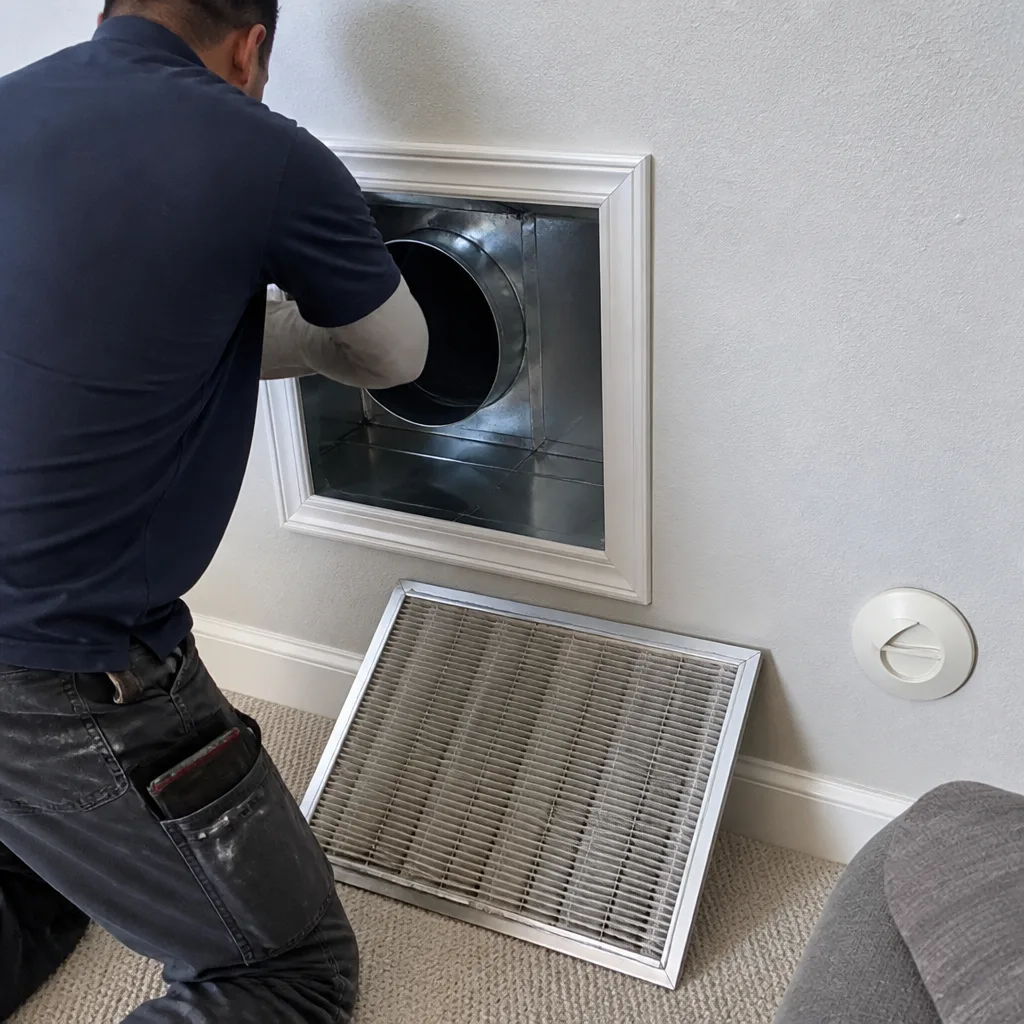
Whole-system duct and dryer vent check with before-and-after photos - you see exactly what came out of your vents
That "$99 whole-house special" is a bait ad - the real number appears once they are in your hallway, or the "clean" is a shop-vac at the register. We photograph the inside of your ducts before and after instead.
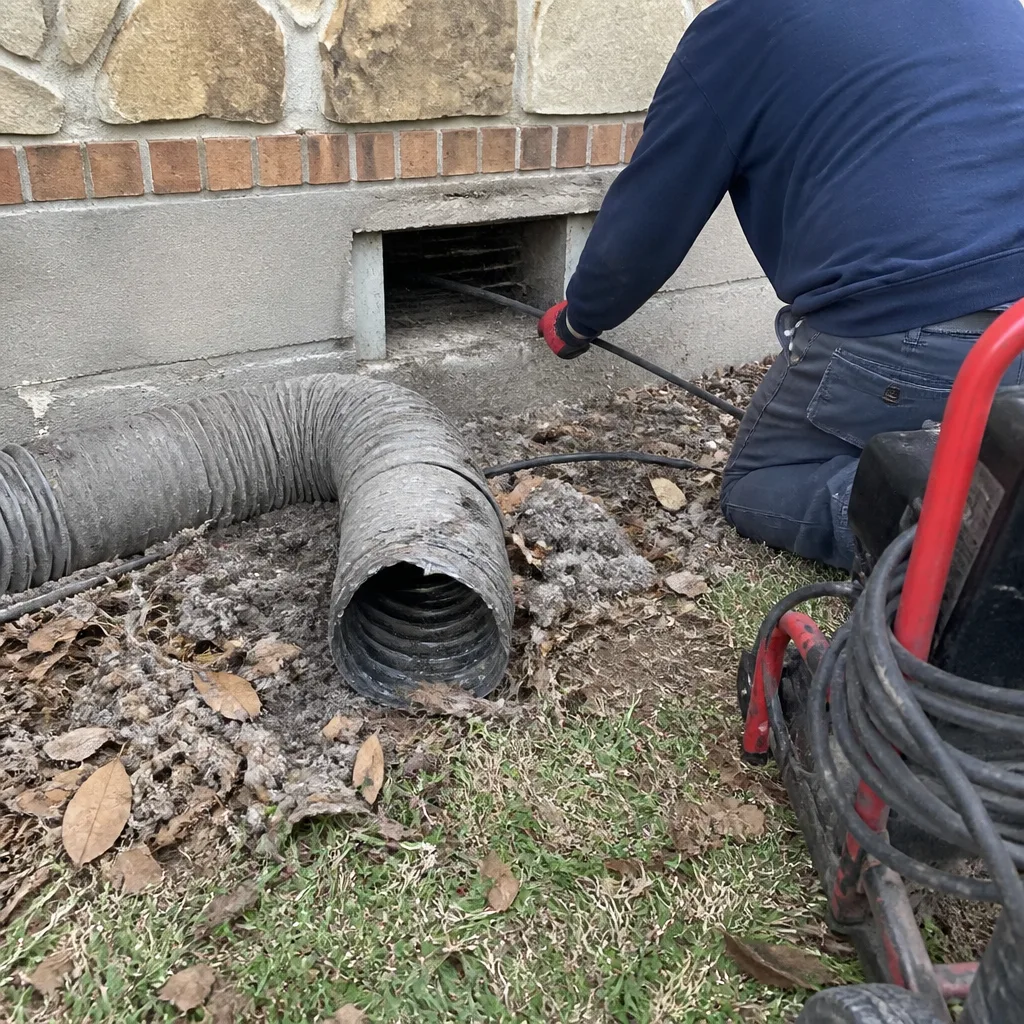 Before
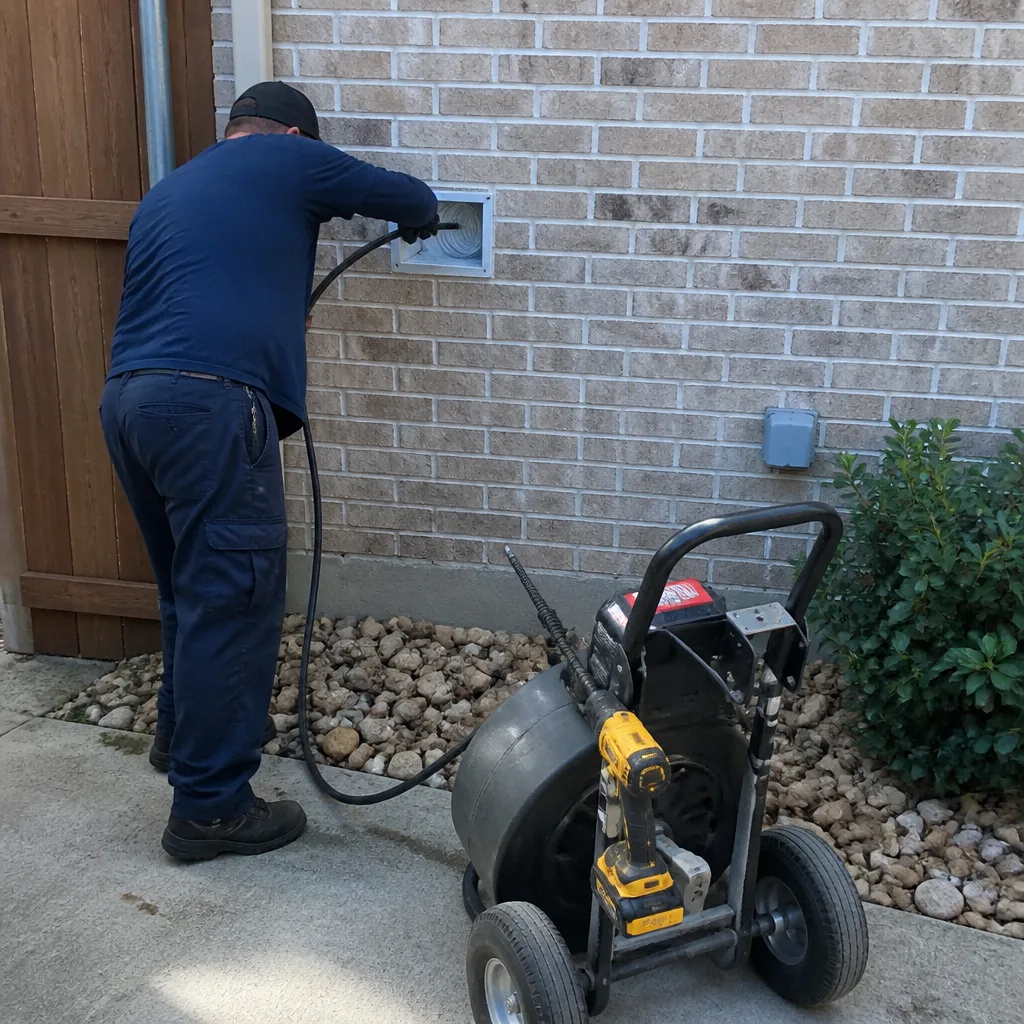 After
After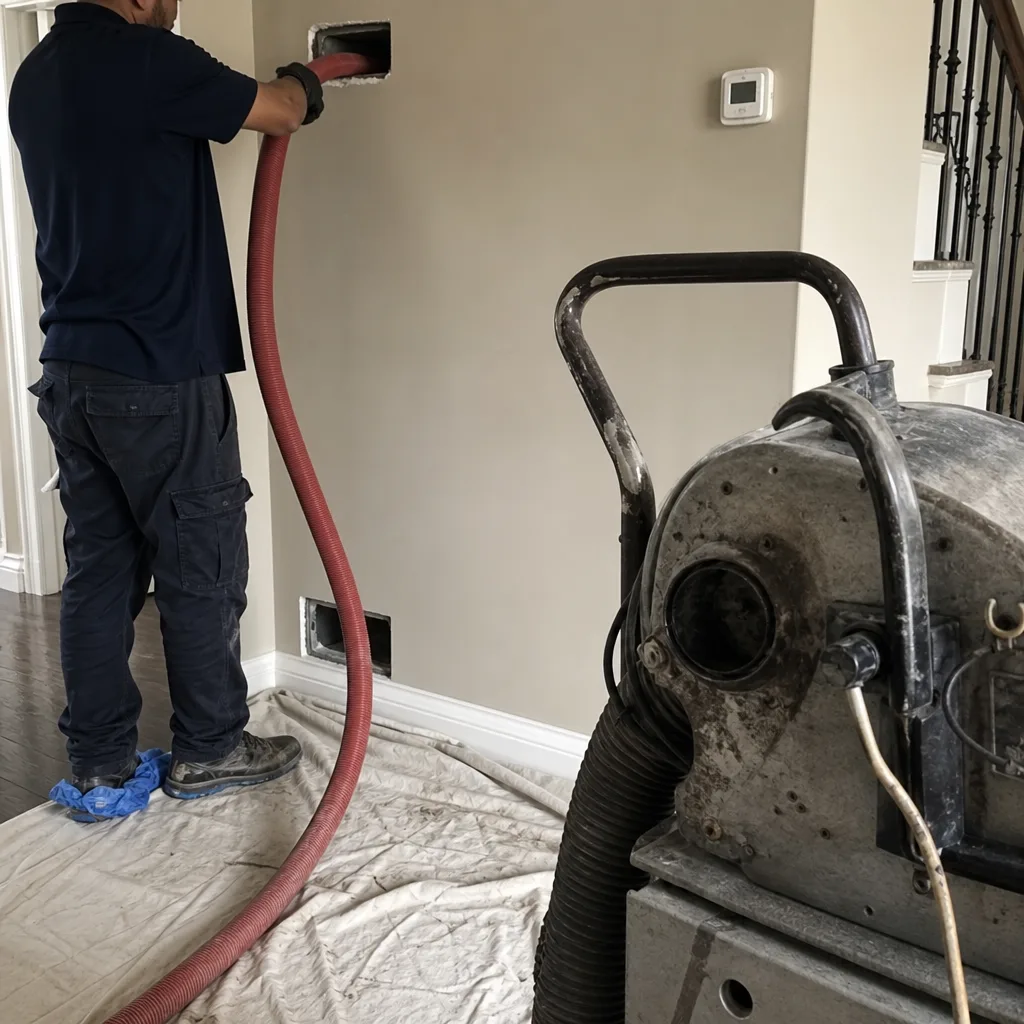 Before
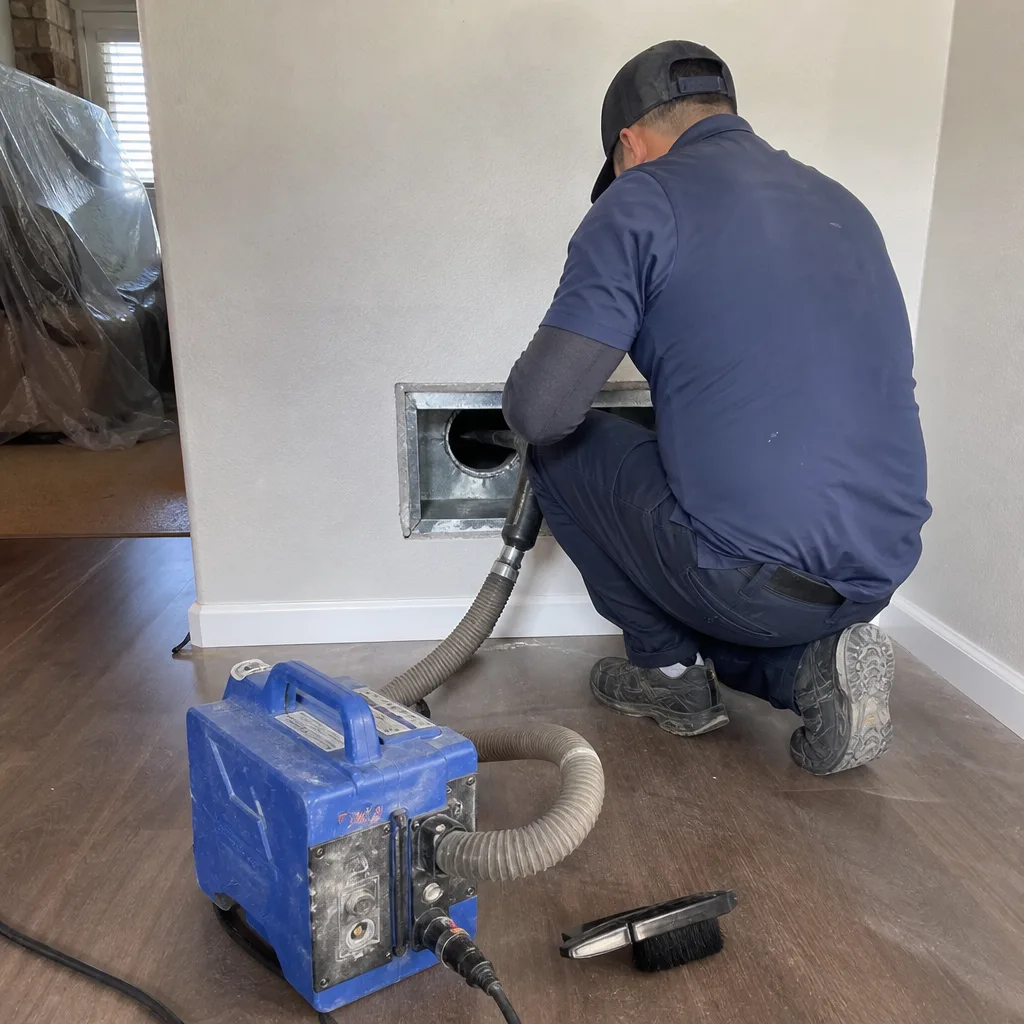 After
After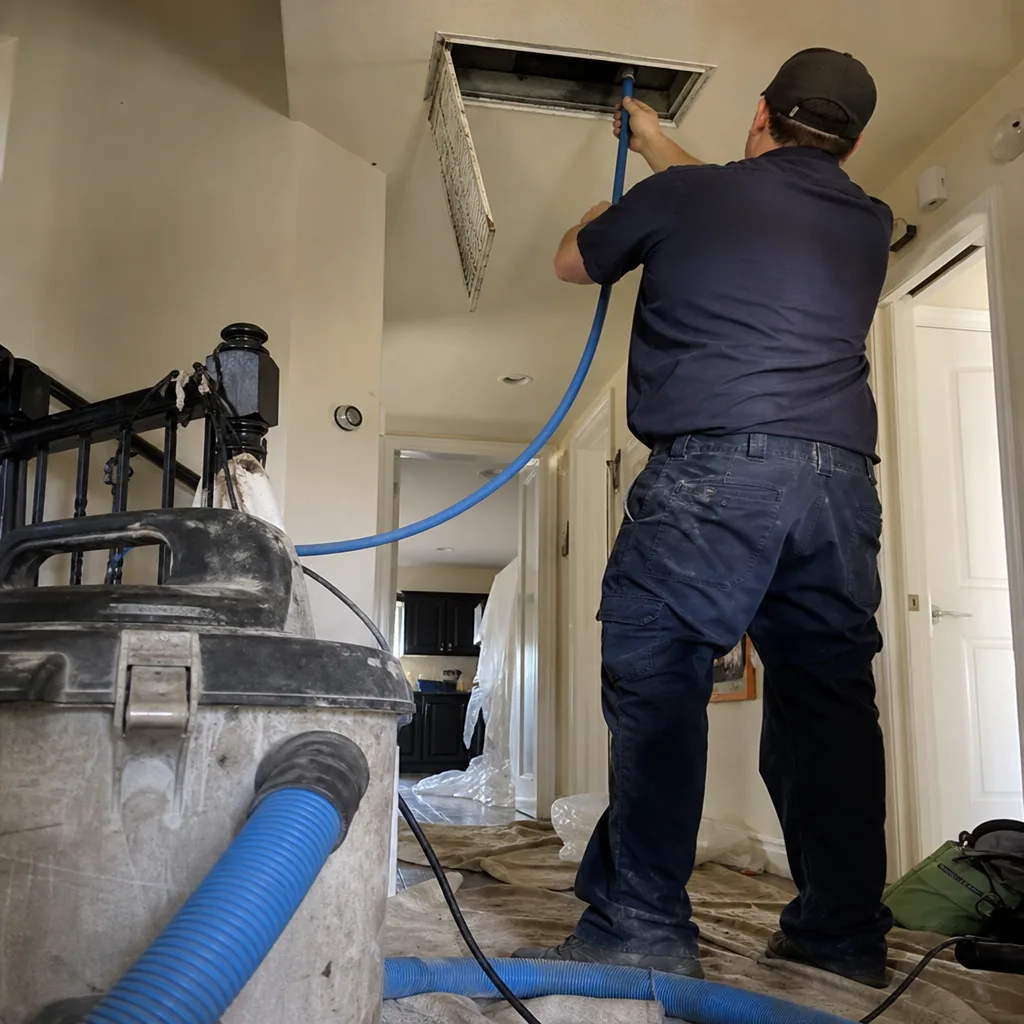 Before
 After
AfterAir Duct Cleaning Maintenance Checklist for Frisco Homeowners
Changing your filter every 30 days doesn’t mean your ducts are clean - it means your filter is doing its job. What accumulates behind and beyond the filter is a separate question that a calendar reminder can’t answer. In Frisco, we’ve photographed the inside of ductwork in homes from Phillips Creek Ranch to Newman Village, and the gap between “filter changed on schedule” and “ducts actually clear” is where most homeowners lose money on energy bills and indoor air quality. This guide gives you a checklist built around observable conditions, not arbitrary dates, so every maintenance item has a physical trigger you can verify with your own eyes.
Quick Answer
A proper air duct maintenance checklist for Frisco homeowners includes monthly filter checks, quarterly visual inspections of supply registers and return grilles, annual assessment of the first 12 inches of exposed ductwork, and our Air Duct Cleaning services with documented photo evidence when debris buildup exceeds 1/8 inch or airflow drops measurably at distant vents. In Frisco’s high-construction environment, homes near active development may need professional assessment every 18-24 months rather than the standard 3-5 year interval.
Table of Contents
- Filter Maintenance vs. Duct Maintenance: What Each Actually Does
- The Visual Checklist Frisco Homeowners Can Do Themselves
- Frisco-Specific Triggers That Override Standard Schedules
- Owner Tasks vs. Contractor-Only Maintenance
- How to Log Your Duct Maintenance: A Simple Written Record
- What Professional Cleaning Should Include (and Document)
- What Duct Maintenance and Cleaning Costs in Frisco
- Common Mistakes to Avoid
- When to Call a Professional
- Frequently Asked Questions
BeforeAfterFilter Maintenance vs. Duct Maintenance: What Each Actually Does
Most Frisco homeowners we meet at CleanRun Air Duct Cleaning Frisco home appointments understand filters. Fewer understand what filters don’t do. The distinction matters because treating one as the other leads to deferred duct maintenance and inflated energy costs.
A filter captures particulate before it enters the air handler - the blower motor and coil assembly that conditions your air. It sits at the return grille or in a slot at the plenum (the central distribution box where all ducts connect), and its job is to protect mechanical components. When a filter loads with dust, pressure drop increases, the blower works harder, and efficiency falls. This is well understood.
What the filter does not do is clean the duct runs themselves - the supply lines that push conditioned air to your rooms, or the return lines that pull it back. These are sealed pathways, and once debris passes the filter or enters through leaks in the return side, no filter will remove it. We’ve photographed supply ducts in Frisco homes with 2-inch debris deposits at elbows where airflow slows, and return ducts with construction dust from 2017 still packed at joints. The filter was changed faithfully. The ducts were never addressed. See Air Duct Cleaning Warning Signs: A Frisco Homeowner’s Reference Guide for what to watch for.
Here’s the functional separation every homeowner should track:
- Filter maintenance: Protects equipment, maintains airflow volume, reduces particle load entering the air handler. Frequency: monthly visual check, replacement per manufacturer rating (typically 30-90 days for 1-inch pleated filters, 6-12 months for 4-5 inch media filters).
- Duct maintenance: Removes accumulated debris from distribution pathways, seals leaks that bypass filtration, verifies structural integrity of flex duct and rigid connections. Frequency: condition-based, triggered by observable indicators, not calendar.
The Frisco-specific wrinkle: many homes built 2015-2022 in developments like The Trails or Hollyhock use media filters (4-5 inch thick, installed in a cabinet at the air handler). These have longer replacement intervals, which creates a false sense of security. Homeowners assume “I just changed my filter in March” means the whole system is protected through September. In reality, return leaks in attic ductwork - common in production builds - pull unfiltered attic air continuously, loading the duct interior regardless of filter condition.
Your maintenance checklist needs both categories, tracked separately, with different triggers.
The Visual Checklist Frisco Homeowners Can Do Themselves
Every item below is observable without tools beyond a flashlight and a screwdriver. We developed this list from thousands of Air Duct Cleaning in Frisco inspections, and it catches the conditions that actually predict duct performance problems.
Monthly: Supply Register Check
Remove one supply register cover (the vent in your ceiling or wall that blows air into the room). Look for:
- Dust rings on the register face or louvers. A thin film is normal. A visible ring or clumped accumulation indicates the duct run behind it is shedding debris under airflow.
- Dark streaking on the ceiling around the register edge. This is thermal tracking - dust particles carried by air leaking through gaps between the register boot and drywall, then deposited where temperature differentials create condensation. It signals a seal failure, not just cleanliness.
- Odor when the system first cycles on. Musty or dusty smell in the first 30 seconds indicates microbial growth or debris accumulation in the duct run, not the air handler.
Quarterly: Return Grille Assessment
The return grille is where air exits your rooms and heads back to the system. It’s your easiest window into duct conditions:
- Grille discoloration. Gray or brown staining on the grille face, especially in horizontal patterns, indicates the filter is bypassing or overloaded. In Frisco’s spring pollen windows (March-May), this accelerates dramatically.
- Visible debris behind the filter. With the filter removed, shine a flashlight into the return cavity. The first 6-12 inches should be relatively clean. Heavy dust or construction debris here means the return pathway needs professional assessment.
- Filter fit. A filter that bows inward under suction, has gaps at the sides, or requires force to install is the wrong size or type. Bypass air around the filter loads the ductwork directly.
Semi-Annually: Exposed Ductwork in Attic or Utility Space
If you have safe access to your attic or a utility closet with exposed flex duct (the insulated flexible tubing common in Frisco tract homes), inspect the first 12 inches from any connection point:
- Visible debris at joints. The connection between flex duct and metal trunk lines is a turbulence point where particles drop out of airflow. A visible accumulation here predicts downstream loading.
- Sagging or kinked flex runs. Flex duct should follow gradual bends. Sharp kinks reduce airflow velocity, which causes debris to settle. This is common in Frisco attics where installers routed ductwork around trusses with insufficient support.
- Tape or sealant condition. Mastic (the gray paste at joints) should be intact, not cracked or peeling. Foil tape at flex connections should adhere fully. Failed seals pull unconditioned attic air into the system, carrying insulation particles and construction dust.
Annually: Room-to-Room Airflow Comparison
This requires no instruments beyond a tissue or lightweight ribbon:
- Hold a tissue against each supply register with the system running on high fan.
- Note which registers hold the tissue firmly and which let it fall or flutter weakly.
- A 20% or greater difference between the strongest and weakest register indicates either duct blockage, leakage, or design imbalance. All three are maintenance triggers.
In Frisco’s two-story homes, we commonly find upstairs registers at 40-50% of downstairs airflow due to duct routing issues compounded by debris accumulation. The homeowner’s first clue is often a temperature complaint, not a maintenance check.
Frisco-Specific Triggers That Override Standard Schedules
Generic advice says “clean ducts every 3-5 years.” In Frisco, that timeline fails for specific, addressable reasons. We’ve adjusted our assessment recommendations based on what we find in local homes, and the patterns are consistent enough to build into your checklist.
Active Construction Proximity
Frisco’s development pace means many homeowners live within half a mile of active earthwork, framing, or final grading. Construction particulate - silica dust, wood fiber, drywall compound - is fine enough to remain airborne for miles and enters homes through intake vents, window gaps, and attic penetrations. In neighborhoods like Lawler Park and Wade Crossing, where build-out continued through 2023, we’ve documented return ducts with construction-grade dust loads within 18 months of professional cleaning.
Trigger: If you can see active construction from your property line, reduce your professional assessment interval to 18-24 months regardless of other indicators. The particulate load is simply higher than standard schedules assume.
Seasonal Pollen Windows
North Texas pollen peaks in March-April (oak, elm, ash) and September-October (ragweed, marsh elder). These are not allergy anecdotes; they’re mass loading events. A single heavy pollen day can deposit visible yellow film on outdoor surfaces, and the fraction that enters your home adds to duct accumulation. Homes with oversized returns or high air exchange rates (common in newer, leakier construction) see accelerated loading.
Trigger: If household members experience seasonal respiratory symptoms that begin before outdoor pollen counts peak, your ducts may be harboring prior years’ accumulation. This is a maintenance signal, not just a medical one.
Post-Renovation Conditions
Frisco’s resale market drives significant renovation activity. Flooring replacement, drywall repair, and even “minor” bathroom updates generate fine particulate that bypasses most temporary barriers. We’ve photographed supply ducts with drywall dust deposits 8 feet from renovation zones, carried by the HVAC system during work.
Trigger: Any renovation involving cutting, sanding, or demolition warrants a post-project duct assessment, even if the work was “contained.” The cost of assessment is minor compared to circulating construction debris for years.
New Construction “Break-In” Period
Homes built 2015-2022 in Frisco commonly have duct conditions that contradict their age. Production HVAC installation during build-out often occurs before final cleanup, meaning ducts operate through months of construction dust loading before occupancy. We’ve found 3/8-inch debris layers in 18-month-old homes where the owner assumed “new means clean.”
Trigger: If your Frisco home was built 2015-2022 and has never had professional duct assessment, schedule one regardless of occupancy duration. The construction-period loading is independent of your household’s use. Review Air Duct Cleaning Permits, Codes & Inspections in TX: What You Need to Know to understand regulatory requirements.
Owner Tasks vs. Contractor-Only Maintenance
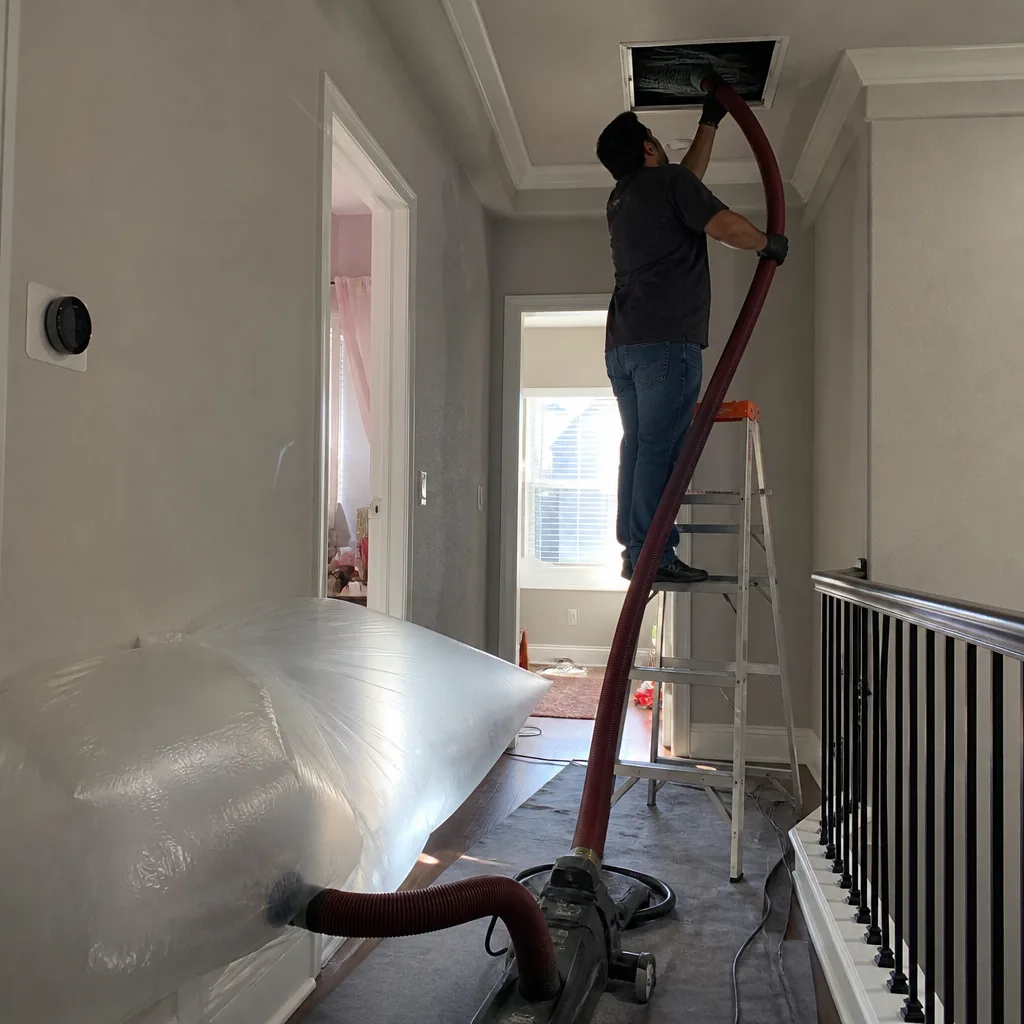
This distinction prevents two common errors: homeowners attempting work that requires specialized equipment, and contractors selling services that owners could perform themselves. Our checklist assigns each item based on what equipment the task actually requires.
Owner-Level Tasks (No Special Equipment)
- Filter replacement: Requires correct filter size only. Note the dimensions printed on the existing filter frame, match the MERV rating to system specifications (typically MERV 8-13 for residential), and verify fit without gaps.
- Register and grille cleaning: Warm water and mild detergent remove normal accumulation. Soak metal grilles; vacuum louvers with brush attachment.
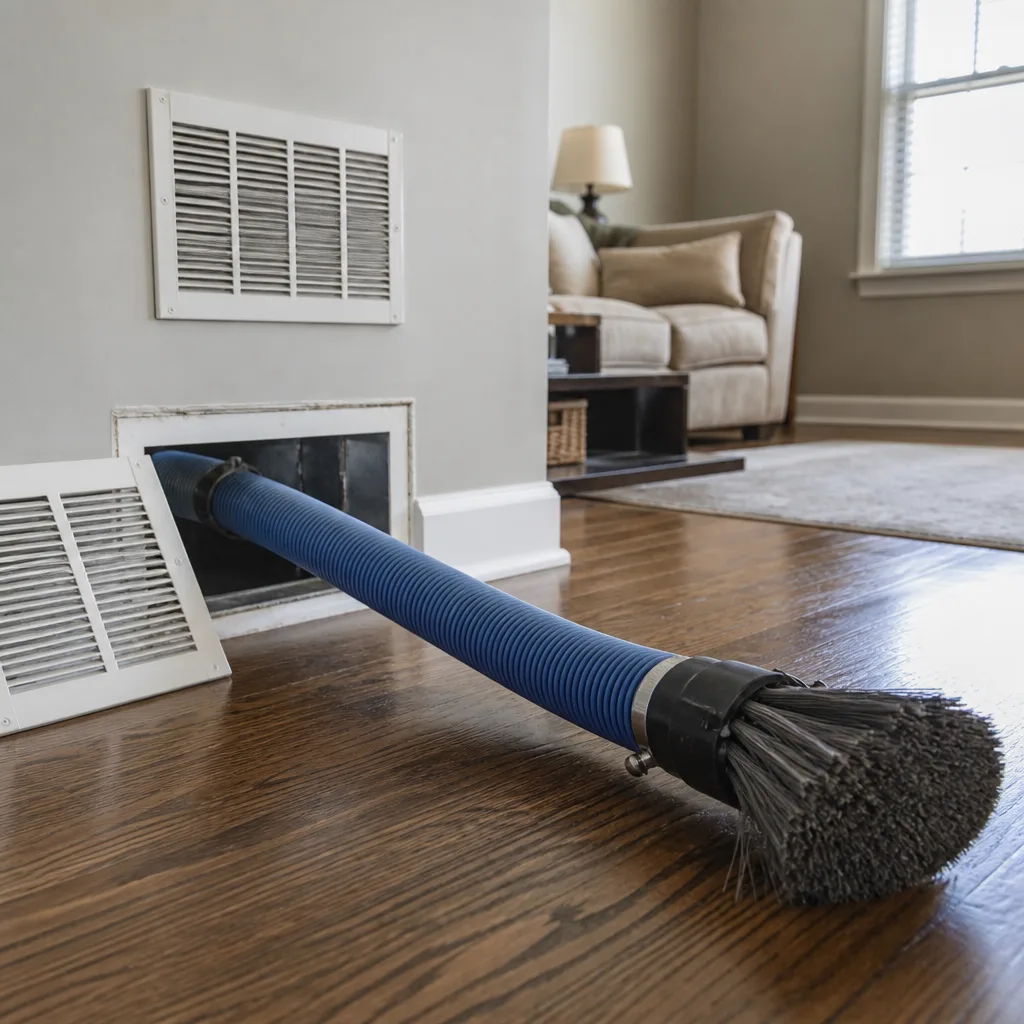
- Visible debris removal at register openings: A vacuum with hose attachment can clear the first 6-12 inches of a duct run. Do not force the hose deeper - flex duct damage is easy and expensive.
- Surrounding area maintenance: Keep furniture and drapes clear of registers to maintain designed airflow patterns. Blocked returns cause pressure imbalances that accelerate duct loading.
Contractor-Only Tasks (Professional Equipment Required)
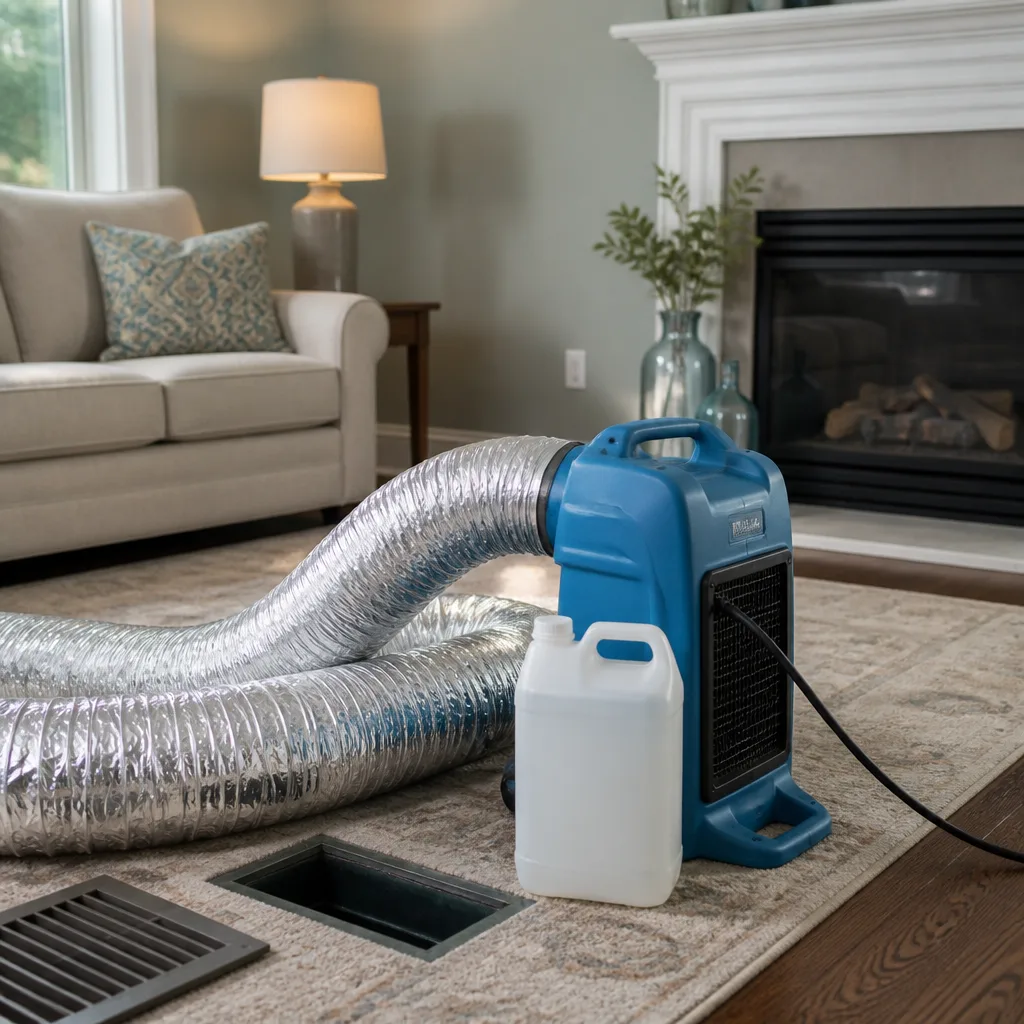
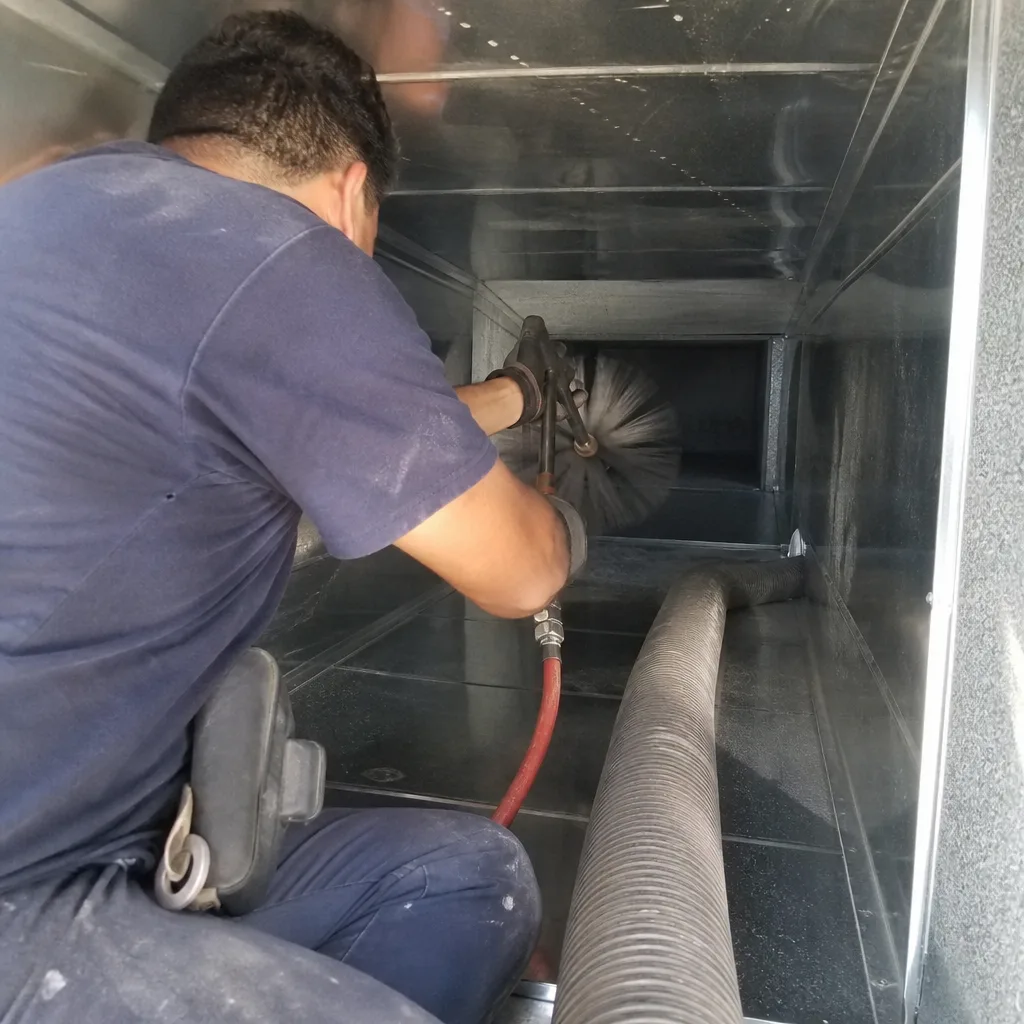
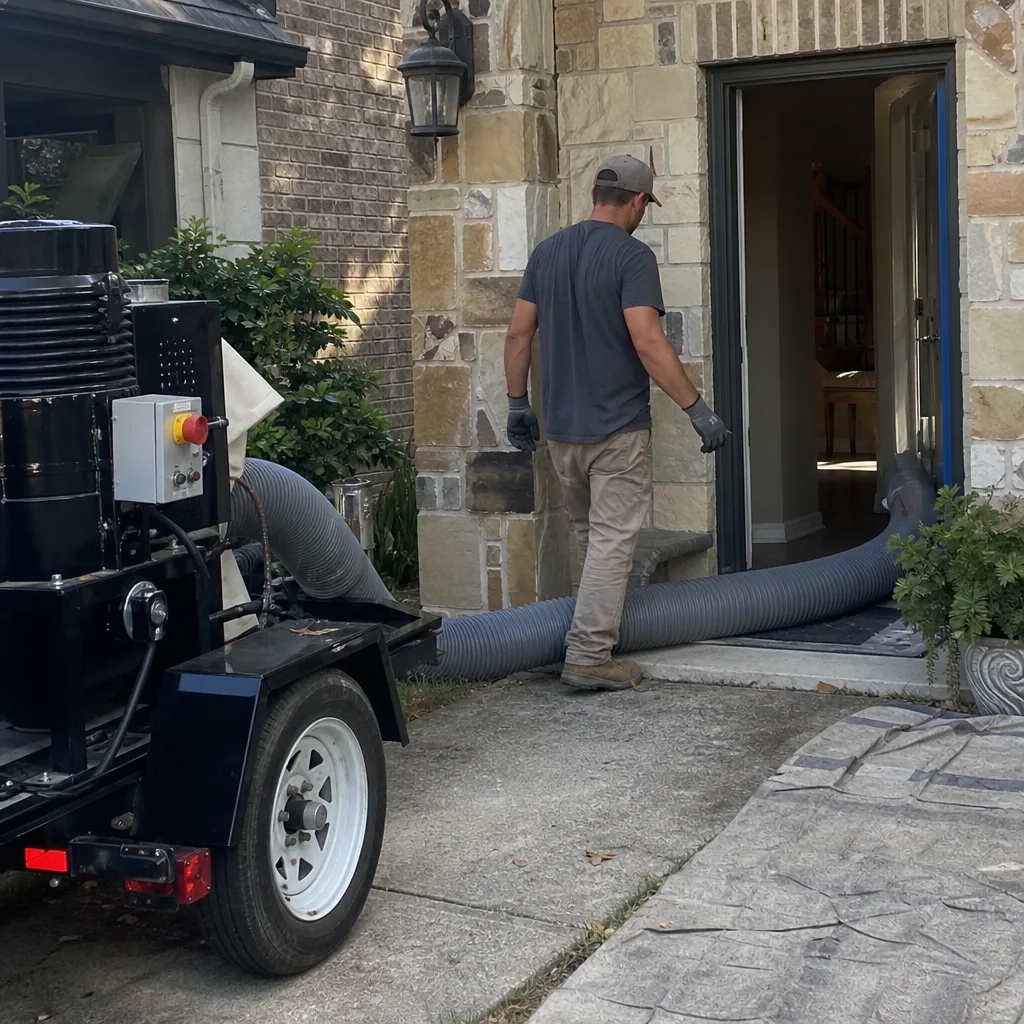
- Negative-pressure extraction: This is the core of professional duct cleaning. A large vacuum (typically 5,000+ CFM) attaches to the duct system, creating suction throughout all runs simultaneously. Agitation tools - rotary brushes, air whips, compressed-air skipper balls - dislodge debris while the vacuum captures it at the collection point. No homeowner equipment approximates this.
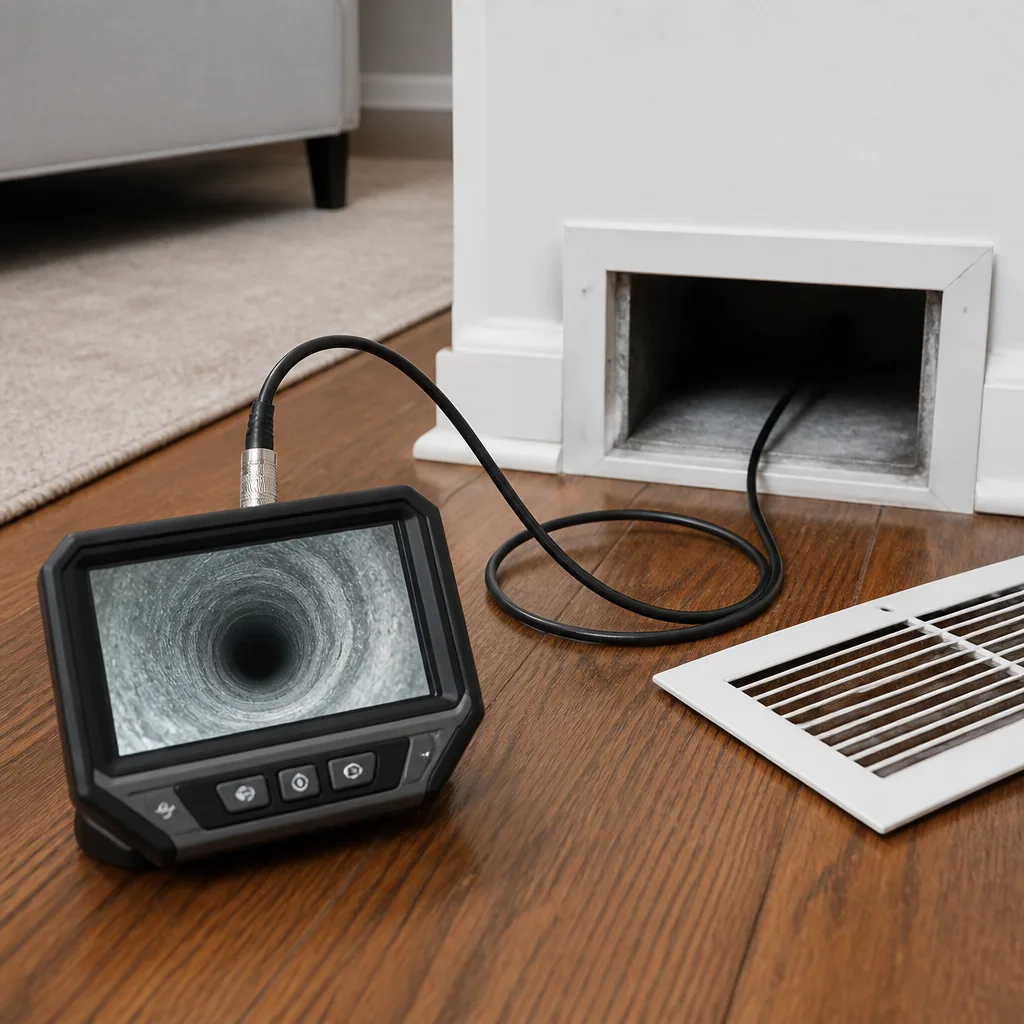
- Internal photography: CleanRun uses inspection cameras to document every duct run before and after. The camera head navigates 90-degree elbows and travels 20+ feet into branch lines. The images are delivered as a standard job record, not an upsell.
- Leak detection and sealing: Duct leakage testing requires a calibrated fan and pressure sensors (a duct blaster system). Sealing accessible leaks with mastic or aerosol sealant requires application equipment and safety protocols for attic work.
- Plenum and coil access cleaning: The plenum (the sheet-metal box where all ducts connect to the air handler) and the evaporator coil above it require panel removal and specialized cleaning solutions. Incorrect technique damages fins or drains.
The H.A.V.E.N. Standard governs how we distinguish these categories with customers. Haven Standard Clause 1: Written Price Before Work Starts means we specify which items are owner-performable and which require our crew, with no pressure to convert simple tasks into billable work.
How to Log Your Duct Maintenance: A Simple Written Record
Most Frisco homeowners have no record of prior duct conditions. When a contractor arrives, neither party has baseline data. The result is subjective assessments and inconsistent recommendations. A simple log fixes this.
We recommend a single-page format, kept with your HVAC paperwork or digitally:
| Date | Action | Findings | Next Action Trigger |
|---|---|---|---|
| Example: 03/15/2025 | Quarterly return grille check | Moderate dust accumulation behind filter; filter fit good; no grille discoloration | Re-check in 3 months; schedule pro assessment if dust increases 50%+ |
| Example: 06/20/2025 | Professional cleaning - CleanRun | Photo record shows 1/4″ debris at master bedroom elbow; all other runs clear; sealed 3 return leaks in attic | Re-assess in 24 months given construction proximity; check attic seals annually |
The critical fields:
- Findings, not feelings. “Dusty” is useless. “Visible gray accumulation 1/8 inch deep at first elbow of north bedroom supply” is actionable. Use measurements when possible.
- Next action trigger. This prevents calendar-based drift. Instead of “check again in 3 months,” write “re-check when register dust rings reappear after cleaning” or “schedule pro assessment if airflow at upstairs registers drops below downstairs by 30%.”
- Contractor documentation reference. Note the company, date, and what they delivered. For CleanRun jobs, this includes the Documented Photo Record - reference the job date and technician name so any future contractor can request transfer if needed.
When we provide HVAC Cleaning in Frisco, we leave a completed log entry with the customer, formatted for their records. It’s part of the standard deliverable, not an extra. A homeowner who hands the next contractor a two-year log of observations and prior findings gets a more precise assessment and avoids redundant work.
What Professional Cleaning Should Include (and Document)
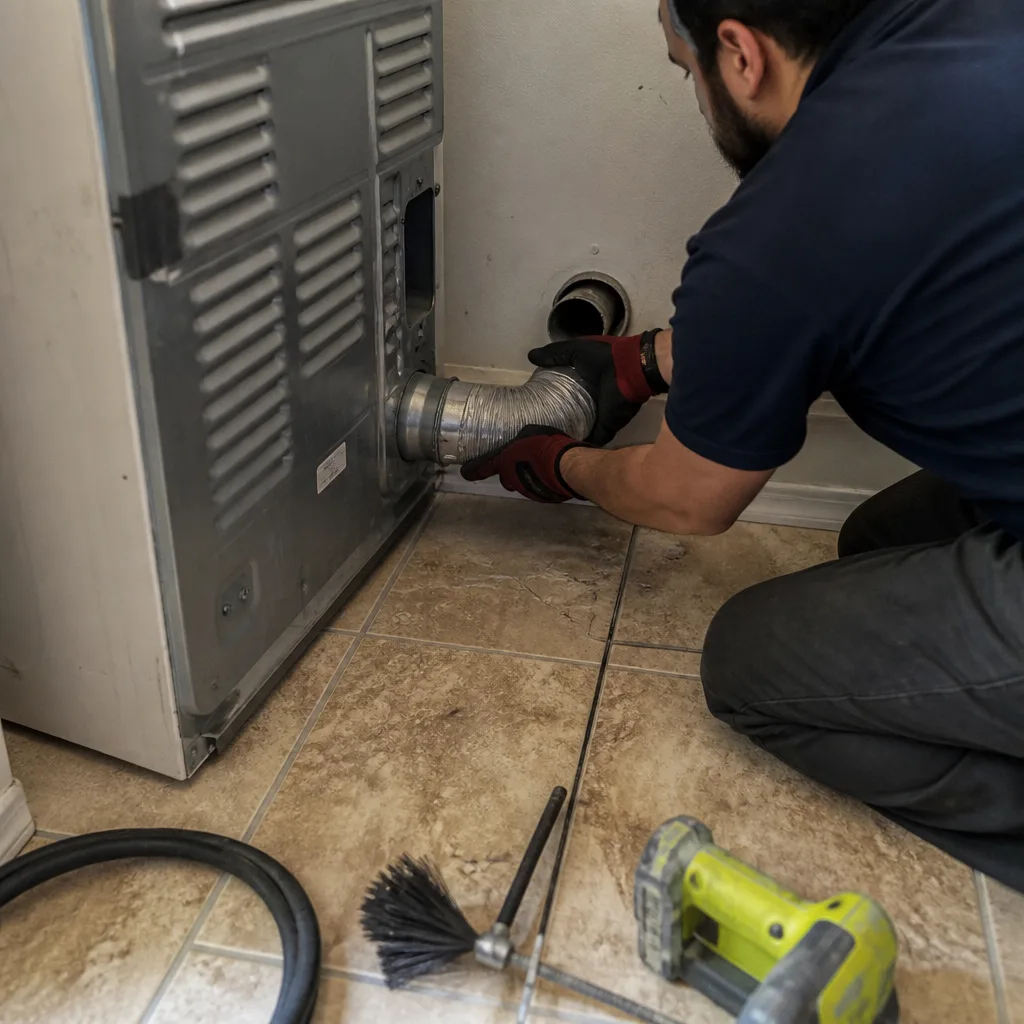
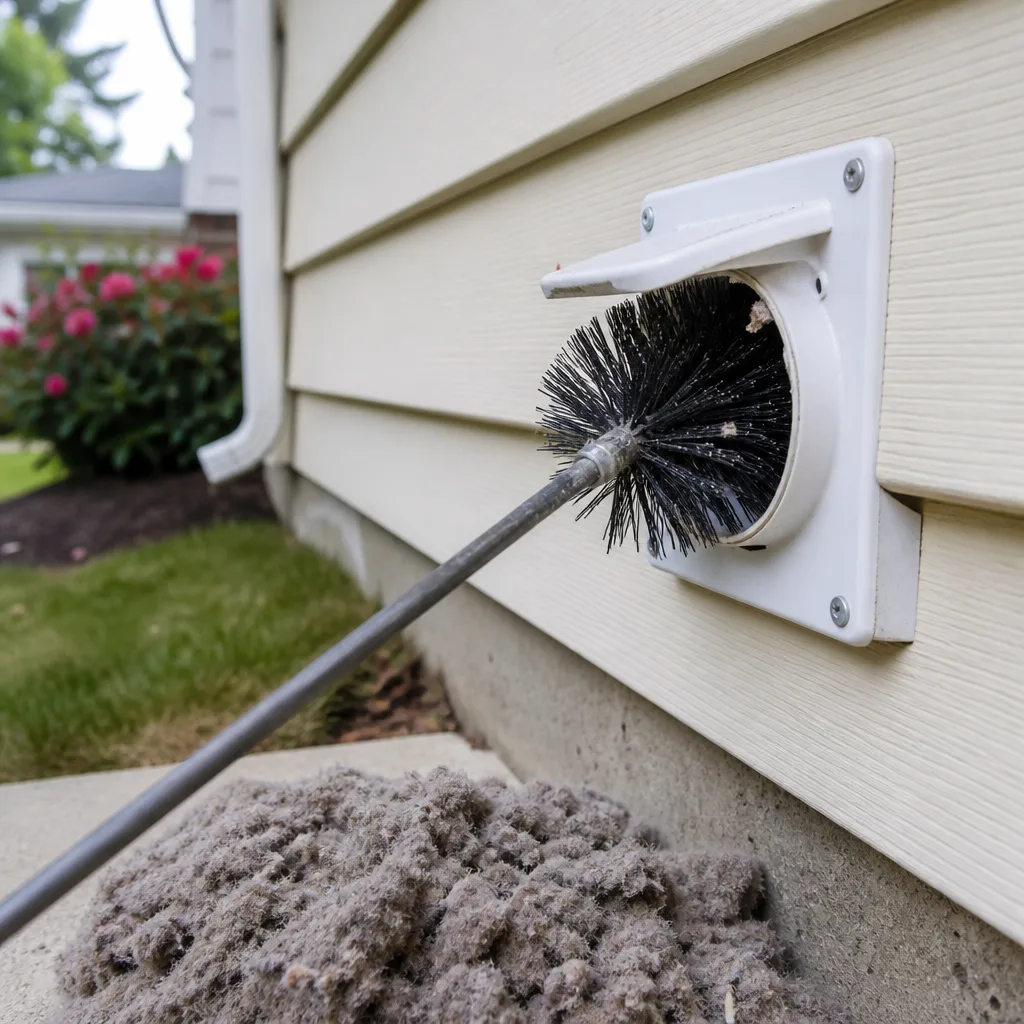
Not all duct cleaning is equivalent. The Dryer Vent Cleaning in Frisco market has similar variance - some providers remove lint, others perform full airflow restoration. For ducts, these are the minimum deliverables that separate maintenance from theater:
The Written Scope (Before Work Starts)
Every professional cleaning should begin with a written description of what will be done, which duct runs are included, and the fixed price. At CleanRun, this is Haven Standard Clause 1: no exceptions, no “call for a quote” evasion. The scope should specify:
- Number of supply runs and return pathways to be cleaned
- Whether the plenum and air handler cabinet are included
- Sealant or repair work to be performed, with separate line items
- Equipment to be used (for verification: Rotobrush, Nikro, or equivalent negative-pressure systems)
The Photo Record (During and After)
We photograph the interior of every duct run before agitation begins and after extraction completes. The customer receives these images as part of the standard job record. This practice, held since our first job in 2013, eliminates ambiguity about what was found and what was removed. A provider who cannot or will not produce dated, location-stamped images of your specific ductwork is not performing documented maintenance.
The Equipment Verification
Professional-grade duct cleaning uses equipment from trade-recognized manufacturers. CleanRun’s roster includes Rotobrush rotary brush systems, Nikro negative-pressure vacuums, and Honeywell and Aprilaire filtration components. These are not marketing names - they’re verifiable tools customers can research independently. A provider using unmarked shop vacuums or compressed air alone is not performing extraction-grade cleaning.
The Post-Cleaning Delivery
After work, you should receive:
- The photo record, with before/after pairs for each duct run
- A written completion statement noting any damage, leaks found, or recommended repairs
- The 365-Day Done Right Promise documentation - at CleanRun, this is a written guarantee, not a verbal assurance, backed by the H.A.V.E.N. Standard
- An updated maintenance log entry with findings and recommended next assessment date
What Duct Maintenance and Cleaning Costs in Frisco
Price transparency is central to how CleanRun operates. These ranges reflect Frisco’s market as of 2025, based on system size and condition. Every job is quoted with a written price before work begins - Haven Standard Clause 1 - so these ranges narrow to a fixed figure during assessment.
| Service | Typical Range (Frisco) | What Affects Price |
|---|---|---|
| Standard residential duct cleaning (single system, up to 12 runs) | $450-$750 | Number of supply/return runs; accessibility (attic vs. crawl space); debris density requiring extended agitation |
| Large home or dual-zone system (13-20+ runs) | $750-$1,200 | Second air handler; extended trunk line length; multiple attic access points |
| Duct repair and sealing (per project) | $200-$600 | Linear feet of sealant application; number of disconnections to rejoin; accessibility |
| Air quality upgrade (UV, filtration, sanitizing) | $300-$800 | Component selection (Honeywell, Aprilaire, Guardsman systems); integration with existing air handler |
| Post-renovation or construction recovery cleaning | $600-$950 | Debris type (drywall dust vs. organic); filter bypass extent; coil contamination requiring separate treatment |
The industry bait-and-switch pattern works like this: a $79-$129 coupon price gets the truck to your driveway, then “discovered” conditions inflate the invoice to $600+. CleanRun does not use coupon pricing. The written price delivered before work starts is the price. If conditions differ from the initial assessment, we stop, document, and present a revised scope with a new written price - no work proceeds without explicit agreement.
Free Second Opinion: bring any competitor’s written estimate to CleanRun. We’ll assess independently and put our number next to theirs, both in writing, with no obligation.
Common Mistakes to Avoid
- Assuming new construction means clean ducts. In Frisco’s 2015-2022 builds, we’ve found heavy construction debris loads in homes occupied less than two years. The HVAC system operated during build-out, before final cleaning.
- Equating filter brand with duct cleanliness. A premium Aprilaire or Honeywell filter protects equipment effectively but does not retroactively clean duct runs. These are sequential systems, not interchangeable ones.
- Ignoring upstairs airflow complaints. Weak airflow at second-floor registers is often dismissed as “heat rises.” In Frisco’s two-story homes, it’s frequently debris accumulation at upstairs duct elbows or flex duct sag in attics - both correctable conditions.
- Accepting “clean” without photo evidence. Verbal assurance or a post-service smell test proves nothing. Insist on dated, location-specific images of your ductwork interior.
- Scheduling by calendar alone. “Every three years” ignores construction proximity, renovation history, and household conditions. Use observable triggers from the visual checklist above.
- Attempting deep duct cleaning with household vacuums. A shop vacuum or hose attachment can clear register openings but cannot create negative pressure throughout a branched duct system. Attempting this wastes time and risks duct damage.
- Neglecting the return side. Supply ducts blow air you feel; return ducts pull air you don’t. But returns are typically larger, leakier, and more debris-loaded because they’re upstream of the filter. Both sides need assessment.
When to Call a Professional
Call for assessment when: visible debris exceeds 1/8 inch at any accessible point; room-to-room airflow varies more than 20%; you detect musty or chemical odors at system startup; you’ve completed renovation work; or your home is within active construction proximity and it’s been 18+ months since last professional cleaning.
CleanRun Air Duct Cleaning Frisco offers free estimates in Frisco - call (940) 290-8552. Every estimate includes a written price before any work starts, and every completed job includes a Documented Photo Record of every duct run. Technicians are background-checked, uniformed, and identified by name before arrival under Haven Standard Clause 3: Verified Crews.
Frequently Asked Questions
For a typical single-system Frisco home with up to 12 duct runs, professional cleaning ranges from $450 to $750, with larger or dual-zone systems running $750 to $1,200. The exact price depends on run count, attic accessibility, and debris density. CleanRun provides a written fixed price before any work begins - call (940) 290-8552 for a free estimate with no obligation.
The $79-$129 coupon model is designed to get a truck on your driveway, then inflate the price with “discovered” conditions. True negative-pressure extraction with professional equipment (Rotobrush, Nikro) and documented photography cannot be performed at coupon prices. The difference is equipment, time, and accountability - not margin. Ask any low-quote provider for dated before/after photos of your specific ductwork before agreeing to service.
Insist on a photo record showing the interior of every duct run before and after cleaning, with timestamps and location labels. At CleanRun, this is standard on every job, delivered to the customer as part of the completed work record. A provider who cannot produce images of your specific ductwork did not perform documented maintenance.
In Frisco, every 3-5 years for stable conditions, but 18-24 months if you’re near active construction, have completed renovation, or observe visual triggers like register dust rings or airflow variation. The correct interval is condition-based, not calendar-based. Use the visual checklist in this guide to set your own triggers.
You can maintain registers, grilles, and the first 6-12 inches of accessible duct openings with a vacuum and brush attachment. Deep cleaning of the full duct system requires negative-pressure extraction equipment that creates suction throughout all runs simultaneously. Attempting this with household tools risks damaging flex duct and will not remove debris from branch lines or elbows.
Yes. North Texas pollen loads (March-April, September-October) add seasonal particulate, and Frisco’s high construction activity generates fine dust that enters homes continuously. The combination means some Frisco homes accumulate debris faster than national averages suggest, particularly in newer developments where build-out continued into 2023-2024.
The Bottom Line
Effective air duct maintenance in Frisco is a two-tier system: owner-performed visual checks with observable triggers, and professional cleaning with documented deliverables when those triggers are met. The calendar is a poor substitute for inspection. Construction proximity, renovation history, and actual debris accumulation should drive your schedule, not an arbitrary interval. Keep a written log, demand photo evidence from any contractor, and separate filter maintenance from duct maintenance in your tracking. Explore more guides & resources to stay informed. The homeowners who get the most value from professional service are those who arrive with baseline data and leave with documented proof of what changed.
Written by Tomas Reyes, Owner at CleanRun Air Duct Cleaning Frisco, serving Frisco since 2013.